

A clean environment is defined as a living or working space with reduced allergens, controlled pollutants, and organized surroundings that support physical, mental, and emotional health. Understanding why clean environment boosts wellness matters because your home directly shapes how you breathe, sleep, think, and feel. The benefits of a clean environment extend far beyond appearances. Research links clean spaces and health to lower stress, fewer allergy symptoms, and deeper sleep. Experts like Cleveland Clinic psychologist Dr. Kia-Rai Prewitt and Hartford HealthCare’s Dr. Andrew Wong have documented how cleanliness acts as a genuine health intervention, not just a chore.
Why does a clean environment boost wellness?
A clean environment reduces the physical triggers that make your body work harder just to function. Dust, pollen, and dust mites are the three most common indoor allergens. They accumulate in carpets, bedding, and air vents, and they force your immune system into a constant low-grade defensive state. That ongoing response drains energy, disrupts sleep, and worsens focus.
Regular cleaning improves air purity, surface hygiene, and removes the sources of irritation that trigger respiratory symptoms. This is not a minor benefit. When your airways are clear, your body recovers faster, sleeps deeper, and handles stress better. Clean living and mental health are connected through this same chain: fewer physical stressors mean a calmer nervous system.

The environmental health and wellness connection also runs through psychology. Cluttered, dirty spaces signal disorder to your brain. That signal raises cortisol, the primary stress hormone. A tidy space removes that signal and lets your brain shift into a lower-alert state.
How does cleaning reduce allergens and improve respiratory health?
Cleaning acts as a health intervention that directly targets asthma and allergy triggers. Dust mites thrive in bedding, stuffed furniture, and carpets. Pollen enters through windows and settles on every horizontal surface. Without regular cleaning, these allergens build up to levels that cause real respiratory symptoms: congestion, itchy eyes, coughing, and disrupted breathing at night.
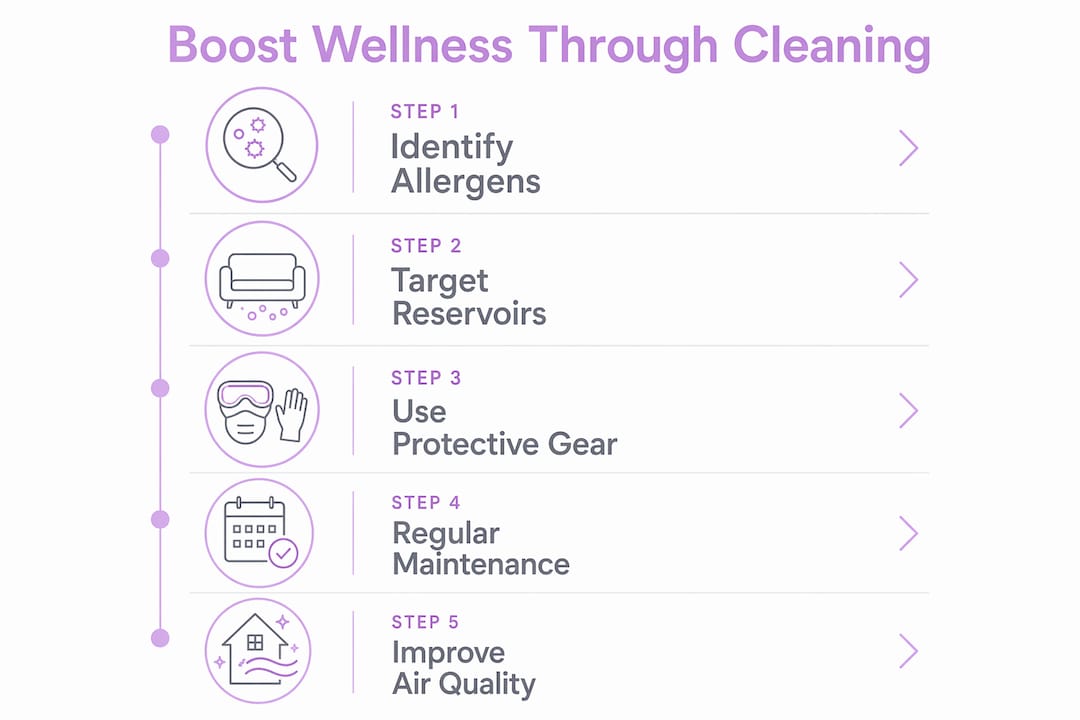
The most effective cleaning tasks focus on allergen reservoirs, not just visible surfaces. Wiping a countertop does almost nothing for your airways. Washing your bedding, vacuuming carpets with a HEPA filter vacuum, and cleaning air vents removes the actual sources of irritation. Hartford HealthCare confirms that targeted cleaning of bedding and carpets produces the greatest reduction in allergy symptoms.
For people with asthma, this distinction is critical. Surface-level tidying looks clean but leaves allergen reservoirs intact. Deep cleaning of soft surfaces and ventilation systems is what actually changes the air you breathe.
Key cleaning tasks that reduce allergens:
- Wash bedding weekly in hot water (above 130°F) to kill dust mites
- Vacuum carpets and rugs twice a week using a HEPA filter vacuum
- Clean air vents and replace HVAC filters every 1–3 months
- Dust blinds, ceiling fans, and baseboards where pollen settles
- Wash curtains and upholstery covers monthly
Pro Tip: Wear a mask when vacuuming or dusting heavily soiled areas. Cleaning stirs up allergens before removing them, and breathing them in during the process can trigger the exact symptoms you are trying to prevent. This is especially true for people with asthma or seasonal allergies.
If you are also concerned about whether your cleaning products themselves could be causing reactions, Jermaphobi4me has a detailed guide on why cleaning products cause allergies that helps you choose safer options.
How does decluttering affect mental health and emotional well-being?
Clutter is a documented source of stress and anxiety. Your brain processes visual disorder as unfinished business. That constant background processing raises cognitive load, which is the mental effort required just to exist in a space. Cleaner environments reduce cognitive load, allowing better focus and lower stress levels, according to Penn State Health.
The physical act of cleaning adds another layer of benefit. Cleaning is moderate physical activity. It releases endorphins and produces the same mood-lifting effects as exercise. Dr. Kia-Rai Prewitt at the Cleveland Clinic notes that decluttering also restores a sense of control, which directly boosts motivation and reduces feelings of helplessness.
The comparison between cluttered and clean spaces on mental performance is stark:
- Cluttered space: elevated cortisol, reduced focus, higher anxiety, decision fatigue
- Clean space: lower stress response, clearer thinking, improved mood, stronger sense of agency
“Cleaning can be a way to feel more in control of your environment, which can help reduce anxiety and improve your overall mood.” — Dr. Kia-Rai Prewitt, Cleveland Clinic
The impact of environment on well-being is not abstract. Researchers consistently find that people in organized spaces make better decisions, feel more motivated, and report higher life satisfaction. The clean living and mental health link is one of the most well-supported findings in environmental psychology.
Does a clean bedroom actually improve sleep quality?
A clean bedroom directly improves sleep quality by removing the two main disruptors: allergens and psychological stress. Cleaner bedrooms with fewer allergens promote better sleep by reducing nighttime congestion and breathing difficulty. Fresh sheets and a calm, organized space make it easier to fall asleep and stay asleep through the night.
Sleep is a downstream wellness factor. Poor sleep raises cortisol, weakens immune function, impairs memory, and increases appetite for high-calorie foods. Improving your sleep environment is one of the highest-return wellness investments you can make. The importance of clean surroundings becomes most obvious in the bedroom, where you spend roughly one-third of your life.
Practical steps to clean your sleep space for better rest:
- Wash pillowcases and sheets every week in hot water
- Vacuum the mattress surface monthly and use a mattress protector
- Remove clutter from nightstands and bedroom floors before bed
- Clean air vents and keep a window cracked for fresh air circulation
- Dust ceiling fans and light fixtures to prevent allergen fallout during sleep
Pro Tip: Keep a small basket near your bedroom door for items that do not belong in the room. Spending two minutes clearing the space before bed reduces visual clutter and signals to your brain that it is time to wind down. This small habit compounds into noticeably better sleep over weeks.
For readers who also want to connect bedroom cleanliness to skin health, Jermaphobi4me covers how clean sheets and skin health interact in their double cleansing guide.
Indoor cleanliness vs. time in nature: which matters more for wellness?
Both matter, and they work through different mechanisms. The US EPA confirms that natural systems filter air pollutants, reducing particulate matter and ozone, which lowers respiratory risks. Forests and wetlands clean outdoor air in ways no indoor system can replicate. The Minnesota Department of Health reports that 10–20 minutes in nature daily reduces stress hormones, boosts mood, and supports mental focus.
Indoor air, however, is often dirtier than outdoor air. Without regular cleaning and ventilation, indoor spaces accumulate dust, mold spores, pet dander, and volatile organic compounds from furniture and cleaning products. This makes indoor cleanliness a non-negotiable baseline, not an optional upgrade.
| Factor | Indoor cleanliness | Time in nature |
|---|---|---|
| Air quality | Improved by cleaning and ventilation | Naturally filtered by trees and wetlands |
| Stress reduction | Reduced by decluttering and organizing | Reduced by exposure to greenery and quiet |
| Allergen control | Directly controlled through cleaning tasks | Pollen exposure may increase outdoors |
| Sleep benefit | Strong, through allergen and clutter removal | Indirect, through cortisol reduction |
| Accessibility | Available daily, any weather | Weather and location dependent |
The most effective approach combines both. Clean your indoor environment consistently, then spend time outdoors daily. These two habits compound each other’s benefits rather than compete.
Key Takeaways
A clean environment boosts wellness by reducing allergens, lowering stress, and improving sleep quality through consistent, targeted cleaning habits.
| Point | Details |
|---|---|
| Target allergen reservoirs | Wash bedding weekly and vacuum carpets to cut allergy and asthma symptoms. |
| Cleaning lifts mood | Physical cleaning releases endorphins and restores a sense of control over your space. |
| Clean bedrooms improve sleep | Fewer allergens and less clutter help you fall asleep faster and stay asleep longer. |
| Indoor air needs active management | Indoor air is often dirtier than outdoor air without regular cleaning and ventilation. |
| Nature and cleanliness compound | Daily time outdoors and a clean home together produce stronger wellness results than either alone. |
Why I think most people underestimate the wellness power of cleaning
Most wellness conversations focus on supplements, exercise routines, and diet plans. Cleaning rarely makes the list. That is a mistake I have seen play out repeatedly. People invest in expensive air purifiers but skip weekly vacuuming. They buy sleep supplements but never wash their pillowcases. The environment they live in undoes the benefits of everything else they are doing.
The insight that changed how I think about this: cleaning is not maintenance. It is a health practice. When you wash your bedding, you are treating a respiratory condition. When you declutter your desk, you are performing a stress management intervention. The Cleveland Clinic’s research on spring cleaning and mood confirms what I have observed: the act itself produces measurable psychological benefits, not just the result.
The practical advice I give is simple. Start with one room. Not the whole house. Pick the space where you spend the most time, usually the bedroom, and clean it thoroughly. Notice how you sleep that week. Notice your stress levels. The feedback loop is fast enough to be motivating, and motivation is what turns a one-time clean into a consistent habit.
Perfection is not the goal. Consistency is. A home that gets cleaned regularly at a moderate standard beats a home that gets deep-cleaned twice a year. Your body responds to the ongoing reduction in allergens and clutter, not to the occasional heroic effort.
— Gimmi
Jermaphobi4me products that support your clean wellness routine
Maintaining a clean environment is easier when you have the right tools. Jermaphobi4me builds health and beauty products specifically for people who take their environment seriously.

The Jermaphobi4me top-seller collection includes hand hygiene and personal care products designed to complement the clean living habits covered in this article. Clean hands are the first line of defense against bringing allergens and pathogens into your home. For people who travel or work outside the home, the Hand Hygiene Starter Kit keeps your hygiene routine consistent wherever you are. Every product is formulated with health-conscious people in mind, not just cleanliness for its own sake.
FAQ
Does a clean home actually improve physical health?
Yes. Deep cleaning reduces allergens like dust mites and pollen, which directly improves symptoms for asthma and allergy sufferers. Cleaner air means fewer respiratory symptoms and better sleep.
How does clutter affect mental health?
Clutter raises cognitive load and cortisol levels, increasing stress and anxiety. Penn State Health research confirms that cleaner spaces lower stress and improve focus by removing the visual signal of unfinished tasks.
How often should I clean my bedroom for better sleep?
Wash bedding weekly, vacuum the floor and mattress monthly, and clear clutter from surfaces before bed each night. These three habits address the main allergen and stress triggers that disrupt sleep.
Is indoor air really dirtier than outdoor air?
The US EPA confirms that indoor air frequently contains higher concentrations of pollutants than outdoor air. Without regular cleaning and ventilation, dust, mold, and chemical compounds from furniture accumulate indoors.
How long does it take to feel the wellness benefits of cleaning?
The mood benefits from cleaning can appear within a single session, as physical activity releases endorphins immediately. Respiratory and sleep improvements from allergen reduction typically become noticeable within one to two weeks of consistent cleaning.
Recommended
- Why Men Need Clean Environments for Better Health – Gimmi Vitality Products dba Jermacilin Store
- Why Cleaning Products Cause Allergies: What to Know – Gimmi Vitality Products dba Jermacilin Store
- What Is Chemical-Free Cleaning? A Practical Guide – Gimmi Vitality Products dba Jermacilin Store
- What Is a Safe Cleaning Product? Your 2026 Guide – Gimmi Vitality Products dba Jermacilin Store