

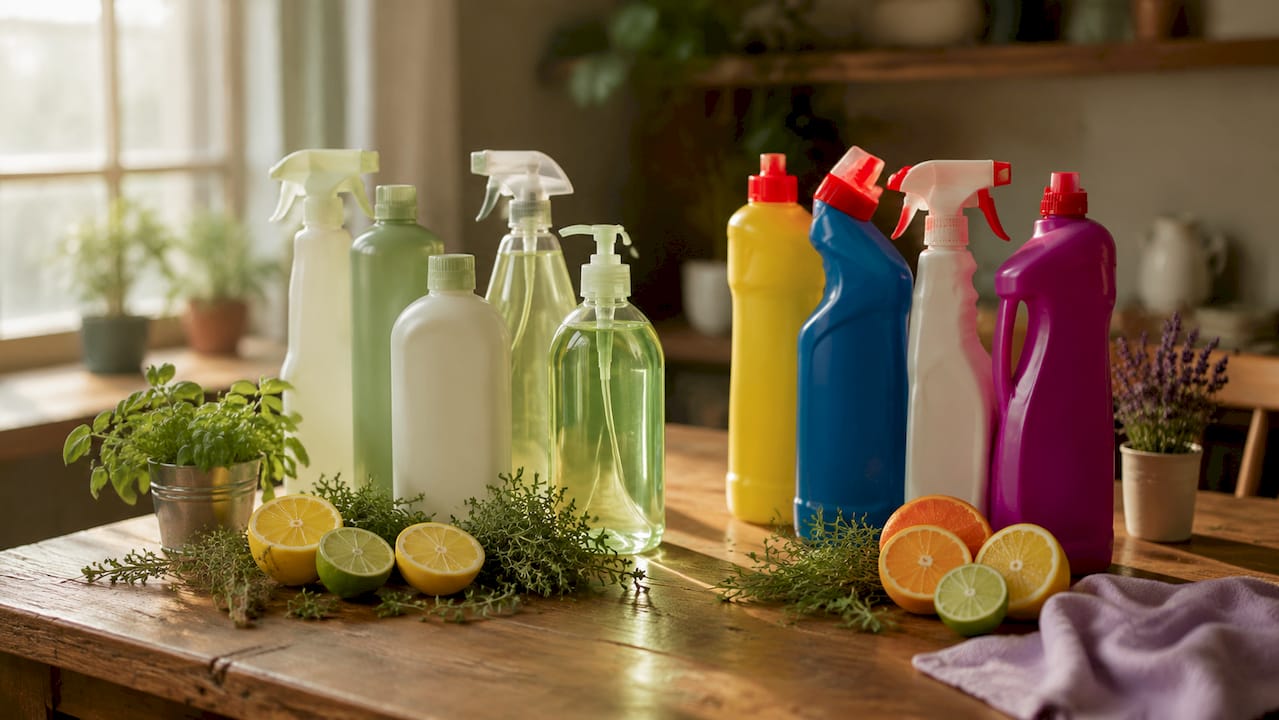
A safe cleaning product is defined as any formulation made with non-toxic, environmentally evaluated ingredients that clean effectively without posing risks to human health or ecological systems. The industry standard term for this category is “safer chemistry,” a framework championed by the U.S. EPA through its Safer Choice program. Whether you’re scrubbing a kitchen counter or wiping down a child’s highchair, knowing what’s in your cleaner matters as much as how well it works. Ingredients like baking soda, Castile soap, and citric acid form the backbone of genuinely safe formulations, while certifications from the EPA Safer Choice program and Design for the Environment (DfE) give you a verified shortcut to trustworthy products.
What is a safe cleaning product, exactly?
A safe cleaning product avoids ingredients that cause respiratory irritation, hormone disruption, carcinogenicity, or aquatic toxicity. The EPA’s Safer Choice label is the most reliable certification for cleaning products, evaluating every ingredient for both human health and environmental impact. That means every surfactant, preservative, fragrance component, and solvent in a Safer Choice product has been screened before it reaches your shelf.
The distinction between “safe” and “safer” matters here. No cleaning product is entirely without risk at extreme concentrations, but safer chemistry minimizes that risk through ingredient selection, not just dilution. Products built on hydrogen peroxide, lactic acid, ethanol, and plant-derived surfactants deliver real cleaning power while keeping your indoor air and waterways cleaner. Jermaphobi4me was built on exactly this principle: clean environments and healthy people go together, and the products you use at home are where that starts.
What chemicals should you avoid in cleaning products?
Conventional cleaners often contain a short list of ingredients that cause outsized harm. Knowing these by name is the fastest way to protect your household.
The most common offenders include:
- Ammonia: Found in glass cleaners and multi-surface sprays. Mixing ammonia with bleach produces toxic chloramine gas, a serious respiratory hazard. Even alone, ammonia irritates airways and eyes.
- Phthalates: Hidden inside the word “fragrance” or “parfum” on labels. Phthalates are endocrine disruptors linked to hormonal interference and are rarely disclosed individually.
- Synthetic fragrances: The single word “fragrance” on a label can mask dozens of chemicals, including phthalates and volatile organic compounds (VOCs). This is one of the most exploited loopholes in cleaning product labeling.
- Ethoxylated surfactants: These are common in dish soaps and degreasers. During manufacturing, they can generate 1,4-dioxane, a likely carcinogen that never appears on the ingredient list because it is a byproduct, not an added ingredient.
- VOCs from aerosol sprays: Pressurized containers release VOCs that linger in indoor air, contributing to respiratory issues and poor air quality, especially in poorly ventilated spaces.
Pro Tip: Scan for the word “fragrance” or “parfum” on any cleaner label. If you see it and the brand does not disclose the full scent ingredient list, set the product down. Fragrance-free or essential-oil-scented products with full disclosure are the safer call.
The health consequences of repeated exposure to these chemicals range from short-term irritation to long-term risks including asthma, reproductive harm, and increased cancer risk. Children and people with asthma face disproportionate harm because their airways are more sensitive and their bodies are still developing.
Which certifications actually guarantee a safer cleaner?
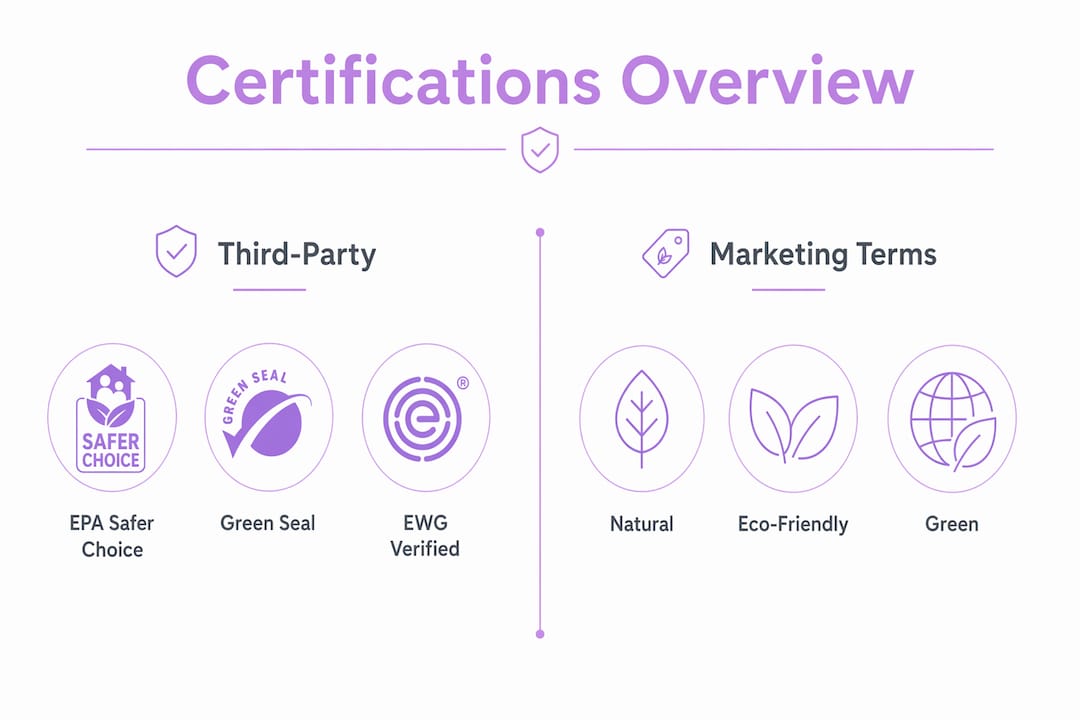
Third-party certifications cut through marketing noise. “Green,” “natural,” and “eco-friendly” are marketing terms with no legal definition. These labels are not strictly regulated and can mask harmful ingredients causing respiratory or hormonal issues. Verified logos are a different story.
| Certification | Who Issues It | What It Screens |
|---|---|---|
| EPA Safer Choice | U.S. Environmental Protection Agency | Every ingredient for human health, aquatic toxicity, and environmental fate |
| Design for the Environment (DfE) | U.S. EPA | Disinfectant active ingredients like hydrogen peroxide, citric acid, and ethanol |
| Green Seal | Green Seal, Inc. | Full product lifecycle including packaging and manufacturing |
| UL ECOLOGO | UL (Underwriters Laboratories) | Performance, health, and environmental criteria across product categories |
| EWG Verified | Environmental Working Group | Ingredient transparency and avoidance of EWG-flagged chemicals |
The EPA Safer Choice program is the gold standard for household cleaners. DfE certification applies specifically to disinfectants and confirms that the active germ-killing ingredient, whether hydrogen peroxide, citric acid, lactic acid, or ethanol, has been evaluated for safety. Green Seal and UL ECOLOGO add supply chain scrutiny. EWG Verified focuses heavily on transparency, requiring brands to disclose every ingredient.
One persistent myth is that safer products clean less effectively. Safer Choice-certified products undergo independent testing demonstrating cleaning performance comparable or superior to traditional products. Safety does not compromise efficacy. That finding should end the debate for most consumers.
Pro Tip: When shopping online or in-store, search the EPA’s Safer Choice product finder at epa.gov/saferchoice before buying a new cleaner. It takes 30 seconds and removes all guesswork.
How do natural DIY cleaners compare to certified commercial products?
Natural ingredients like baking soda, white vinegar, Castile soap, and essential oils are genuinely useful for everyday cleaning tasks. Baking soda is a mild abrasive that deodorizes and scrubs without scratching. White vinegar cuts through grease and mineral deposits on glass and tile. Castile soap, made from plant oils like olive or coconut, cleans surfaces and skin without synthetic detergents.
Where DIY solutions fall short:
- Antimicrobial effectiveness: Vinegar and baking soda are not EPA-registered disinfectants. They reduce surface grime but do not reliably kill pathogens like Salmonella, E. coli, or norovirus. For food prep surfaces or during illness, you need a certified product.
- Surface compatibility: Vinegar is acidic and damages natural stone surfaces like marble and granite. Castile soap can leave a film on some surfaces when mixed with hard water.
- Consistency: Commercial products are formulated and tested for stability. A homemade spray may separate, degrade, or lose effectiveness within days.
- Allergy risk: Essential oils, while natural, are common allergens. Tea tree oil, lavender, and eucalyptus can trigger reactions in sensitive individuals, including pets.
The practical answer is to use both strategically. Baking soda and Castile soap handle routine daily cleaning well. For disinfecting a cutting board after raw chicken or sanitizing a bathroom during a stomach bug, reach for a DfE-certified or EPA Safer Choice product instead. You can also explore kitchen disinfection without harsh bleach for a practical breakdown of safer alternatives that still get the job done.
What 2026 regulations are reshaping safer cleaning products?
Regulatory pressure is accelerating the shift toward safer formulations. Colorado’s SB24-081 bans intentional PFAS addition in household cleaning products and detergents starting May 2026. PFAS, or per- and polyfluoroalkyl substances, are persistent chemicals linked to cancer, immune disruption, and developmental harm. The law targets surfactants in sprays, surface cleaners, and detergents specifically.
| Regulation | Jurisdiction | Key Restriction | Effective Date |
|---|---|---|---|
| Colorado SB24-081 | Colorado, USA | Bans intentional PFAS in household cleaners and detergents | May 2026 |
| EPA Safer Choice Updates | Federal, USA | Expanded ingredient screening criteria for surfactants | Ongoing 2026 |
Colorado’s law matters beyond state lines. When a major market restricts an ingredient, manufacturers typically reformulate nationally rather than maintain two separate product lines. This means consumers across the U.S. are likely to see PFAS-free cleaning products become the norm faster than federal regulation alone would achieve. The PFAS ban’s national impact is already pushing the cleaning industry toward safer chemical profiles in 2026 and beyond.
How to choose and use safe cleaning products at home
Choosing safer cleaners is a skill that gets faster with practice. Here is a practical sequence that works:
- Read the ingredient list first. If a product lists “fragrance” without disclosure, or if you see ingredients ending in “-eth” (a sign of ethoxylation), treat it as a flag worth investigating.
- Look for verified certification logos. EPA Safer Choice, Green Seal, EWG Verified, and UL ECOLOGO are the four logos worth trusting. Ignore claims like “plant-based” or “green formula” without one of these backing them up.
- Match the product to the task. Routine cleaning prioritizes soap and water; reserve EPA-registered sanitizers or disinfectants for food prep surfaces or illness situations. Over-disinfecting increases chemical exposure without adding meaningful protection.
- Follow dwell time instructions. Disinfectants must stay wet on surfaces for a defined contact time to kill pathogens. Wiping immediately after spraying reduces effectiveness even with a strong product.
- Ventilate every time. Open a window or run an exhaust fan when using any spray cleaner, even certified safer ones. VOC buildup in enclosed spaces is cumulative.
- Store products safely. Keep cleaners in original containers, away from children and pets, and never mix products from different categories. Even safe cleaners can interact unpredictably.
Pro Tip: Build a short “approved list” of three to five certified products for your home: one all-purpose cleaner, one bathroom disinfectant, and one floor cleaner. Rotating through a small, vetted set is easier to manage than evaluating every new product you encounter.
For personal hygiene products that follow the same safer chemistry principles, Jermaphobi4me’s guide on chemical-free body wash options applies the same ingredient-first thinking to what goes on your skin.
Key takeaways
Safe cleaning products are those formulated with ingredients verified by third-party certifications like EPA Safer Choice, avoiding known hazards such as ammonia, phthalates, synthetic fragrances, and PFAS while delivering cleaning performance equal to conventional alternatives.
| Point | Details |
|---|---|
| Certification is the only reliable signal | Look for EPA Safer Choice, Green Seal, EWG Verified, or UL ECOLOGO logos before trusting any “natural” claim. |
| Hidden ingredients are the biggest risk | Fragrance and ethoxylated surfactants can conceal phthalates and 1,4-dioxane without appearing on labels. |
| Natural does not equal safe or effective | DIY cleaners like vinegar work for routine cleaning but are not EPA-registered disinfectants for pathogen control. |
| 2026 regulations are raising the bar | Colorado’s PFAS ban and EPA Safer Choice updates are pushing national reformulation toward safer chemical profiles. |
| Dwell time determines disinfectant effectiveness | A certified disinfectant only works if it stays wet on the surface for the full contact time listed on the label. |
Why I think most people are solving the wrong problem
By Gimmi
Most consumers I talk to focus on finding the “perfect” safe cleaner as if it were a single product. The real shift is building a habit of reading labels and trusting certifications over marketing language. I have seen households stocked with products labeled “natural” that contained synthetic fragrances and ethoxylated surfactants. The label looked clean. The ingredient list told a different story.
The other thing I have noticed is that people dramatically over-disinfect. They reach for the strongest product for every task, daily, on every surface. That is not safer chemistry in practice. Soap and water handle most household cleaning jobs without any chemical risk. Reserving certified disinfectants for genuinely high-risk moments, like raw meat contact or illness recovery, is both smarter and safer.
The good news is that the 2026 regulatory environment is making it harder for brands to hide behind vague claims. Colorado’s PFAS ban, EPA Safer Choice program updates, and growing consumer pressure are collectively moving the industry in the right direction. Your job as a consumer is to stay one step ahead of the marketing and let the certification logos do the filtering for you.
— Gimmi
Clean smarter with Jermaphobi4me
Jermaphobi4me was built for people who take clean environments seriously without wanting a chemistry degree to shop safely. The top-selling product collection features hand hygiene and multipurpose cleaners formulated with safer ingredients, free from the synthetic fragrances and harsh surfactants this article flags as risks. If you are starting fresh, the hand hygiene starter kit gives you travel-sized versions of the core lineup so you can test before committing. For families who want a full safer-cleaning setup at home, the bundle collection covers every room. Every product reflects the same principle: your home should be clean, and the products making it clean should not be a health risk themselves.
FAQ
What makes a cleaning product safe?
A safe cleaning product uses ingredients evaluated for human health and environmental impact, avoiding carcinogens, endocrine disruptors, and aquatic toxins. The EPA Safer Choice certification is the most reliable indicator that every ingredient in a product has passed that screening.
Are green or natural cleaners actually effective?
Yes. Safer Choice-certified products demonstrate cleaning performance comparable or superior to conventional products in independent testing. The “green means weak” assumption is a myth not supported by performance data.
How do I spot hidden harmful ingredients on a label?
Look for the word “fragrance” or “parfum,” which can legally conceal dozens of chemicals including phthalates. Also watch for ingredients ending in “-eth,” which signals ethoxylation and potential 1,4-dioxane contamination as a manufacturing byproduct.
Are cleaning products safe for kids if they carry a “natural” label?
Not automatically. “Natural” labeling is not regulated and can mask harmful ingredients. For products used around children, verify a third-party certification like EPA Safer Choice or EWG Verified rather than relying on marketing language.
Do I need to disinfect every surface every day?
No. Routine cleaning with soap and water is sufficient for most household surfaces. Reserve EPA-registered disinfectants for food preparation areas, bathrooms during illness, and other genuinely high-risk situations to minimize unnecessary chemical exposure.
Recommended
- How to Disinfect Your Kitchen Without Harsh Bleach – Gimmi Vitality Products dba Jermacilin Store
- Types of Chemical-Free Body Wash: Your 2026 Guide – Gimmi Vitality Products dba Jermacilin Store
- What Is Double Cleansing? Your Skin-Clearing Guide – Gimmi Vitality Products dba Jermacilin Store
- Maiden For Her (Plant-Based, pH Balanced, Eco-Friendly) Wet Wipes – Gimmi Vitality Products dba Jermacilin Store