

A clean environment is one of the most direct investments a man can make in his physical health, mental clarity, and social standing. Research from the British Psychological Society, Penn State PRO Wellness, and Cleveland Clinic confirms that the state of your surroundings shapes your brain chemistry, immune function, and how others perceive you. Understanding why men need clean environments goes beyond tidiness. It is about building a foundation for a life that performs at its best.
Why men need clean environments: the mental health connection
The link between clutter and mental strain is not a matter of preference. Cluttered environments negatively impact cognitive processing and are linked with dysregulated cortisol slopes, which is the biological signature of chronic stress. When your brain is constantly processing visual noise from piles of clothes, stacked dishes, and scattered papers, it has fewer resources left for focus, decision-making, and emotional regulation.
Men’s mental health and cleanliness are more tightly connected than most realize. The effect is not subtle. A disorganized space competes for your attention the same way a loud conversation in the next room does. You may not consciously notice it, but your brain is working harder just to filter it out.
The good news is that cleaning itself is a corrective action with measurable psychological benefits:
- Endorphin release: Cleaning burns 100 to 200 calories per hour and triggers endorphin release that improves mood and energy. That is a meaningful physical and psychological return for 20 minutes of effort.
- Sense of mastery: Cleaning provides psychological mastery and a sense of control that directly reduces anxiety and feelings of helplessness. For men who feel overwhelmed by work or personal pressure, cleaning one room can reset the mental state.
- Reduced intrusive thoughts: Short cleaning sessions act as mental breaks that interrupt rumination cycles. The repetitive, predictable nature of wiping down a counter or organizing a shelf gives the mind a structured task with a clear endpoint.
- Momentum building: Starting with one room or spot builds momentum and reduces anxiety about overall disorder. You do not need to clean everything at once to feel better.
Pro Tip: Pick one surface in your home, your desk, your kitchen counter, or your bathroom sink, and commit to keeping it clear for one week. That single anchor point of order creates a psychological baseline that makes the rest of the space feel more manageable.
The importance of cleanliness for men is not about perfectionism. It is about removing the low-grade mental friction that accumulates when your environment is working against you.
What unclean spaces do to men’s physical health

The physical health impacts of a dirty environment are concrete and well-documented. Poor cleanliness attracts pests that degrade air quality and spread disease, while poor personal hygiene is a direct cause of bacterial infections. This is not about being overly cautious. It is about understanding that your home and body are ecosystems, and neglect has biological consequences.
Here is a practical breakdown of the physical risks men face from unclean environments and habits:
- Bacterial infections from poor personal hygiene. Skipping regular washing of hands, genitals, and feet creates conditions for fungal infections, urinary tract infections, and skin conditions. These are not rare outcomes. They are predictable results of infrequent hygiene.
- Respiratory issues from dust and mold. Dust mites, mold spores, and pet dander accumulate in spaces that are not regularly cleaned. Men with allergies or asthma are especially vulnerable, but even healthy men experience degraded sleep and energy from poor indoor air quality.
- Pest infestations from food debris. Leaving food out, not taking out trash, and ignoring spills invites cockroaches, rodents, and flies. Each of these carries pathogens that contaminate surfaces and food.
- Skin and scalp problems from infrequent grooming. Irregular showering and grooming leads to clogged pores, scalp buildup, and body odor. Understanding why men need skincare routines is part of the same conversation as environmental cleanliness. Both are preventative health practices.
- Compounding health risks from combined neglect. A man who rarely cleans his home and rarely practices personal hygiene is not facing two separate problems. He is facing a compounding risk environment where bacteria from surfaces transfer to skin, and skin bacteria transfer back to surfaces.
Clean living for men is not about spending hours scrubbing. It is about consistent, targeted habits that prevent the buildup of conditions that make you sick.
How hygiene shapes men’s social and professional lives
Cleanliness carries social weight that most men underestimate. Hygiene signals health, energy, and social competence, directly influencing romantic and professional opportunities. This is not a superficial observation. It is rooted in evolutionary psychology.
“Physical disgust related to hygiene is intertwined with moral judgment, affecting men’s social standing in ways they rarely anticipate.” — Hygiene premium: Cleanliness signals fitness and safety
The brain’s behavioral immune system treats visible signs of poor hygiene as threat signals. When someone smells unwashed, has visibly dirty hands, or lives in a chaotic space, other people unconsciously register that as a reliability risk. The social penalty is automatic and largely invisible to the person receiving it.
| Hygiene behavior | Social perception |
|---|---|
| Consistent grooming and clean clothes | Perceived as reliable, disciplined, and trustworthy |
| Fresh breath and clean hands | Signals respect for others and self-awareness |
| Tidy home environment | Communicates self-control and competence |
| Poor body odor or unkempt appearance | Triggers unconscious avoidance and reduced trust |
| Neglected living space | Associated with low conscientiousness and instability |
Good grooming acts as a social lubricant that shapes perceptions in job interviews, first dates, and everyday professional interactions. The effect of tidy spaces on men extends outward. When a colleague or partner visits your home and sees order, they form a positive impression that carries into every future interaction.
The “hygiene penalty” is real. Men who neglect cleanliness often experience social withdrawal without understanding why. That withdrawal feeds isolation, which compounds mood and motivation problems. It is a cycle that starts with something as simple as not washing regularly.
Practical strategies for building a clean environment that sticks
Sustainable cleanliness is not about motivation. It is about systems. Most men who struggle with maintaining clean spaces are not lazy. They lack a structure that fits how they actually think and move through their day.
Men’s organizational styles often differ from conventional expectations. Many men are “vertical organizers,” meaning they prefer stacking and grouping by use rather than by category. Fighting that instinct creates systems that collapse within a week. Working with it creates order that lasts.
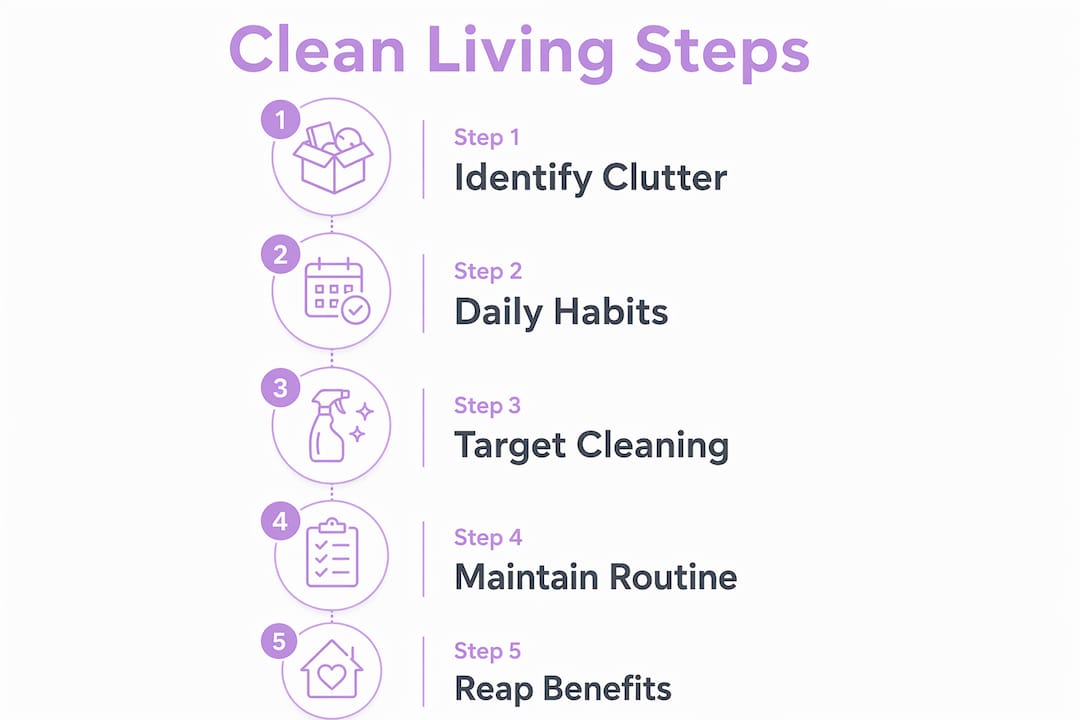
Here is how to build habits that hold:
- Use micro-habits to prevent buildup. Micro-habits like rinsing the sink after shaving prevent accumulation and reduce the need for major cleaning sessions. The goal is to never let mess reach the point where it feels overwhelming.
- Assign a home to every object. Clutter is almost always the result of objects without designated places. Spend 30 minutes assigning a specific location to the items you use daily. After that, putting things away takes two seconds instead of a decision.
- Clean in time blocks, not by task. Set a 15-minute timer and clean whatever is in front of you. This approach removes the mental overhead of planning and makes starting easier.
- Tie cleaning to existing habits. Wipe the bathroom counter after brushing your teeth. Take out the trash when you leave for work on Mondays. Attaching cleaning to existing routines removes the need for willpower.
- Start with the space where you spend the most time. For most men, that is the bedroom or the desk. Starting with small tasks creates mastery and motivates continued progress. A clean workspace alone can shift your entire mental state for the day.
Pro Tip: Follow post-treatment skincare steps in a clean bathroom environment. A hygienic space makes your grooming routine more effective and reduces the risk of introducing bacteria to freshly treated skin.
Men’s productivity in clean environments improves because the brain stops allocating resources to filtering out disorder. The return on 15 minutes of daily maintenance is hours of clearer thinking.
Key takeaways
Clean environments directly protect men’s mental health, physical health, and social standing, making daily hygiene habits one of the highest-return investments in overall well-being.
| Point | Details |
|---|---|
| Clutter raises cortisol | Disorganized spaces trigger chronic stress responses that impair focus and mood. |
| Cleaning releases endorphins | Even short sessions improve energy and provide measurable psychological relief. |
| Hygiene prevents physical illness | Regular cleaning stops bacterial, fungal, and pest-related health risks before they start. |
| Social perception is automatic | Others unconsciously judge reliability and competence based on hygiene and environment. |
| Micro-habits beat motivation | Small daily actions like rinsing sinks and wiping counters sustain cleanliness without burnout. |
What I’ve learned watching men ignore the obvious
I have spent years watching men dismiss cleanliness as a low-priority concern, something to deal with when things get bad enough. The pattern is consistent. A cluttered desk becomes a cluttered mind. A bathroom that never gets wiped down becomes a source of skin problems that get blamed on genetics. A home that feels chaotic starts to feel like a place to escape rather than recover in.
What surprises most men when they finally commit to a cleaner environment is how fast the mental shift happens. Not weeks. Days. The brain responds to order almost immediately because it stops spending energy managing visual and sensory noise. I have seen men who were convinced they “just weren’t organized people” completely change their daily output after spending one weekend restructuring their living space.
The bigger misconception is that cleaning is a chore. It is not. It is a form of self-care with a direct return on your health, your relationships, and your performance. Men who treat their environment as an extension of their physical health, the same way they treat diet or exercise, see results that compound over time.
The psychological need for cleanliness is not a personality trait. It is a biological reality. Your brain functions better in order. Your body gets sick less often in clean spaces. Other people respond to you differently when you present as someone who takes care of his surroundings. None of that requires perfection. It requires consistency.
— Gimmi
Start your clean environment routine with Jermaphobi4me
If you are ready to take your hygiene habits seriously, Jermaphobi4me makes it straightforward to get started. The brand’s products are built around one principle: clean environments and healthy people go together.

The Hand Hygiene Starter Kit gives you travel-ready, plant-based hygiene essentials that fit into any daily routine without friction. For men who want a more complete setup, the bundle collection covers the full range of personal hygiene needs in one place. Browse the top-selling products at Jermaphobi4me to find the right starting point for your routine.
FAQ
Why does a messy room affect men’s mental health?
Cluttered spaces compete for your brain’s attention and trigger elevated cortisol, the stress hormone linked to chronic anxiety. Research from Penn State PRO Wellness confirms that disorganized environments disrupt cognitive processing and emotional regulation.
How often should men clean their living spaces?
Daily micro-habits like wiping surfaces and clearing dishes prevent buildup, while a deeper clean once a week keeps air quality and hygiene at a healthy level. Consistency matters more than intensity.
Does personal hygiene really affect men’s social opportunities?
Hygiene signals health and social competence, and poor hygiene triggers unconscious avoidance in others. Research in evolutionary psychology shows that the brain’s behavioral immune system registers poor hygiene as a reliability risk, affecting both romantic and professional relationships.
What is the easiest way for men to start maintaining a cleaner home?
Start with one surface or one room and build from there. Cleveland Clinic research shows that beginning with a single manageable task creates a sense of mastery that motivates continued progress without overwhelming you.
Can cleaning actually improve men’s physical fitness?
Cleaning burns approximately 100 to 200 calories per hour, making it a legitimate source of light physical activity. The British Psychological Society notes that regular cleaning sessions also release endorphins, improving mood and energy alongside the physical benefit.
Recommended
- Maiden For Her (Plant-Based, pH Balanced, Eco-Friendly) Wet Wipes – Gimmi Vitality Products dba Jermacilin Store
- Gimmi Vitality Products dba Jermacilin Store
- Jermaphobi’s Hand Hygiene Starter Kit (Travel Sizes) – Gimmi Vitality Products dba Jermacilin Store
- Sample 0.5 oz “Try Me Before You Pee” (2 Samples) – Gimmi Vitality Products dba Jermacilin Store