

Chemical-free cleaning is defined as any cleaning method or product that avoids harsh synthetic chemicals, relying instead on natural ingredients, physical techniques, or minimally processed substances. The term appears on labels from brands like Branch Basics and Kit & Kin, and it resonates deeply with anyone building a healthier, more sustainable home. What is chemical-free cleaning in practice, though, is more nuanced than the marketing suggests. Every substance on earth is a chemical, including water, vinegar, and baking soda. Understanding that distinction helps you make smarter choices rather than just trusting a label.
What does “chemical-free cleaning” actually mean?
Chemical-free cleaning, in the industry, falls under the broader category of green cleaning or non-toxic cleaning. Green cleaning is the recognized standard term used by the EPA and professional cleaning organizations. The phrase “chemical-free” is the consumer-facing version, widely used in marketing but not backed by any regulatory definition.
In practical terms, green cleaning means choosing products and methods that minimize exposure to synthetic compounds known to irritate the skin, lungs, or environment. Common natural ingredients include white vinegar, baking soda, castile soap, and essential oils like tea tree and lavender. Physical methods such as steam cleaning and microfiber cloths also qualify because they remove contaminants without adding any substance at all.
The appeal is straightforward. You want a clean home without filling it with fumes, residues, or ingredients you cannot pronounce. That goal is completely achievable. The key is knowing what you are actually choosing and why.

Why “chemical-free” is a misnomer
The phrase “chemical-free” is a marketing label without regulation or scientific meaning. No governing body defines it, no certification body enforces it, and no product can technically qualify for it. Every substance in existence is a chemical compound. Water is H₂O. Vinegar is acetic acid. Even the air you breathe is a mixture of nitrogen, oxygen, and argon.
What consumers actually mean when they say “chemical-free” is “free from harsh or synthetic chemicals.” That is a legitimate and worthwhile goal. The problem is that marketing exploits the common misunderstanding that “chemical” equals “dangerous.” It does not. Toxicity depends on the specific compound, the concentration, and the exposure level.
Here is what to look for instead of a “chemical-free” claim:
- EPA Safer Choice certification: The EPA reviews every ingredient in a product for human and environmental safety before awarding this label.
- USDA Biobased certification: Confirms a product is made from renewable biological sources rather than petroleum derivatives.
- EWG Verified: The Environmental Working Group screens products against a database of known hazardous ingredients.
- Fragrance-free or unscented: These labels reduce VOC exposure more reliably than “natural scent” claims.
Pro Tip: Scan the full ingredient list, not just the front label. If a product lists “fragrance” without specifying the source, it may contain undisclosed synthetic compounds even if the front label says “natural.”
Third-party certifications give you something a marketing claim never can: accountability. A brand that has earned EPA Safer Choice status has had its formula reviewed by scientists, not just copywriters.
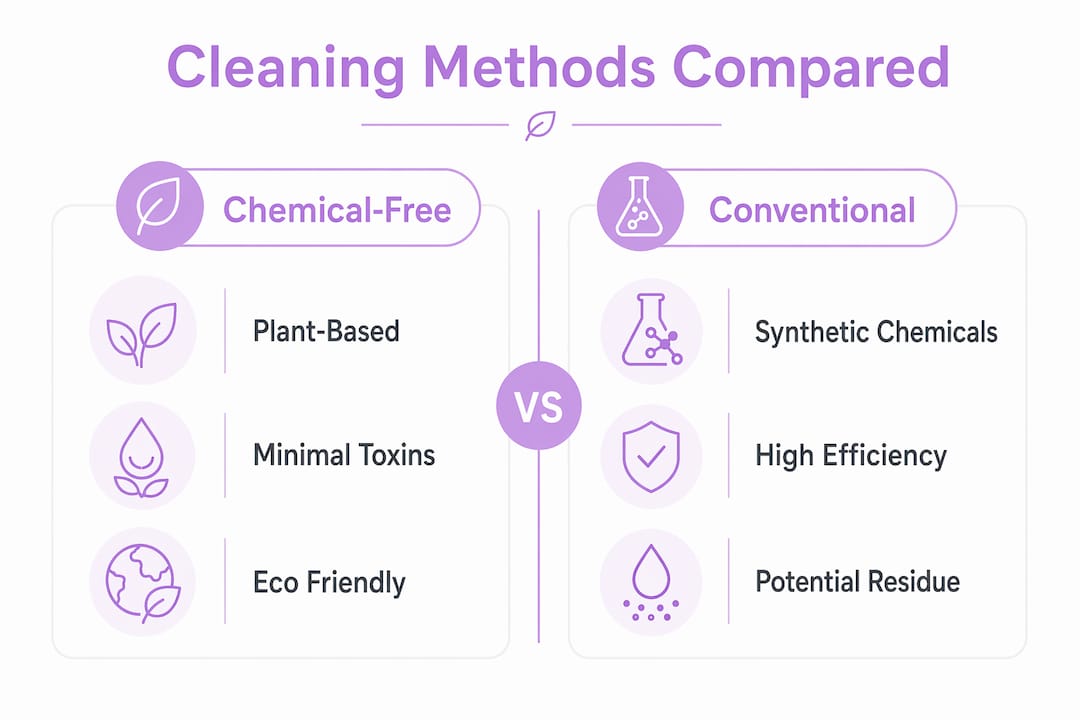
Chemical-free vs. conventional cleaners: how do they compare?
Performance is the most common objection to natural cleaning methods. The assumption is that synthetic chemicals clean better. The data does not always support that assumption. Plant-based all-purpose cleaners can remove 14% more dirt than leading conventional competitors while neutralizing 99.9% of bacteria. That result comes from surfactants derived from essential oils and lactic acid, not from bleach or ammonia.
That said, the comparison is not one-sided. Conventional cleaners formulated responsibly can be efficient and lower-impact than poorly chosen natural alternatives. The real question is not “natural vs. synthetic” but “what does this surface need, and what is the safest way to achieve it?”
| Ingredient | Type | Primary Cleaning Role | Key Limitation |
|---|---|---|---|
| White vinegar | Natural (acetic acid) | Dissolves mineral deposits, cuts grease | Does not disinfect reliably |
| Baking soda | Natural (sodium bicarbonate) | Mild abrasive, deodorizer | No antimicrobial action |
| Essential oils (tea tree) | Natural | Light antimicrobial, fragrance | Concentration-dependent efficacy |
| Hydrogen peroxide (3%) | Safer synthetic | EPA-registered disinfectant | Can bleach some surfaces |
| Ethanol (70%) | Safer synthetic | Kills bacteria and viruses | Evaporates quickly, not for porous surfaces |
| Ammonia-based cleaners | Conventional synthetic | Cuts grease, glass cleaner | Respiratory irritant, VOC contributor |
Physical cleaning methods like steam, microfiber, and purified water systems reduce chemical consumption significantly and handle most routine household tasks well. Steam at high temperatures kills dust mites and loosens grime without any added product. Microfiber cloths trap particles mechanically rather than dissolving them.
The limit of purely physical methods appears when you need to neutralize pathogens. Chemical reactions are sometimes necessary for hygiene tasks like disinfecting cutting boards, sanitizing bathrooms after illness, or removing hard water scale. Physical removal alone does not reliably kill viruses or bacteria at the surface level.
Pro Tip: Use microfiber and steam for daily maintenance. Reserve EPA-registered disinfectants like 3% hydrogen peroxide for high-touch surfaces during cold and flu season. You get the benefits of both approaches without overusing either.
What are the health and environmental benefits?
Choosing non-toxic cleaning methods reduces indoor air pollution, which is a leading environmental health concern inside homes. Volatile organic compounds (VOCs) from conventional spray cleaners, air fresheners, and scented products accumulate indoors and trigger asthma, allergies, and headaches. Switching to fragrance-free, plant-based products directly lowers that chemical load in the air your family breathes every day.
The environmental benefits extend beyond your front door. Synthetic cleaning chemicals wash down drains and enter waterways, where some compounds disrupt aquatic ecosystems. Plant-based and biodegradable formulas break down more completely, reducing that downstream impact. Concentrated formats, like those offered by Branch Basics, also cut plastic waste by reducing the number of bottles you buy.
“Consumers should choose lower-hazard, responsibly formulated products and use chemicals only where they add measurable value for balanced sustainability.” — European Cleaning Journal
One pitfall catches many people off guard. Many “natural” smelling products still contain undisclosed synthetic fragrances. The word “fragrance” on an ingredient label can legally represent dozens of unlisted compounds. Choosing fragrance-free or unscented products is a more reliable way to minimize VOC exposure than trusting a “natural” scent claim.
The benefits of reducing synthetic chemical exposure also apply to your skin and personal care routine. If you are already rethinking your home cleaners, it is worth exploring chemical-free body wash options that apply the same principles to what goes directly on your body.
How to clean without harsh chemicals: a step-by-step approach
Switching to safer cleaning methods does not require a complete overhaul on day one. A phased approach works better and lets you test what performs well in your home.
- Start with your most-used surfaces. Kitchen counters, bathroom sinks, and stovetops see daily use. Replace your current all-purpose spray with a plant-based, EPA Safer Choice certified alternative or a DIY mix of one part white vinegar to one part water with a few drops of tea tree oil.
- Upgrade your tools. Microfiber cloths replace paper towels and reduce the amount of product you need. A steam cleaner handles floors, grout, and upholstery without any added cleaner at all.
- Make your own where it makes sense. A baking soda paste (baking soda plus a small amount of castile soap) scrubs sinks and tubs effectively. White vinegar in a spray bottle handles glass and mirrors without streaks.
- Choose certified products for the rest. For toilets, trash cans, and surfaces that need real disinfection, choose products with EPA-registered disinfectants like 3% hydrogen peroxide or 70% ethanol. These are safer than quaternary ammonium compounds and still effective.
- Read labels before you buy. Look for EPA Safer Choice, EWG Verified, or USDA Biobased seals. Avoid products that list “fragrance” without specifying the source.
Modern plant-based enzyme cleaners match or exceed traditional chemical cleaners when used correctly. The key phrase is “used correctly.” Vinegar needs contact time to work on mineral deposits. Baking soda needs physical agitation to scrub. These methods require slightly more technique than spray-and-wipe, but the results hold up.
Pro Tip: For kitchen disinfection without bleach, a 3% hydrogen peroxide spray left on the surface for 60 seconds before wiping is both effective and safe. Jermaphobi4me’s guide on disinfecting your kitchen walks through the full process.
Key takeaways
Chemical-free cleaning is most effective when you combine natural methods for daily maintenance with EPA-registered safer disinfectants for high-risk surfaces, guided by third-party certifications rather than marketing claims.
| Point | Details |
|---|---|
| “Chemical-free” is a marketing term | No product is truly chemical-free; look for EPA Safer Choice or EWG Verified labels instead. |
| Natural cleaners can outperform conventional ones | Plant-based cleaners remove more dirt and neutralize bacteria without harsh synthetic compounds. |
| Physical methods have real limits | Steam and microfiber handle daily cleaning but cannot reliably disinfect against pathogens. |
| VOCs are the hidden health risk | Synthetic fragrances in “natural” products still release VOCs; choose fragrance-free options. |
| Safer disinfection is possible | Hydrogen peroxide (3%) and ethanol (70%) are EPA-registered, lower-hazard disinfecting options. |
The honest truth about going chemical-free
By Gimmi
I have spent years watching people swap their entire cleaning cabinet for “natural” products and then feel confused when results disappoint. The problem is rarely the natural ingredients. The problem is the expectation that one label solves everything.
What I have found actually works is a split approach. Natural methods and plant-based products handle 80% of your cleaning needs better than most people expect. The remaining 20%, the situations where you genuinely need to kill pathogens or dissolve heavy buildup, still call for a targeted, responsibly formulated product. Pretending otherwise does not make your home cleaner or safer.
The marketing around “chemical-free” frustrates me because it puts consumers in a false binary. You are not choosing between “toxic” and “safe.” You are choosing between well-understood, lower-hazard ingredients and poorly understood, higher-hazard ones. That is a much more useful frame. It also means you can feel confident using a 3% hydrogen peroxide disinfectant without feeling like you have failed your sustainability goals.
My advice: stop reading front labels and start reading ingredient lists. Certifications from the EPA and EWG exist precisely because the label on the front of a bottle is a marketing decision, not a safety guarantee. Pair that habit with good physical cleaning tools, and you will have a genuinely cleaner, healthier home without the confusion.
— Gimmi
Explore jermaphobi4me’s eco-friendly cleaning range
Jermaphobi4me curates cleaning and personal care products built around the same principles covered in this article: plant-based ingredients, pH-balanced formulas, and transparent labeling you can actually trust.
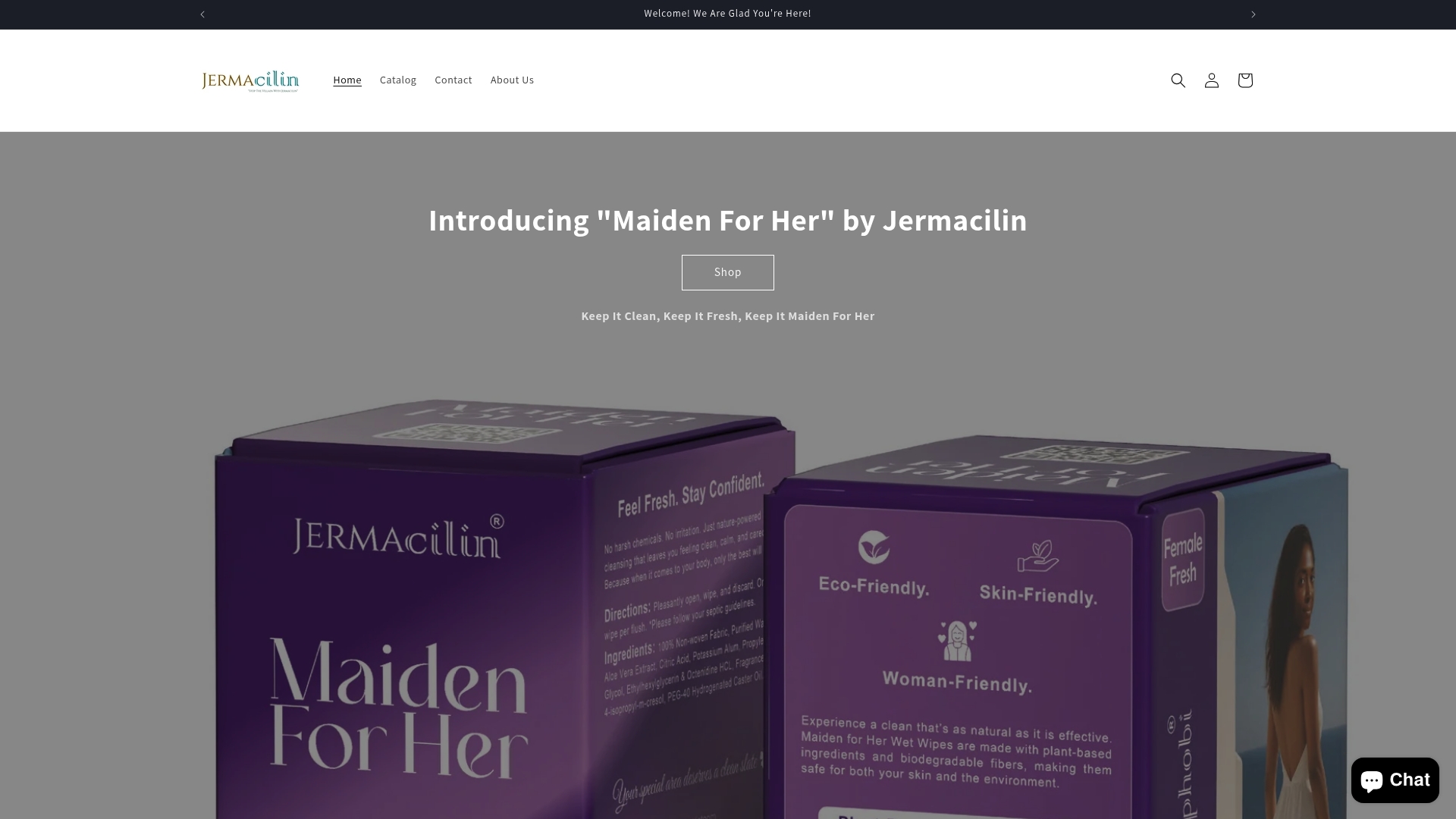
Whether you are just starting out or looking to complete your non-toxic cleaning setup, the top-selling collection includes options for every room in your home. The bundle collection pairs complementary products so you cover daily maintenance and targeted disinfection without guesswork. For on-the-go hygiene, the hand hygiene starter kit keeps safer cleaning within reach wherever you are.
FAQ
What is the difference between chemical-free and green cleaning?
Green cleaning is the recognized industry term for cleaning practices that minimize harmful synthetic chemicals and environmental impact. “Chemical-free” is a consumer marketing phrase with no regulatory definition, making green cleaning the more precise and credible standard.
Can natural cleaners actually disinfect?
Most natural cleaners like vinegar and baking soda do not reliably disinfect. Effective disinfection requires EPA-registered active ingredients such as 3% hydrogen peroxide or 70% ethanol to neutralize pathogens.
Are “natural” scented products safer than conventional ones?
Not automatically. Many natural-scented products still contain undisclosed synthetic fragrances that release VOCs. Fragrance-free or unscented labels are the more reliable choice for minimizing chemical exposure.
What certifications should i look for on cleaning products?
EPA Safer Choice, EWG Verified, and USDA Biobased are the three most credible certifications for safer cleaning products. These labels confirm that ingredients have been reviewed for human health and environmental safety by independent bodies, not just the brand itself.
Is DIY chemical-free cleaning as effective as store-bought products?
DIY cleaners using vinegar, baking soda, and castile soap handle most everyday cleaning tasks well. For disinfection or heavy-duty jobs, store-bought products with EPA-registered ingredients deliver more consistent and verifiable results.
Recommended
- Types of Chemical-Free Body Wash: Your 2026 Guide – Gimmi Vitality Products dba Jermacilin Store
- How to Disinfect Your Kitchen Without Harsh Bleach – Gimmi Vitality Products dba Jermacilin Store
- What Is Double Cleansing? Your Skin-Clearing Guide – Gimmi Vitality Products dba Jermacilin Store
- Why Natural Deodorant Works: the Science Explained – Gimmi Vitality Products dba Jermacilin Store