

Double cleansing is defined as a two-step face-washing method that uses an oil-based cleanser first, then a water-based cleanser second, to remove makeup, sunscreen, sebum, and environmental pollutants more thoroughly than a single wash can achieve. Dermatologists and skincare brands including CeraVe, La Roche-Posay, and Tatcha have endorsed this method as the most reliable way to clear oil-based debris and water-soluble residue in one routine. The double cleansing method works because different impurities require chemically different solvents to dissolve. When done correctly, it reduces clogged pores, improves product absorption, and leaves skin genuinely clean rather than just surface-rinsed.
What is double cleansing and how does it work?
Double cleansing operates on a straightforward chemical principle: like attracts like. Oil-based cleansers bind to oil-based impurities such as foundation, SPF, and excess sebum, lifting them from the skin without stripping moisture. Water-based cleansers then remove the remaining water-soluble residue, including sweat, pollution particles, and any leftover traces from the first step.
The first cleanser does the heavy lifting. It breaks down the waxy, lipid-rich layer that sits on skin after a full day of wearing makeup or sunscreen. Without this step, a water-based cleanser alone cannot fully penetrate that oily film, which means residue stays behind, sitting in pores overnight.
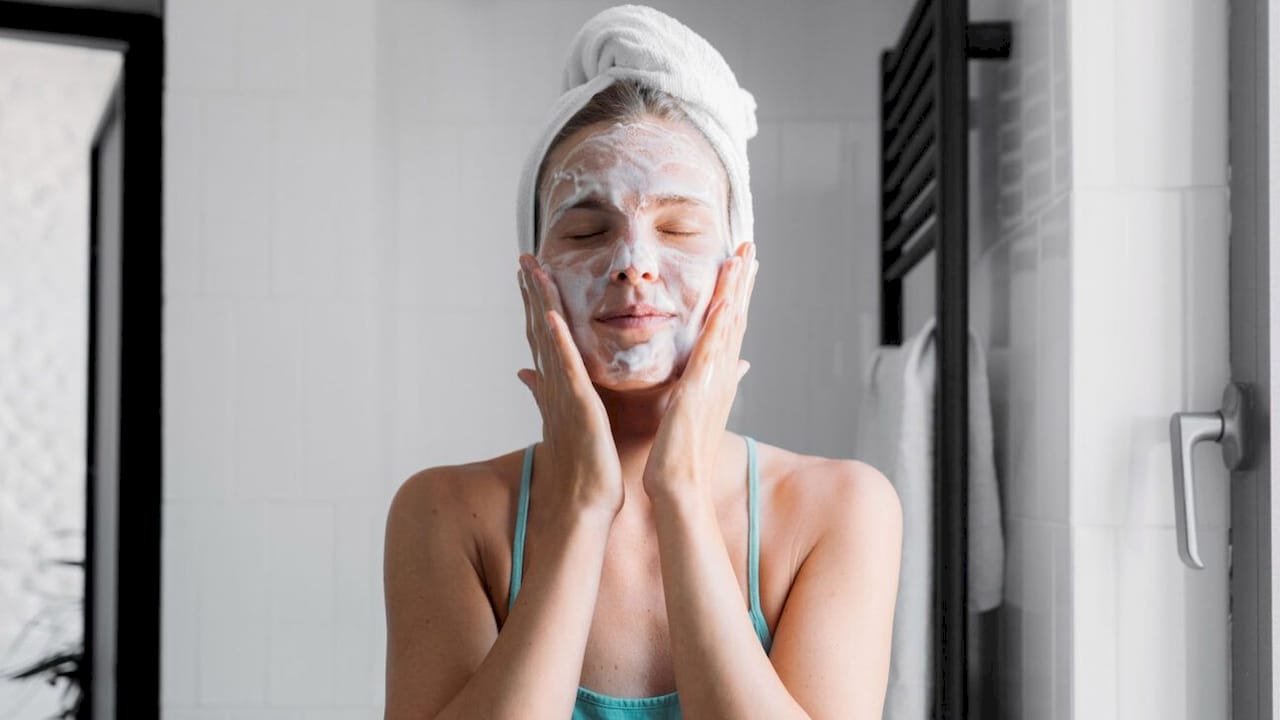
The second cleanser resets the skin’s surface. It targets dirt and bacteria that the oil cleanser cannot address, leaving the skin balanced and ready to absorb serums, moisturizers, and treatments. Dr. Michele Green, a board-certified dermatologist, notes that removing bacteria and dirt through thorough cleansing directly reduces breakouts and improves how well follow-up skincare products perform.
This two-step chemistry is why double-cleansing skincare routines consistently outperform single-step washing for anyone wearing layered products.
The step-by-step process
-
Apply the oil-based cleanser to completely dry skin. Wet skin dilutes the oil cleanser before it can bind to impurities, reducing its effectiveness.
-
Massage in circular motions for 30 to 60 seconds. This duration allows the cleanser to fully emulsify with makeup and sebum. Massaging the oil cleanser for this duration is the step most people skip, and skipping it is the most common reason the method underperforms.
-
Add a small amount of lukewarm water and emulsify. The cleanser will turn milky white. This signals it has bonded with the impurities and is ready to rinse.
-
Rinse thoroughly with lukewarm water. Hot water disrupts the skin barrier. Cold water does not rinse oil residue cleanly.
-
Apply the water-based cleanser to damp skin. Massage gently for 30 to 60 seconds using circular motions.
-
Rinse again with lukewarm water and pat dry. Never rub. Rubbing creates micro-friction that weakens the skin barrier over time.
Pro Tip: If your oil cleanser does not turn milky when you add water, it has not emulsified properly. Add more water and keep massaging before rinsing, or switch to a cleansing balm or micellar oil that emulsifies more reliably.
Benefits of double cleansing and who should use it
The benefits of double cleansing are most pronounced for people who wear foundation, concealer, SPF, or heavy skincare products daily. Thorough impurity removal reduces the bacteria and debris that trigger inflammation and clogged pores, which is why oily and acne-prone skin types see the clearest results from this method.
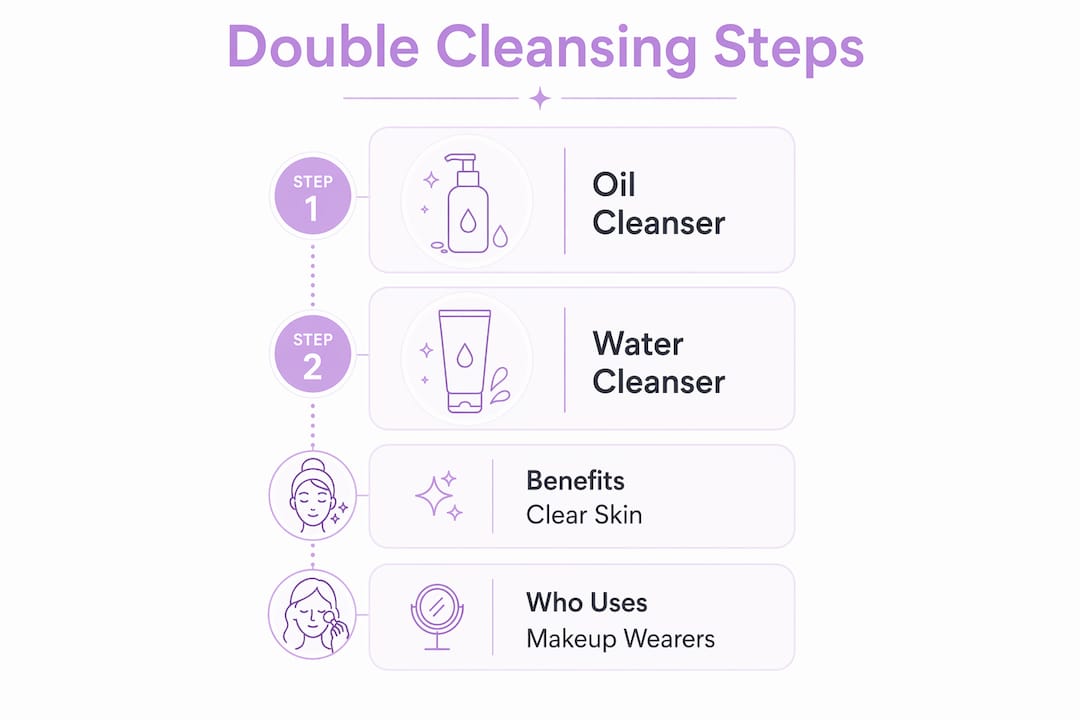
Beyond pore health, a clean skin surface absorbs serums and moisturizers more efficiently. When residue sits on the skin, active ingredients in products like retinol, niacinamide, or hyaluronic acid cannot penetrate as deeply. Double cleansing removes that barrier, so your follow-up products actually reach the skin layers they are designed to target.
Who benefits most from double cleansing:
-
People who wear full-coverage foundation or long-wear makeup daily
-
Anyone who applies SPF 30 or higher every morning
-
Oily and combination skin types with frequent congestion or breakouts
-
People who live in urban environments with high pollution exposure
-
Anyone whose skin feels tacky or dull after a single wash
“Double cleansing is a tool, not a universal rule. For the right skin type and lifestyle, it is one of the most effective habits in a skincare routine. For the wrong skin type, it can do more harm than good.” — Dermatologist guidance via NBC Select
Double cleansing is not recommended for people with rosacea, eczema, chronic dryness, or highly reactive skin. Two rounds of cleansing can strip the skin’s natural lipid barrier, triggering redness, tightness, and increased sensitivity. For these skin types, a single gentle cleanser formulated for sensitive skin is the safer choice.
How to double cleanse properly: products and technique
Choosing the right products is as important as the technique itself. The first cleanser should be oil-based, but the format can vary based on preference and skin type.
Oil-based first cleanser options:
-
Cleansing oils (such as DHC Deep Cleansing Oil or Kiehl’s Midnight Recovery Botanical Cleansing Oil): lightweight, rinse cleanly, ideal for normal to oily skin
-
Cleansing balms (such as Elemis Pro-Collagen Cleansing Balm or Banila Co Clean It Zero): richer texture, excellent for dry skin or heavy makeup removal
-
Micellar water with oil base: gentler option for minimal makeup days, though less effective on heavy SPF
The second cleanser should be water-based and matched to your skin type. Gel cleansers work well for oily skin. Cream or lotion cleansers suit dry or normal skin. Foam cleansers are effective for combination skin but can be drying if used daily on sensitive areas.
Avoid using exfoliating cleansers, products containing benzoyl peroxide, or anything with high concentrations of acids as your second cleanser. These ingredients are too aggressive when the skin has already been cleansed once, and they increase the risk of irritation and barrier damage.
Pro Tip: Pay extra attention to the hairline, the sides of the nose, and the eye area during the first cleanse. Makeup and SPF accumulate in these zones and are the most common source of persistent congestion and milia.
Post-cleansing care is non-negotiable. Applying moisturizer immediately after rinsing the second cleanser, while the skin is still slightly damp, locks in hydration and supports the skin barrier. Patting skin dry rather than rubbing preserves the moisture you just sealed in. Skipping moisturizer after double cleansing is one of the fastest ways to create dryness and sensitivity, even in oily skin types.
For travel or on-the-go routines, plant-based wet wipes can serve as a gentle first-step substitute when a full oil cleanse is not practical, though they should not replace the full method on heavy makeup days.
Double cleansing vs single cleansing: how often should you do it?
Daily double cleansing is unnecessary unless you wear heavy makeup or have oily, acne-prone skin. For lighter makeup users or people with normal skin, a single gentle cleanse is sufficient most days.
| Skin type and lifestyle | Recommended approach |
|---|---|
| Heavy makeup or SPF daily, oily skin | Double cleanse every evening |
| Light makeup or tinted moisturizer, normal skin | Double cleanse on makeup days only |
| Dry or combination skin, minimal products | Single gentle cleanse most evenings |
| Sensitive, rosacea, or eczema-prone skin | Single gentle cleanse; skip double cleansing |
| No makeup, low pollution exposure | Single cleanse or rinse with water in the morning |
Morning cleansing is a separate consideration. Most dermatologists recommend a single gentle cleanse or a water rinse in the morning, since the skin has not been exposed to makeup or SPF overnight. Double cleansing in the morning is rarely necessary and can deplete natural oils before the day begins.
Adjusting frequency based on skin response is the most practical approach. If your skin feels tight, dry, or reactive after double cleansing, reduce frequency before changing products. The method should leave skin feeling clean and comfortable, not stripped.
Clinicians also advise reserving double cleansing for days with high oil-based product buildup, such as days with heavy sunscreen or full makeup, rather than applying it as a rigid daily rule regardless of what you wore that day.
Key takeaways
Double cleansing delivers its full benefits only when the oil-based first step is properly emulsified, the second cleanser matches your skin type, and moisturizer is applied immediately after rinsing.
| Point | Details |
|---|---|
| Two-step chemistry | Oil cleanser dissolves makeup and SPF; water cleanser removes dirt and sweat. |
| Massage duration matters | Spend 30 to 60 seconds on the oil cleanser to allow full emulsification before rinsing. |
| Not for every skin type | Rosacea, eczema, and dry skin types risk barrier damage from daily double cleansing. |
| Moisturize immediately | Apply moisturizer on damp skin right after rinsing to restore hydration and protect the barrier. |
| Frequency is flexible | Daily double cleansing suits heavy makeup and oily skin; others should adjust based on skin response. |
Why cleansing is the step that makes or breaks everything else
I have worked with enough skincare routines to say this with confidence: the most expensive serum in your cabinet is wasted if your cleansing step is wrong. People spend significant money on vitamin C, retinol, and peptide treatments, then apply them over a layer of residual SPF and foundation. The products sit on top of the film rather than penetrating the skin. The results are disappointing, and the products get blamed.
Double cleansing fixed that for me personally. The first time I used a proper cleansing balm followed by a gel cleanser, I noticed the difference in how my skin felt the next morning. Not tight. Not dull. Just clean in a way that a single wash had never achieved.
That said, I have also seen people overcorrect. They double-cleanse morning and night, use harsh second cleansers, skip moisturizer, and then wonder why their skin is red and reactive. The method is not the problem. The execution is. Cleansing should feel like a ritual you look forward to, not a punishment your skin has to recover from.
My honest advice: start with one week of evening double cleansing only. Use a gentle balm or oil cleanser first, a cream or gel cleanser second, and moisturize immediately after. Observe how your skin looks and feels after seven days. That feedback tells you more than any product review.
— Gimmi
Build your double cleansing routine with Maiden For Her Cleansing Wipes

At Jermaphobi4me.com, clean skin and clean environments are the foundation of everything we do. Our top-selling cleansing products are formulated to support effective double cleansing without compromising your skin barrier. Whether you need a gentle first-step cleanser, a water-based follow-up, or a moisturizer to seal in hydration, Jermaphobi4me carries options suited to real skin routines. For those who want a ready-to-go solution, the Jermaphobi bundle collection pairs cleansing and moisturizing products designed to work together. Healthy skin starts with a clean foundation, and we make that step easier.
FAQ
What is double cleansing in simple terms?
Double cleansing is washing your face twice: first with an oil-based cleanser to dissolve makeup and SPF, then with a water-based cleanser to remove dirt and sweat. The two-step process cleans more thoroughly than a single wash.
Is double cleansing necessary for everyone?
No. Double cleansing is most beneficial for people who wear makeup, sunscreen, or have oily and acne-prone skin. Those with dry, sensitive, rosacea, or eczema-prone skin may experience irritation and should stick to a single gentle cleanser.
Can you double cleanse in the morning?
Most dermatologists recommend against double cleansing in the morning. Skin does not accumulate oil-based impurities overnight, so a single gentle cleanse or a water rinse is sufficient and less likely to strip natural oils before the day begins.
What happens if you skip the oil cleanser step?
Skipping the oil cleanser means water-based cleansers must work through an oily film of makeup and SPF, which they cannot fully dissolve. Residue stays in pores overnight, increasing the risk of congestion, dullness, and reduced effectiveness of follow-up skincare products.
How long should you massage the first cleanser?
Massaging the oil cleanser for 30 to 60 seconds on dry skin is the recommended duration. This allows full emulsification with impurities before rinsing and is the step most commonly rushed, leading to incomplete makeup removal.
Recommended
-
Sample 0.5 oz “Try Me Before You Pee” (2 Samples) – Gimmi Vitality Products dba Jermacilin Store
-
Jermaphobi’s Hand Hygiene Starter Kit (Travel Sizes) – Gimmi Vitality Products dba Jermacilin Store
Article Published on June 5, 2026