

Natural hair care is the practice of nurturing curly, coily, or kinky hair in its original, unaltered state using moisture-focused methods and products that minimize damage. The goal is not just to style your hair but to protect its structure and keep it healthy long term. Natural Black hair has a unique elliptical follicle shape that makes it more prone to dryness because scalp oils cannot travel easily down the hair shaft. That structural reality makes moisture-centric care a necessity, not a preference. Understanding what is natural hair care gives you the foundation to build a routine that actually works for your specific hair.
What does a natural hair care routine include?
A natural hair care routine covers four core habits: cleansing, moisturizing, deep conditioning, and nighttime protection. Mastering these four foundational habits consistently delivers better results than any complicated multi-step system. Beginners often skip one of these steps and then wonder why their hair is not thriving.
Cleansing: how often and with what
Experts recommend washing natural hair every 1 to 2 weeks using sulfate-free shampoos or co-washing to preserve natural oils. Sulfates strip the hair of moisture, which is the last thing textured hair needs. Co-washing, which means washing with conditioner only, works well between shampoo sessions to refresh curls without drying them out.

Moisturizing: the LOC and LCO methods
The LOC method (Liquid, Oil, Cream) and the LCO method (Liquid, Cream, Oil) are the two most widely used layering techniques for sealing moisture into natural hair. You apply each layer while the previous one is still damp. The difference between the two is the order of oil and cream, and your hair’s porosity determines which works better for you.
- Leave-in conditioner forms the liquid base and hydrates the hair shaft directly.
- Oils like castor oil, jojoba oil, or coconut oil seal moisture in or help cream penetrate, depending on the method.
- Creams or butters like shea butter provide a final seal and add definition.
Protective styling and nighttime care
Protective styles like braids, twists, and buns tuck away your ends and reduce daily manipulation. Less manipulation means less breakage. However, tight styles with excessive tension can cause traction alopecia, a form of hair loss caused by repeated pulling at the hairline. Keep styles loose enough that your scalp does not feel sore.
Nighttime protection is equally critical. Sleeping on a cotton pillowcase creates friction that breaks off hair. A satin or silk pillowcase, or a satin bonnet, reduces that friction significantly. Your hair retains more moisture overnight when it is not rubbing against absorbent fabric.
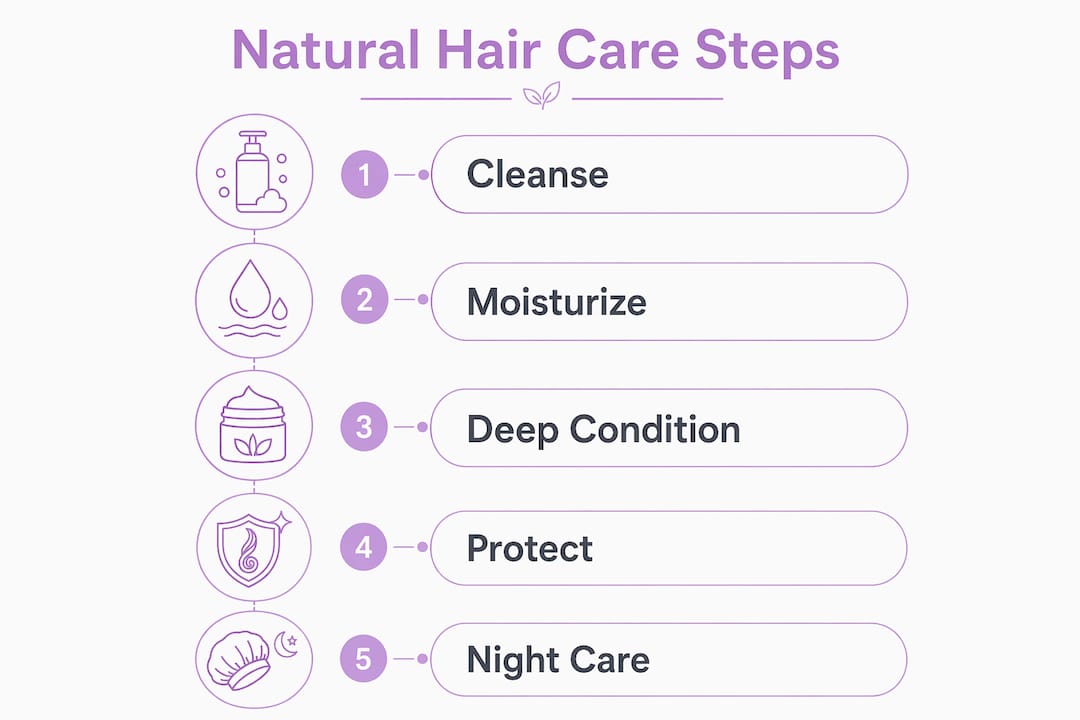
Pro Tip: Deep condition every 1 to 2 weeks with a protein-moisture balanced treatment. Protein strengthens the hair shaft, while moisture keeps it flexible. Too much protein without moisture makes hair brittle, and too much moisture without protein makes it limp.
How to choose natural hair care products effectively
The word “natural” on a product label means nothing legally. The term is unregulated in hair care, and some products marketed as natural contain ingredients that cause residue buildup or clean less effectively than their synthetic counterparts. That gap between marketing and reality is what the beauty industry calls greenwashing.
Reading ingredient lists is the skill that separates informed buyers from impulse buyers. Ingredients are listed in order of concentration, so the first five ingredients tell you the most about what a product actually does. A product with water, aloe vera, and glycerin in the top three positions is genuinely hydrating. A product with “natural fragrance” and a long list of unrecognizable compounds near the top is not.
| Ingredient type | Examples | What it does | Watch out for |
|---|---|---|---|
| Humectants | Glycerin, aloe vera, honey | Draws moisture into the hair shaft | Can cause frizz in low-humidity climates |
| Emollients | Shea butter, avocado oil, mango butter | Softens and smooths the hair cuticle | Heavy butters can cause buildup on fine hair |
| Proteins | Hydrolyzed keratin, silk amino acids | Strengthens and repairs the hair shaft | Overuse leads to brittle, stiff hair |
| Sulfates | Sodium lauryl sulfate | Cleanses the scalp thoroughly | Strips natural oils; avoid for regular use |
| Silicones | Dimethicone, cyclomethicone | Adds shine and reduces frizz | Builds up without sulfate cleansing |
Pro Tip: If a product causes your scalp to itch or your hair to feel coated after a few uses, the formula is not right for your hair, regardless of how “natural” the label claims to be. Check out safe product ingredients to know what to look for and what to avoid.
Plant-based hair care routines enable more predictable hair behavior over time, but they require patience during the transition from conventional products. Your hair may feel different for several weeks as it adjusts. That adjustment period is normal, not a sign that the products are failing.
What does your hair type actually need?
Hair type is not just about curl pattern. Three factors determine what your hair actually needs: density, strand size, and porosity. Curl pattern tells you how your hair looks. These three factors tell you how your hair behaves.
Density refers to how many strands you have per square inch of scalp. High-density hair needs lighter products to avoid weighing it down. Low-density hair benefits from volumizing formulas and lighter oils like argan oil.
Strand size describes the diameter of each individual hair strand. Fine strands are easily weighed down by heavy butters. Coarse strands can handle and often need richer, heavier products to stay moisturized.
Porosity is the most important factor for product selection. It describes how easily your hair absorbs and retains moisture.
- Low porosity hair has tightly closed cuticles. Products sit on top rather than absorbing. Use heat during deep conditioning to open the cuticle, and choose lighter liquid-based products.
- Medium porosity hair absorbs and retains moisture well. This is the easiest porosity to care for and responds well to most natural products.
- High porosity hair absorbs moisture quickly but loses it just as fast. Seal with heavier oils and butters, and use protein treatments regularly to fill gaps in the cuticle.
4C hair, the tightest coil pattern, experiences the most shrinkage and has the highest moisture needs of any curl type. Length retention is the primary challenge because breakage, not slow growth, is what keeps 4C hair from gaining length. Protecting the ends through consistent moisture and gentle handling is the solution.
Common mistakes that slow your natural hair progress
Most natural hair setbacks come from a small set of repeated mistakes. Recognizing them early saves months of frustration.
- Overwashing strips the scalp of natural oils and leaves hair dry and brittle. Washing more than once a week is rarely necessary for natural hair.
- Detangling dry hair causes breakage. Always detangle on wet, conditioner-coated hair using a wide-tooth comb or your fingers, starting from the ends and working upward.
- Skipping nighttime protection is one of the most common causes of breakage. A satin bonnet or pillowcase takes 30 seconds to use and makes a measurable difference.
- Tight protective styles feel secure but create tension at the hairline. Any style that causes soreness or bumps at the roots is too tight.
- Chasing growth instead of retention leads to frustration. Hair grows roughly the same rate for most people. The real variable is how much of that growth you keep.
A consistent, moisture-focused regimen often leads to reduced breakage and increased length retention within 3 to 6 months. That timeline matters because many people quit their routine after a few weeks, before the results become visible.
Pro Tip: Focus on one change at a time when adjusting your routine. Changing your shampoo, conditioner, and styling products simultaneously makes it impossible to know what is working. Swap one product, give it four weeks, then evaluate.
Key takeaways
Natural hair care works best when you prioritize moisture, protect your ends, and choose products based on your hair’s actual needs rather than label claims.
| Point | Details |
|---|---|
| Moisture is the foundation | Natural hair’s elliptical follicle structure makes it prone to dryness; moisture-first routines address this directly. |
| Cleanse gently and not too often | Wash every 1 to 2 weeks with sulfate-free shampoo or co-wash to preserve natural oils. |
| “Natural” labels are unregulated | Read ingredient lists instead of trusting marketing claims; greenwashing is common in hair care. |
| Match products to your porosity | Low, medium, and high porosity hair each need different product weights and application techniques. |
| Retention beats growth | Breakage is the main obstacle to length; protect ends with moisture, gentle handling, and satin at night. |
Why I think most natural hair advice misses the point
By Gimmi
Most natural hair content focuses on products. New launches, ingredient trends, the next oil or butter that promises transformation. After years of working in health and beauty at Jermaphobi4me, I have watched women spend hundreds of dollars on products while skipping the basics that actually move the needle.
Dr. Fey Ahmad puts it plainly: natural hair is resilient and worthy of evidence-based, thoughtful care rather than chemical alteration or concealment. That framing shifted how I think about this entirely. Your hair is not a problem to fix. It is a structure with specific needs, and meeting those needs consistently is the whole job.
The psychological weight of natural hair care is real and often underestimated. Choosing to wear your hair in its natural state carries cultural significance, especially for Black women. That choice deserves a care approach that is grounded in science, not trend cycles. The basics, done consistently, are what actually change your hair over time. I have seen it happen with patience and a simple four-step routine, and I have seen complicated 12-step routines fail because the person could not maintain them.
Start simple. Master cleansing, moisturizing, deep conditioning, and nighttime protection. Add complexity only when you have a specific problem those four steps do not solve. Your hair will tell you what it needs if you pay attention.
— Gimmi
Support your routine with products that actually deliver
Building a natural hair care routine is easier when your products are formulated with clean, plant-based ingredients that do not undermine your efforts.

Jermaphobi4me carries a curated selection of gentle, plant-based formulas designed to support cleansing, moisturizing, and protecting your hair without harsh chemicals. The top-selling collection includes options suited to different hair needs, from lightweight hydrators to richer moisture-sealing products. If you prefer a ready-to-go set, the bundle collection takes the guesswork out of building a starter routine. Every product in the lineup reflects Jermaphobi4me’s commitment to clean environments and healthy people.
FAQ
What is natural hair care in simple terms?
Natural hair care is the practice of maintaining curly, coily, or kinky hair in its unaltered state using gentle, moisture-focused methods and products. The goal is to protect the hair’s structure and support long-term health without chemical processing.
How often should you wash natural hair?
Experts recommend washing natural hair every 1 to 2 weeks using sulfate-free shampoo or co-washing. Washing more frequently strips the scalp of natural oils and leads to dryness and breakage.
What are the best practices for natural hair moisture retention?
The LOC or LCO method, which layers a liquid, oil, and cream product, is the most effective approach for sealing moisture into natural hair. Nighttime protection with a satin bonnet or pillowcase also prevents moisture loss while you sleep.
Can natural hair care products cause buildup?
Yes. The term “natural” is unregulated, and some natural products contain ingredients that leave residue on the hair shaft over time. Clarifying with a sulfate-free shampoo every few weeks removes buildup without stripping the hair.
How long does it take to see results from a natural hair care routine?
A consistent, moisture-focused routine typically produces visible results, including reduced breakage and improved length retention, within 3 to 6 months. Patience during this period is critical because hair health changes gradually, not overnight.
Recommended
- Types of Chemical-Free Body Wash: Your 2026 Guide – Gimmi Vitality Products dba Jermacilin Store
- DIY Natural Face Mask Recipes for Every Skin Type – Gimmi Vitality Products dba Jermacilin Store
- How to Make a Natural Body Scrub at Home – Gimmi Vitality Products dba Jermacilin Store
- What Is Chemical-Free Cleaning? A Practical Guide – Gimmi Vitality Products dba Jermacilin Store