

Chemical-free body wash is defined as a cleanser formulated without synthetic irritants like sodium lauryl sulfate (SLS), parabens, phthalates, and undisclosed synthetic fragrances, relying instead on plant-based ingredients to cleanse and nourish skin. The term “chemical-free” is technically a marketing misnomer since every substance, including water, is a chemical. What matters is avoiding the specific synthetic compounds linked to skin irritation and hormonal disruption. The main types of chemical-free body wash are solid soap bars, natural exfoliating scrubs, and sulfate-free liquid washes. Each format suits different skin types, lifestyles, and environmental priorities. This guide breaks down all three so you can make a genuinely informed choice.
1. Solid plant-based soap bars
Solid soap bars are the most straightforward type of chemical-free body wash available. They are made from saponified plant oils, most commonly olive oil, coconut oil, shea butter, and castor oil, with no water content required. That absence of water is significant: solid bars avoid preservatives entirely because bacteria and mold need moisture to grow. Liquid formulas, by contrast, almost always require some form of preservative system.
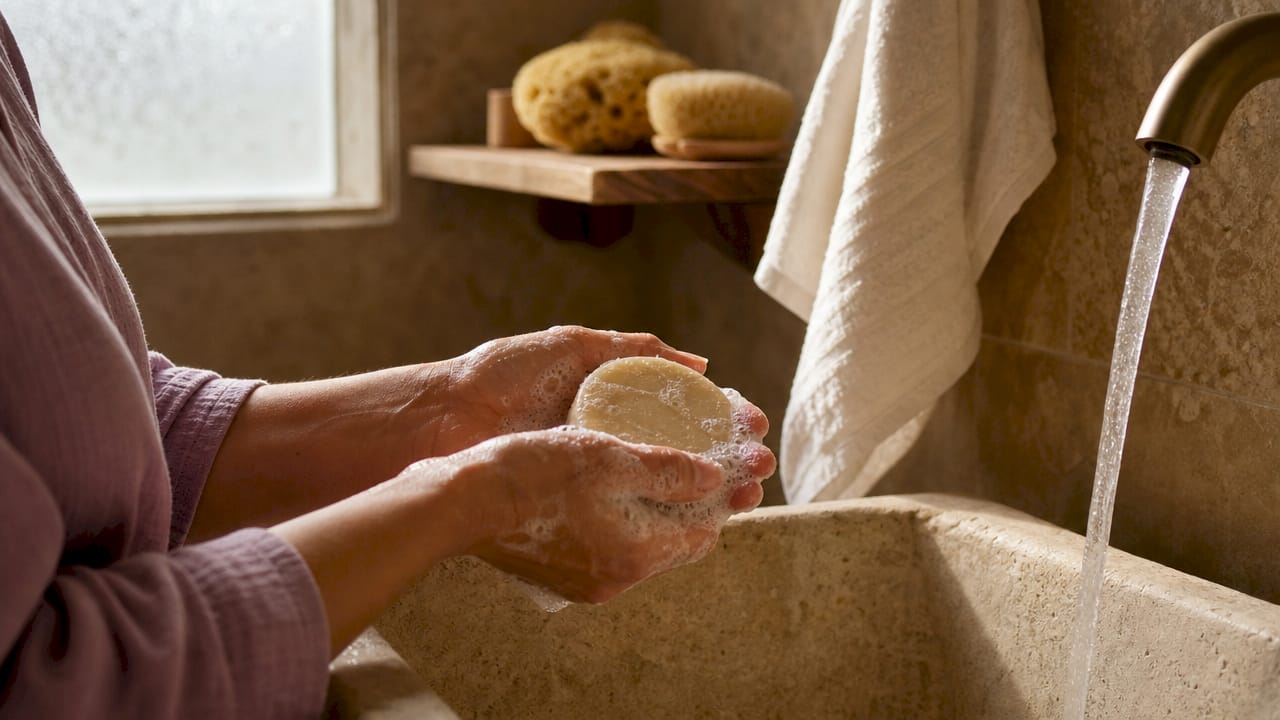
The environmental case for solid bars is hard to argue with. One bar replaces 2 to 3 plastic bottles of liquid shower gel and lasts four to eight weeks with daily use. That math adds up fast for anyone serious about reducing bathroom plastic waste. Brands like Dr. Bronner’s and Ethique have built entire product lines around this format, and both are widely available in the United States.
From a skin perspective, the natural oils in a well-formulated bar leave a thin moisturizing layer on the skin after rinsing. This is the opposite of what SLS and SLES surfactants do, which strip natural oils and leave skin feeling tight or dry. If you have eczema, rosacea, or generally reactive skin, a fragrance-free solid bar is often the gentlest starting point.
Key benefits at a glance:
- No water content means no preservatives needed
- Packaging is typically paper or cardboard, fully recyclable
- Natural oils provide passive moisturization during cleansing
- Free from SLS, synthetic fragrance, and parabens by default in quality formulations
- Long shelf life and travel-friendly format
Pro Tip: Store your bar on a draining soap dish between uses. Sitting in pooled water is the fastest way to shorten a bar’s lifespan and introduce bacterial growth.
2. Natural exfoliating soap scrubs
Natural exfoliating scrubs combine the cleansing base of a soap bar or gel with biodegradable exfoliating particles. Instead of microplastic beads, which are now banned in rinse-off products in the United States, quality scrubs use ground seeds, dried flowers, and salt as exfoliants. Common ingredients include ground apricot kernel, sea salt, pumice, oat flour, and dried lavender petals.
The practical advantage is that a scrub merges two steps into one. You cleanse and exfoliate simultaneously, which shortens your shower routine without sacrificing skin care. For people dealing with keratosis pilaris, rough elbows, or dull winter skin, a twice-weekly scrub can produce visible results within two to three weeks.
Sensitive skin users are not automatically excluded from this category. Chia seed particles are soft enough for mild exfoliation without causing microtears or inflammation, making them suitable even for reactive skin types. The key is particle size and hardness. Walnut shell powder, by contrast, has been criticized for its irregular sharp edges and is better avoided on the face or sensitive areas.
What to look for in a natural scrub:
- Exfoliant particles from plant or mineral sources, not synthetic beads
- A soap or surfactant base free from SLS and synthetic fragrance
- Moisturizing oils like jojoba or sweet almond to offset the drying effect of exfoliation
- No artificial colorants or undisclosed “fragrance” on the label
Pro Tip: Limit scrub use to two or three times per week. Daily exfoliation with any particle type, even gentle ones, can compromise your skin barrier over time.
3. Sulfate-free liquid body washes
Liquid body washes remain the most popular format in the United States, and the chemical-free versions of this category rely on plant-derived surfactants instead of SLS or SLES. The most common alternatives are coco-glucoside and decyl glucoside, both derived from coconut and corn. These surfactants clean effectively without stripping the skin’s natural lipid barrier.
The honest trade-off with liquid washes is packaging and preservation. Because liquid formulas contain water, they require some form of preservative to prevent microbial contamination. Truly non-toxic options use mild preservatives like sodium benzoate or potassium sorbate rather than parabens or formaldehyde releasers. Refillable and concentrated liquid formulas reduce the packaging problem significantly, and several brands now offer aluminum or glass bottles with refill pouches.
Liquid washes suit people who prefer a lathering, pump-dispenser experience and those who share a bathroom with children or elderly family members who may find bars slippery. They also work well for anyone applying body wash with a loofah or silicone scrubber, where a liquid is easier to distribute.
What to check on the label:
- Surfactants: look for coco-glucoside, decyl glucoside, or sodium cocoyl isethionate
- Preservatives: sodium benzoate and potassium sorbate are acceptable; avoid methylparaben, propylparaben, and DMDM hydantoin
- Fragrance: “fragrance” or “parfum” on a label can hide dozens of undisclosed synthetic compounds; choose products that list individual essential oils instead
- Packaging: prioritize glass, aluminum, or brands with verified refill programs
4. How the three types compare
Choosing between soap bars, scrubs, and liquid washes comes down to your skin type, environmental priorities, and daily routine. The table below puts the three formats side by side on the factors that matter most.
| Feature | Solid soap bar | Natural scrub | Sulfate-free liquid |
|---|---|---|---|
| Preservatives required | No | No (if solid) | Yes (mild options exist) |
| Packaging waste | Minimal (paper) | Minimal to moderate | Moderate (plastic or glass) |
| Longevity | 4 to 8 weeks | 3 to 6 weeks | 4 to 6 weeks |
| Best for skin type | Dry, sensitive, normal | Normal, oily, rough | All types, especially oily |
| Exfoliation | None | Yes | None (unless added) |
| Eco-friendliness | Highest | High | Moderate |
| Allergen risk | Low (no preservatives) | Low to moderate | Moderate |
“Labels like ‘sensitive’ or ‘hypoallergenic’ are not regulated. Ingredient transparency is a better guide to true chemical-free body wash than any front-of-pack claim.” — A Fine Choice, 2026
For sensitive or reactive skin, solid bars win on every metric that matters: no preservatives, no synthetic fragrance risk, and the gentlest surfactant profile. For people who want exfoliation built in, a natural scrub with soft particles is the right call. Liquid washes offer the most familiar experience and the widest product range, but they demand more careful label reading to avoid hidden irritants.
5. Practical tips for choosing the right option
Switching from conventional to natural body wash is not complicated, but a few habits will protect your skin and your wallet during the transition.
- Read the full ingredient list, not the front label. Words like “natural,” “gentle,” and “hypoallergenic” carry no legal definition in the United States. The ingredient list is the only honest part of the packaging.
- Avoid “fragrance” or “parfum” as listed ingredients. These terms can legally conceal hundreds of synthetic compounds, including known allergens and hormone disruptors.
- Patch test any new product. Apply a small amount to the inside of your wrist or elbow and wait 24 hours before full-body use. This is especially important if you have a history of contact dermatitis.
- Check EWG Skin Deep ratings. The Environmental Working Group’s Skin Deep database rates personal care products by ingredient safety. A score of 1 to 2 indicates low hazard.
- Start with a solid bar if you are unsure. Bars have the fewest ingredients, the lowest allergen risk, and the smallest environmental footprint. They are the lowest-stakes entry point into non-toxic body cleansers.
- Give your skin two to four weeks to adjust. Skin accustomed to SLS-based products may feel different initially when switching to gentler surfactants. That adjustment period is normal and temporary.
Pro Tip: If you experience breakouts or dryness in the first two weeks after switching, do not assume the new product is the problem. Your skin is recalibrating its oil production after years of harsh surfactants stripping it.
Key takeaways
The most effective approach to chemical-free body wash is to choose a format based on your skin type and then verify every ingredient, because front-of-pack claims like “natural” and “hypoallergenic” carry no regulatory weight in the United States.
| Point | Details |
|---|---|
| “Chemical-free” means avoiding irritants | Focus on eliminating SLS, parabens, synthetic fragrance, and formaldehyde releasers. |
| Solid bars are the cleanest format | No preservatives, minimal packaging, and four to eight weeks of daily use per bar. |
| Scrubs add exfoliation without microplastics | Choose biodegradable particles like chia seeds or sea salt over walnut shell powder. |
| Liquid washes need careful label reading | Plant-based surfactants and mild preservatives are acceptable; parabens and DMDM hydantoin are not. |
| EWG Skin Deep is your verification tool | Use it to cross-check any product claiming to be non-toxic or chemical-free. |
Why I think most people overcomplicate this switch
I have spent years reviewing personal care products and talking to people who are genuinely trying to clean up their routines. The single most common mistake I see is paralysis by label anxiety. People spend 40 minutes reading ingredient lists in a store aisle and walk out with nothing because they cannot confirm every compound is “safe.”
Here is what I have found actually works: start with a solid bar from a brand with a short, readable ingredient list. Dr. Bronner’s Pure-Castile Bar Soap, for example, lists eight ingredients. You can verify all eight in under five minutes. That is a better use of your time than decoding a 30-ingredient liquid wash.
The environmental win from switching to solid bars is real and immediate. You stop buying plastic bottles. That matters whether or not you care about skin chemistry. And once your skin adjusts to a gentler surfactant, most people tell me they would never go back. The tight, squeaky-clean feeling that SLS produces is not clean skin. It is stripped skin.
My honest recommendation: pick one format, commit to it for a month, and pay attention to how your skin responds. The data you collect from your own body is more useful than any product review.
— Gimmi
Find your chemical-free match at Jermaphobi4me
Jermaphobi4me curates personal care products built around the same principles covered in this article: plant-based ingredients, transparent labeling, and zero synthetic irritants. Whether you are ready to try a solid bar, a gentle scrub, or a sulfate-free liquid, the top-selling options at Jermaphobi4me are selected for both skin safety and environmental responsibility. For those who want to try multiple formats at once, the bundle collection offers a convenient way to test what works best for your skin without committing to a single product. Every item reflects Jermaphobi4me’s core mission: clean environments and healthy people.
FAQ
What does “chemical-free” actually mean in body wash?
“Chemical-free” is not a literal claim since all matter is made of chemicals. In body wash marketing, it signals the absence of synthetic irritants like SLS, parabens, phthalates, and synthetic fragrance, as experts confirm.
Are solid soap bars better than liquid washes for sensitive skin?
Solid bars are generally the better choice for sensitive skin because they contain no water and therefore require no preservatives, which are a common trigger for skin reactions. Parabens and formaldehyde releasers found in some liquid formulas are linked to irritation and hormone disruption.
How do I know if a natural body wash is truly free of harmful ingredients?
Read the full ingredient list and cross-reference it with the EWG Skin Deep database. Front-of-pack claims like “hypoallergenic” are unregulated labels and carry no legal guarantee of ingredient safety.
Can I use a natural exfoliating scrub every day?
No. Daily use of any exfoliating product, even one with soft natural particles, can weaken the skin barrier over time. Two to three times per week is the standard recommendation for most skin types.
What plant-based surfactants are safe in liquid body washes?
Coco-glucoside and decyl glucoside are the two most widely used plant-derived surfactants in non-toxic liquid body washes. Both clean effectively without stripping natural oils the way SLS and SLES do.
Recommended
- Maiden For Her (Plant-Based, pH Balanced, Eco-Friendly) Wet Wipes – Gimmi Vitality Products dba Jermacilin Store
- Gimmi Vitality Products dba Jermacilin Store
- Jermaphobi’s Hand Hygiene Starter Kit (Travel Sizes) – Gimmi Vitality Products dba Jermacilin Store
- Sample 0.5 oz “Try Me Before You Pee” (2 Samples) – Gimmi Vitality Products dba Jermacilin Store