

Natural grooming is defined as a personal care practice that uses plant- and mineral-derived ingredients while intentionally avoiding synthetic chemicals, artificial fragrances, dyes, and harsh surfactants like sulfates. What is natural grooming explained in practical terms? It means choosing products built around ingredients like aloe vera, shea butter, coconut oil, and oatmeal instead of lab-synthesized compounds. Consumer interest in this approach has grown steadily as regulatory bodies and health-conscious shoppers push back against ingredient lists loaded with unrecognizable chemicals. Jermaphobi4me exists at the center of this shift, promoting clean environments and healthy people through plant-based personal care.
What is natural grooming and why does it matter?
Natural grooming, also called clean beauty or organic grooming in industry circles, is a personal care philosophy built on one core rule: if the ingredient comes from a plant, mineral, or other natural source, it belongs. If it was synthesized in a lab to cut costs or extend shelf life, it does not. The natural grooming definition centers on plant- or mineral-derived ingredients that cleanse and nourish without stripping the skin’s natural moisture barrier.
The importance of natural grooming goes beyond personal preference. Conventional products often rely on sulfates and formaldehyde-releasing preservatives that are linked to skin irritation. Replacing those agents with plant-based surfactants and moisturizers reduces the chemical load your skin absorbs daily. Over time, that reduction adds up to a measurable difference in skin health and comfort.

Regulatory momentum is also shifting. More ingredient transparency requirements are entering personal care legislation across the United States, pushing brands to disclose what is actually in their formulas. That shift rewards brands that were already building clean products and puts pressure on those that were not.
What are the key natural ingredients and their benefits?
The most effective natural grooming products share a short list of well-documented ingredients. Each one earns its place by delivering a specific, proven function.
| Ingredient | Primary Function | Key Benefit |
|---|---|---|
| Aloe vera | Moisturizing and soothing | Reduces inflammation and calms irritated skin |
| Shea butter | Deep conditioning | Strengthens the skin barrier and locks in moisture |
| Coconut oil | Cleansing and antimicrobial | Removes buildup while fighting bacteria naturally |
| Oatmeal | Anti-inflammatory | Relieves itching and supports sensitive skin |
| Essential oils | Fragrance and therapeutic | Offer antimicrobial and calming effects when properly diluted |
Aloe vera, oatmeal, coconut oil, and shea butter have documented moisturizing and anti-inflammatory properties. These ingredients reduce the allergic reactions that synthetic formulations commonly trigger and improve both skin texture and coat health over time.
Essential oils deserve a separate mention because they function differently from the other ingredients. Lavender, tea tree, and chamomile oils offer real therapeutic effects, but they require careful dilution to avoid irritation. A well-formulated product uses them as active agents, not just as fragrance.
Pro Tip: Read the full ingredient list, not just the front label. A product marketed as “natural” can still contain synthetic preservatives buried at the bottom of the list. Look for recognizable botanical names like Butyrospermum parkii (shea butter) or Cocos nucifera (coconut oil) to confirm what you are actually buying.
For people building a natural hair care routine, these ingredients form the backbone of every effective product category, from shampoos to leave-in conditioners.
What distinguishes natural grooming products from conventional ones?
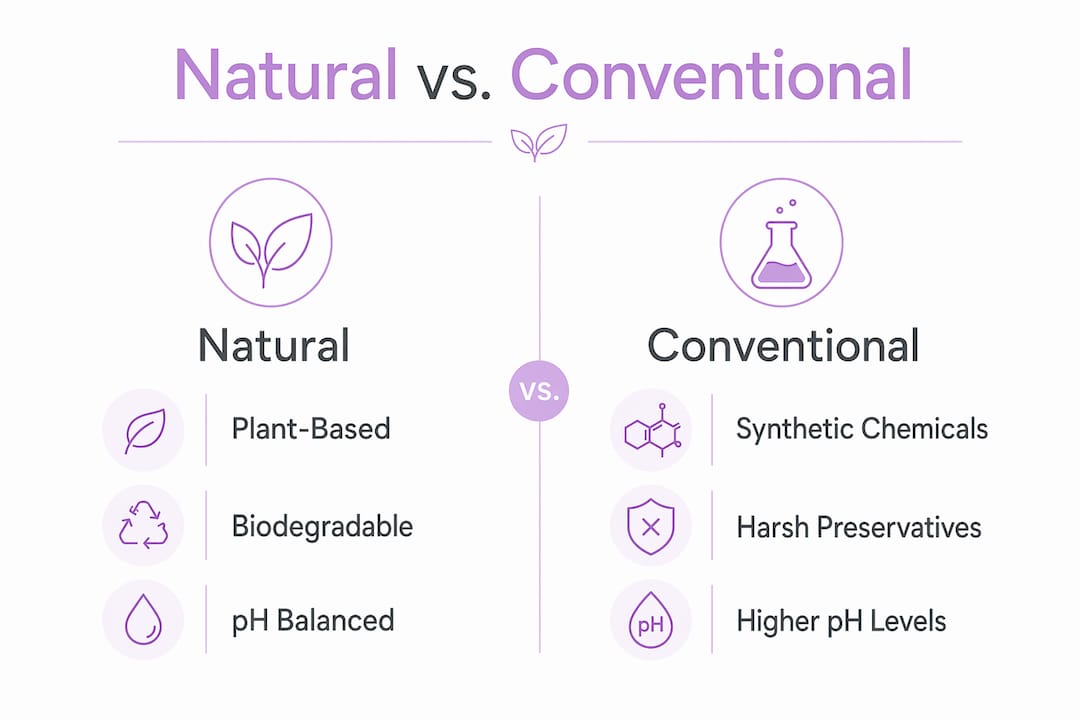
The clearest difference between natural and conventional grooming products is the surfactant. Conventional shampoos and body washes rely on sodium lauryl sulfate (SLS) or sodium laureth sulfate (SLES) to create lather. These agents clean effectively but strip the skin’s natural oils along with dirt. Natural formulations use plant-based surfactants derived from coconut or corn that clean without that stripping effect.
Preservatives are the second major dividing line. Conventional products often use parabens or formaldehyde-releasing agents like DMDM hydantoin to extend shelf life. Natural formulations use alternatives like vitamin E (tocopherol), rosemary extract, or citric acid. These options are less aggressive and less likely to disrupt the skin’s microbiome.
pH balance is a factor that most people overlook entirely. Human skin sits at a pH of roughly 4.5–5.5. Products formulated outside that range can weaken the skin barrier and invite irritation. The same principle applies even more sharply when considering products used on pets, where pH differences between species mean a human formula can damage an animal’s skin microbiome. The takeaway for personal care is the same: pH-matched formulas protect the skin barrier rather than compromise it.
Environmental impact is the third distinction. Natural grooming products support sustainability through biodegradable ingredients and ethical sourcing. Conventional products often contain microplastics or non-biodegradable compounds that enter waterways after rinsing. Choosing natural formulas reduces that downstream impact.
Pro Tip: Check for third-party certifications like USDA Organic, EWG Verified, or Leaping Bunny when evaluating a product’s natural claims. These labels require independent testing, not just brand promises.
How can you incorporate natural grooming into your daily routine?
Building a natural grooming routine does not require replacing everything at once. A phased approach works better and lets your skin adjust without disruption.
- Audit your current products. List every product you use daily, from face wash to body lotion. Check each ingredient list using a resource like the Environmental Working Group’s Skin Deep database to identify the highest-risk synthetic ingredients.
- Replace one product at a time. Start with the product that stays on your skin longest, such as a moisturizer or body lotion. Rinse-off products like shampoo are lower priority because contact time is shorter.
- Match products to your skin type. Oily skin benefits from lightweight plant-based gels with ingredients like witch hazel or green tea extract. Dry skin needs richer formulas built around shea butter or jojoba oil. A clean body lotion checklist can help you read labels faster.
- Test new products before full use. Apply a small amount to your inner forearm for 24 hours before using a new product on your face or body. Natural ingredients can still cause reactions in sensitive individuals.
- Build consistency into your routine. Natural products often work more gradually than synthetic ones. Give any new product at least four weeks before judging its effectiveness.
Regular maintenance matters as much as product choice. Consistent brushing and gentle cleansing prevent buildup that requires harsher treatments later. Master Groomer Lindsey Dicken notes that grooming should be gentle and enjoyable to build long-term success. That principle applies directly to personal care routines: a routine you enjoy is a routine you keep.
For people who want to go further, making your own products is a practical option. A natural body scrub made at home with sugar, coconut oil, and essential oils gives you complete ingredient control at a fraction of the cost of commercial alternatives.
What safety considerations and common misconceptions exist?
The biggest misconception in natural grooming is that “natural” automatically means “safe.” It does not. Poison ivy is natural. So is arsenic. The relevant question is not whether an ingredient comes from nature but whether it is formulated correctly for its intended use.
Essential oils are the most common source of problems in natural grooming products. Essential oils require careful formulation to avoid skin irritation or toxicity. Tea tree oil, for example, is antimicrobial and effective at low concentrations but can cause chemical burns when applied undiluted. Consumers should verify that any essential oil in a product is listed at a safe concentration, typically under 1–3% for leave-on products.
Other common misconceptions worth addressing directly:
- “Natural products are always hypoallergenic.” False. Botanical allergens like lanolin, beeswax, and certain plant proteins trigger reactions in many people.
- “Natural products do not need preservatives.” False. Water-based natural products without preservatives grow mold and bacteria within days of opening.
- “More natural ingredients means better results.” False. Formulation matters more than ingredient count. A single well-chosen ingredient at the right concentration outperforms a crowded formula with poor pH balance.
- “Natural products work immediately.” False. Most natural formulations work gradually by supporting the skin’s own repair processes rather than forcing a fast cosmetic result.
Pro Tip: If you have known sensitivities, look for products that have been tested for sensitive skin and carry third-party verification. Brands that publish full ingredient transparency and testing results are the ones worth trusting. Jermaphobi4me’s approach to clean personal care reflects this standard.
How does natural grooming support a sustainable lifestyle?
Natural grooming connects personal health to environmental health in a direct and measurable way. Every product you rinse off your body eventually enters the water system. Synthetic surfactants, microplastics, and synthetic fragrances accumulate in waterways and affect aquatic ecosystems. Biodegradable plant-based formulas break down without leaving that residue.
The sustainability benefits of switching to natural grooming practices include:
- Reduced chemical exposure. Fewer synthetic compounds absorbed through the skin daily means less cumulative toxin load over a lifetime.
- Lower environmental impact. Biodegradable ingredients and recyclable packaging reduce the footprint of your personal care routine.
- Support for ethical sourcing. Cruelty-free and sustainably harvested ingredients support farming and production practices that do not deplete ecosystems.
- Alignment with broader wellness goals. People who prioritize clean eating and clean living find that natural grooming completes the picture rather than contradicting it.
The connection between natural grooming and overall wellness is not just philosophical. Reducing daily exposure to harsh chemicals and pollutants supports the skin’s natural barrier function, which in turn affects how the body manages inflammation and hydration. Gentle, plant-based care enhances that function rather than working against it.
Key Takeaways
Natural grooming is the practice of using plant- and mineral-based ingredients to care for skin and hair while avoiding synthetic chemicals, and it delivers real health and environmental benefits when products are properly formulated and consistently used.
| Point | Details |
|---|---|
| Core definition | Natural grooming uses plant- and mineral-derived ingredients and avoids sulfates, synthetic fragrances, and harsh preservatives. |
| Key ingredients | Aloe vera, shea butter, coconut oil, and oatmeal deliver moisturizing, anti-inflammatory, and antimicrobial benefits. |
| Natural does not mean risk-free | Essential oils and botanical allergens can cause irritation; always patch test and check formulation concentrations. |
| Build routines gradually | Replace one product at a time and allow four weeks to evaluate results before switching again. |
| Sustainability matters | Biodegradable, ethically sourced natural products reduce chemical runoff and support eco-conscious living. |
Why I think most people start natural grooming the wrong way
Most people approach natural grooming as a shopping exercise. They swap their conventional shampoo for one with a green label and expect everything to change. When their hair feels different for the first few weeks, they assume natural products do not work and go back to what they know. That cycle is the most common reason people give up before they see real results.
What I have found actually works is starting with the mindset before touching the products. Natural grooming is not a product category. It is a practice built on ingredient awareness. Once you understand what aloe vera does versus what a sulfate does, you stop reading labels as marketing and start reading them as information. That shift changes how you shop, how you evaluate results, and how patient you are with the process.
The other thing most articles will not tell you is that your skin goes through an adjustment period when you stop using harsh surfactants. It has been compensating for years by overproducing oil. When you remove the stripping agent, it takes two to four weeks for oil production to normalize. That adjustment period feels like the product is not working. It is actually the product working exactly as it should.
My honest advice: pick two or three well-formulated products from a brand that publishes its full ingredient list and testing standards. Use them consistently for a month. Do not judge results by week one. Natural grooming rewards patience in a way that synthetic products never do, because it is supporting your skin’s own biology rather than overriding it.
— Gimmi
Jermaphobi4me’s natural personal care line
Jermaphobi4me builds personal care products around the same principles this article covers: plant-based ingredients, pH-balanced formulas, and full ingredient transparency. Every product in the line is designed for people who want clean, effective care without synthetic shortcuts.

The top-selling natural products from Jermaphobi4me include formulations built around aloe vera, coconut oil, and botanical conditioners, tested for sensitive skin and packaged with sustainability in mind. For people who want a complete starting point, the Jermaphobi’s Bundle Collection brings together curated eco-friendly grooming and hygiene products in one convenient set. Clean personal care does not have to be complicated. Jermaphobi4me makes it straightforward.
FAQ
What is natural grooming in simple terms?
Natural grooming is personal care that uses plant- and mineral-based ingredients while avoiding synthetic chemicals, sulfates, and artificial fragrances. The goal is to cleanse and nourish the skin without disrupting its natural balance.
Are natural grooming products safe for sensitive skin?
Most are, but not all. Natural does not mean hypoallergenic. Always patch test a new product and look for formulas that have been tested for sensitive skin and carry third-party verification.
How long does it take to see results from natural grooming products?
Most natural formulations show noticeable results after four weeks of consistent use. The skin needs time to adjust after transitioning away from synthetic products, particularly harsh surfactants.
What ingredients should I look for in natural grooming products?
Look for aloe vera, shea butter, coconut oil, and oatmeal as core moisturizing and soothing agents. These ingredients have documented benefits for skin health and are well-tolerated by most skin types.
Is organic grooming the same as natural grooming?
Organic grooming is a subset of natural grooming. Organic products use ingredients grown without synthetic pesticides or fertilizers, while natural grooming is a broader term that includes any plant- or mineral-derived ingredient regardless of how it was farmed.
Recommended
- Natural Hair Care: Your Complete Guide for Healthy Hair – Gimmi Vitality Products dba Jermacilin Store
- Types of Chemical-Free Body Wash: Your 2026 Guide – Gimmi Vitality Products dba Jermacilin Store
- Eco-Friendly Men’s Razors: Best Examples for 2026 – Gimmi Vitality Products dba Jermacilin Store
- What Is Chemical-Free Cleaning? A Practical Guide – Gimmi Vitality Products dba Jermacilin Store