

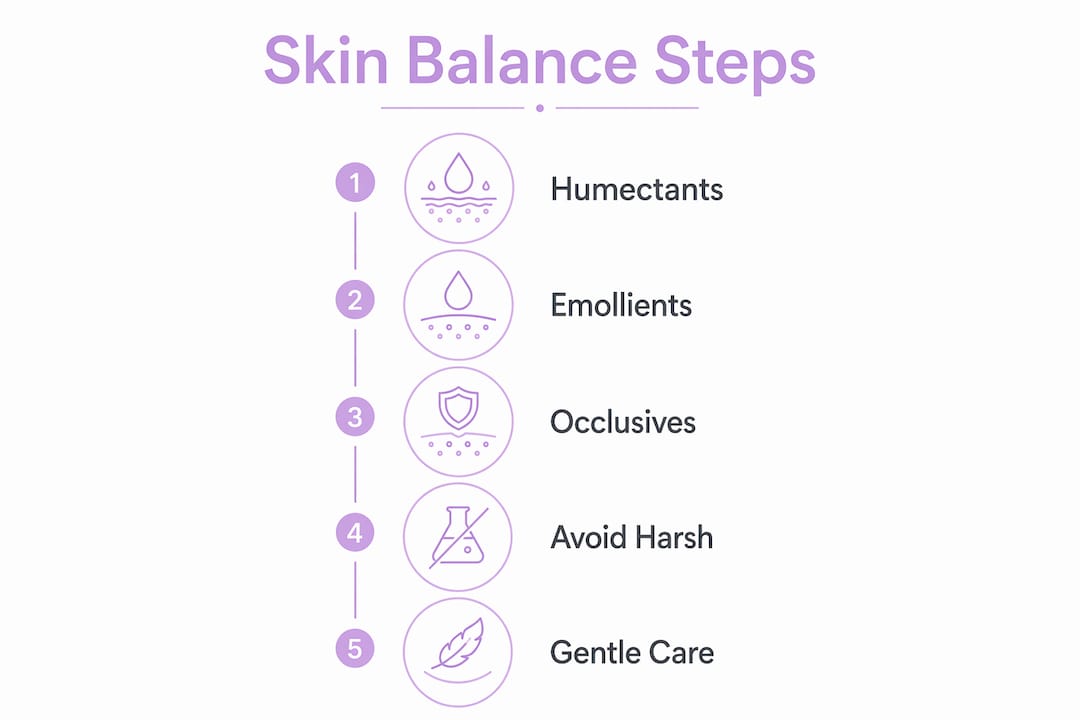
Balancing skin without harsh chemicals means using natural humectants, emollients, and occlusives to maintain your skin’s moisture barrier without synthetic irritants. The standard industry term for this approach is “skin barrier support,” and it covers everything from hydration to pH stability. Consumer Reports confirms that these three ingredient categories work as a team: humectants attract water, emollients smooth texture, and occlusives seal moisture in. Skipping any one of them leaves your skin either dry, rough, or prone to water loss. Jermaphobi4me builds every product around this principle, using plant-based ingredients that support your skin without the risks that come with synthetic formulas.
How to balance skin without harsh chemicals: the ingredient foundation
The most effective natural skincare starts with understanding what each ingredient category actually does. Without that knowledge, you end up layering products randomly and wondering why your skin still feels off.
Humectants: drawing moisture in
Humectants attract water molecules from the air and from deeper skin layers, pulling hydration to the surface. Glycerin is the most studied and widely available humectant. Hyaluronic acid holds up to 1,000 times its weight in water, making it one of the most efficient options for skin hydration without chemicals. Aloe vera gel works as a gentler humectant with added anti-inflammatory properties, which makes it especially useful for reactive or sensitive skin.
Pro Tip: Apply your humectant to slightly damp skin right after cleansing. Damp skin gives the humectant more water molecules to work with, so you get better absorption.
Emollients: smoothing and softening
Emollients fill the gaps between skin cells, creating a smoother surface and reducing the rough, flaky texture that comes with dehydration. Plant oils like jojoba, rosehip, and marula are excellent emollients because their fatty acid profiles closely match your skin’s natural sebum. Squalane, derived from olives or sugarcane, is lightweight and absorbs quickly without clogging pores. These ingredients support natural skin balancing by restoring the lipid layer that harsh cleansers strip away.
Natural occlusives: locking moisture in
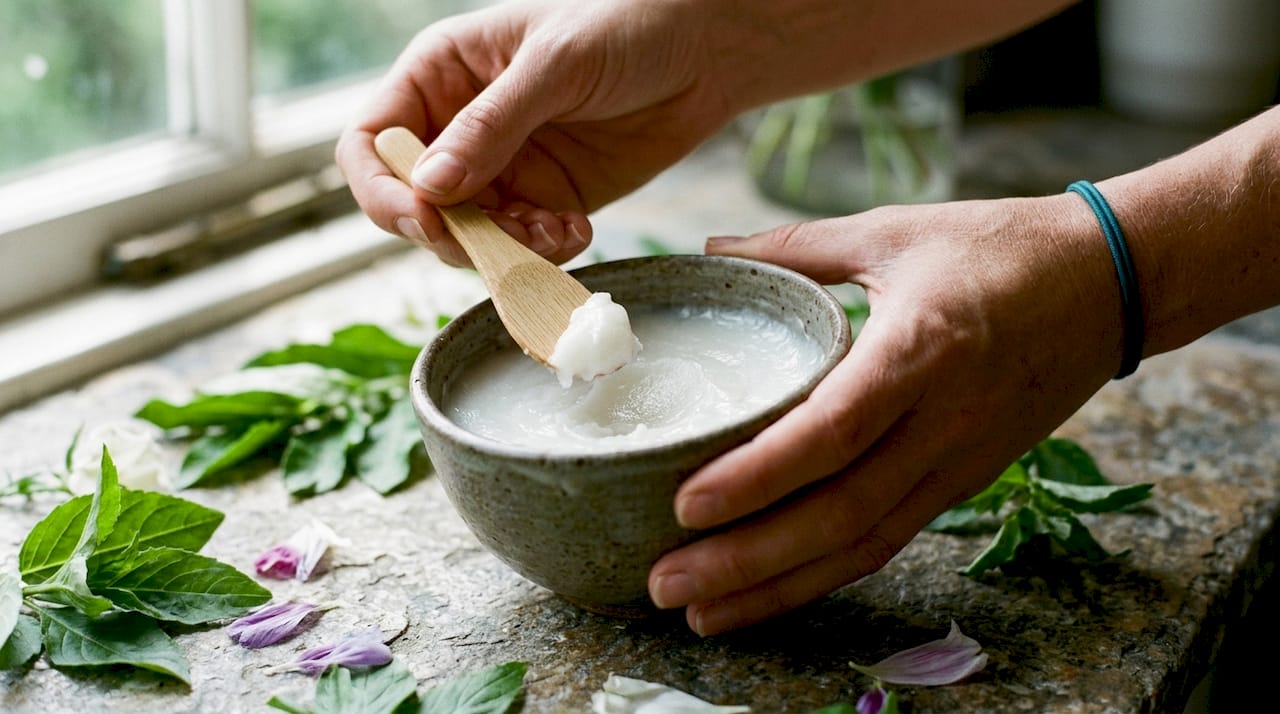
Natural occlusives like beeswax, shea butter, and carnauba wax create a physical barrier on the skin’s surface that slows water evaporation. They are sustainable alternatives to petroleum derivatives like petrolatum and mineral oil, which carry contamination risks and persist in the environment. Shea butter also delivers fatty acids that double as emollients, giving it a dual role in any routine. Apply occlusives as the final step in your routine to seal everything underneath.
How do you identify and avoid harsh chemicals in skincare?
Reading a skincare label feels straightforward until you realize that many harmful ingredients hide behind unfamiliar names. Labels can obscure petroleum-based ingredients under dozens of synonyms, and “fragrance” or “parfum” can legally represent hundreds of undisclosed chemicals.
The most common offenders to watch for:
- Phenoxyethanol — a preservative that may contain residual contaminants like ethylene oxide and 1,4-dioxane, both linked to cancer risk.
- Ethoxylated ingredients — any ingredient ending in “-eth” (such as sodium laureth sulfate) signals an ethoxylation process that can leave behind 1,4-dioxane.
- Synthetic fragrances — listed as “fragrance” or “parfum,” these are common triggers for skin irritation and environmental harm.
- Petroleum derivatives — petrolatum, mineral oil, and paraffin wax all carry contamination risks and are not biodegradable.
- Synthetic dyes — listed as FD&C or D&C followed by a color and number, these offer no skin benefit and frequently cause reactions in sensitive skin.
Pro Tip: Search for products labeled “fragrance-free” rather than “unscented.” Unscented products can still contain masking fragrances that neutralize odor without being disclosed.
When evaluating a product, look for certifications from recognized bodies like the Environmental Working Group (EWG) or USDA Organic. These labels signal that a product has been reviewed against a defined standard for ingredient safety. A clean ingredients checklist is one of the fastest ways to cross-reference what you’re buying against known irritants.
What does a natural skincare routine for balanced skin look like?
A practical routine for achieving skin balance naturally follows four steps: cleanse, hydrate, smooth, and seal. Each step targets a specific part of the skin barrier, and skipping one weakens the whole system.
-
Cleanse gently. Use a non-soap cleanser or a Castile soap formula with botanical extracts. Castile soap cleans without stripping natural oils, which is the most common cause of post-wash tightness. Limit cleansing to once or twice daily. Over-cleansing removes the sebum your skin produces to protect itself.
-
Apply your humectant. While skin is still slightly damp, apply glycerin, hyaluronic acid, or aloe vera gel. Use a thin, even layer. This step draws moisture into the skin before you seal it in.
-
Layer your emollient. Follow with a plant oil or squalane to smooth texture and reinforce the lipid layer. Jojoba oil works for most skin types because its composition is close to human sebum. Rosehip oil suits dry or mature skin due to its higher linoleic acid content.
-
Seal with a natural occlusive. Apply a small amount of shea butter or a beeswax-based balm as the final layer. This step locks in everything underneath and prevents transepidermal water loss overnight.
Additional timing and skin-type notes:
- Oily skin types can skip the occlusive step in the morning and use it only at night.
- Dry skin benefits from a slightly heavier emollient like marula oil before the occlusive.
- Combination skin responds well to applying occlusive only to dry zones like cheeks and avoiding the T-zone.
- Witch hazel extract at low alcohol concentrations can be used as a toner between cleansing and humectant application to balance pH without drying the skin.
Avoid exfoliating more than once or twice a week. Excessive exfoliation removes natural oils and disrupts the skin barrier, leading to redness and dehydration that no moisturizer can fully reverse. You can also try DIY natural face masks once a week using ingredients like oatmeal, honey, or kaolin clay for a deeper treatment that stays chemical-free.
What mistakes do people make when balancing skin naturally?
Natural skincare is not automatically gentle. Using the wrong concentration, the wrong combination, or the wrong frequency can cause the same irritation you were trying to avoid.
Watch for these common mistakes:
- Over-cleansing. Washing your face three or more times a day strips your skin’s acid mantle, the thin protective film that keeps bacteria out and moisture in. Twice daily is the maximum for most skin types.
- Using too many actives at once. Natural acids like lactic acid from yogurt or citric acid from lemon juice are still acids. Combining multiple active ingredients without patch testing first leads to unpredictable reactions.
- Ignoring patch tests. Every new product or DIY ingredient should be tested on a small area of skin for 24 hours before full application. This applies to natural ingredients too, since plant allergens are real and common.
- Skipping seasonal adjustments. Your skin loses more moisture in winter due to low humidity and indoor heating. A routine that works in july may leave your skin dry and tight by december. Swap to a heavier emollient and add an occlusive step when the temperature drops.
- Believing “natural” means safe for all skin types. Essential oils, citrus extracts, and even some plant butters cause reactions in certain people. The ingredient source does not determine safety. Your skin’s response does.
A myth worth addressing: natural skincare does not work as fast as synthetic formulas. That is partly true and partly misleading. Natural ingredients take longer to show results because they work with your skin’s biology rather than forcing a surface change. The payoff is a more stable, resilient skin barrier over time.
Key Takeaways
Achieving skin balance naturally requires three ingredient categories working together: humectants, emollients, and natural occlusives.
| Point | Details |
|---|---|
| Use all three ingredient types | Humectants, emollients, and occlusives each serve a distinct role and must work together for real balance. |
| Avoid hidden chemical names | Ingredients like phenoxyethanol, ethoxylated compounds, and “parfum” hide risks behind unfamiliar labels. |
| Follow a four-step routine | Cleanse, hydrate, smooth, and seal in that order for consistent skin barrier support. |
| Adjust for seasons and skin type | Oily, dry, and combination skin all need different emollient weights and occlusive frequency. |
| Patch test every new ingredient | Natural does not mean universally safe. Test all new products or DIY ingredients before full use. |
What I’ve learned from years of watching people get natural skincare wrong
Most people approach natural skincare the same way they approach switching diets. They clear out everything synthetic overnight, replace it with ten new plant-based products, and then wonder why their skin is angrier than before. I’ve seen this pattern repeat constantly.
The real issue is not the ingredients. It’s the volume and the pace. Your skin has been adapting to a certain chemical environment for years. Swapping everything at once overwhelms the barrier, even with gentle ingredients. The smarter move is to replace one product at a time, starting with your cleanser since that’s where the most damage typically happens.
What I find genuinely underrated is ingredient transparency. Most people scan for a few buzzwords on the front label and stop there. The back label is where the truth lives. Learning to read an INCI (International Nomenclature of Cosmetic Ingredients) list is one of the highest-return skills you can develop for your skin health. It takes about an hour to learn the basics, and it changes how you shop permanently.
The brands I trust most are the ones with short ingredient lists and no vague terms. If a product lists “botanical blend” without naming the plants, that’s a red flag. Jermaphobi4me takes the opposite approach, naming every ingredient clearly so you know exactly what you’re putting on your skin.
Natural skincare done right builds resilience. Your skin gets better at regulating itself over time. That’s the outcome synthetic formulas rarely deliver.
— Gimmi
Jermaphobi4me’s clean skincare for naturally balanced skin
Jermaphobi4me formulates every product around the same principle this article covers: no harsh chemicals, no hidden irritants, and no shortcuts with your skin’s health.

The top-seller collection features plant-based, pH-balanced options designed for people who want results without the ingredient guesswork. Every formula is free from synthetic fragrances, petroleum derivatives, and ethoxylated compounds. The Maiden For Her wet wipes are plant-based, eco-friendly, and pH-balanced for daily use without disrupting your skin’s natural barrier. If you’re building a chemical-free cleansing routine, Jermaphobi4me’s lineup gives you a clean starting point with every product clearly labeled.
FAQ
What does it mean to balance skin naturally?
Natural skin balancing means maintaining your skin’s moisture barrier and pH using humectants, emollients, and natural occlusives instead of synthetic chemicals. The goal is stable hydration and a resilient barrier without irritation.
Which natural ingredients hydrate skin without chemicals?
Glycerin, hyaluronic acid, and aloe vera are the most effective natural humectants for skin hydration. Plant oils like jojoba and squalane smooth texture, while shea butter and beeswax seal moisture in.
How do I spot harsh chemicals on a skincare label?
Look for “parfum,” “fragrance,” ingredients ending in “-eth,” and petroleum derivatives like petrolatum or mineral oil. These are the most common synthetic irritants hiding in mainstream skincare products.
Can natural skincare cause skin reactions?
Yes. Plant allergens, essential oils, and citrus extracts can trigger reactions in sensitive skin. Always patch test any new natural ingredient for 24 hours before applying it to your full face or body.
How often should I exfoliate when using a natural skincare routine?
Exfoliate no more than once or twice a week. Excessive exfoliation removes natural oils and disrupts the skin barrier, causing dryness and irritation that counteracts your balancing routine.
Recommended
- Types of Chemical-Free Body Wash: Your 2026 Guide – Gimmi Vitality Products dba Jermacilin Store
- DIY Natural Face Mask Recipes for Every Skin Type – Gimmi Vitality Products dba Jermacilin Store
- What Is Chemical-Free Cleaning? A Practical Guide – Gimmi Vitality Products dba Jermacilin Store
- How to Disinfect Your Kitchen Without Harsh Bleach – Gimmi Vitality Products dba Jermacilin Store