

Disinfecting your kitchen without harsh bleach is entirely achievable using natural, research-backed alternatives that protect both your health and your home. Hydrogen peroxide, white vinegar, isopropyl alcohol, and baking soda cover the full range of kitchen cleaning needs without the respiratory risks or toxic chemical footprint that bleach carries. These safe kitchen cleaning methods are not a compromise. They are, in most cases, the smarter choice. This article walks you through exactly what works, what doesn’t, and how to use each alternative correctly so your kitchen stays genuinely clean.
What natural and safe alternatives can disinfect kitchen surfaces?
The most effective natural kitchen disinfectants each serve a specific role, and knowing which to reach for makes all the difference.
- Hydrogen peroxide (3%) is an EPA-registered disinfectant that kills bacteria, viruses, and fungi on hard surfaces. It requires 5 to 10 minutes of contact time to break down bacteria and grime effectively. Spray it directly on countertops, cutting boards, or sink basins, leave it to work, then wipe clean.
- White vinegar (5% acetic acid) reduces bacteria including E. coli and Salmonella but is not EPA-registered as a disinfectant. It works well for everyday surface cleaning and deodorizing, but it should not be your first call after handling raw chicken.
- Isopropyl alcohol (70% or higher) is one of the fastest-acting options available. It kills bacteria and viruses on hard surfaces and dries quickly with no residue, making it ideal for appliance handles, faucet knobs, and light switches.
- Baking soda does not disinfect on its own, but it is an excellent cleaning booster and deodorizer. Mixed into a paste with water, it scrubs away grease and stains without scratching surfaces.
- Plant-based enzyme cleaners break down organic matter like food residue and grease at a molecular level. Brands like Biokleen and Puracy produce enzyme-based sprays that are non-toxic and biodegradable.
- Steam cleaning uses heat above 212°F to kill pathogens on contact without any chemicals at all. A handheld steam cleaner from brands like Bissell or McCulloch works well on tile grout, stovetop grates, and sealed countertops.
Pro Tip: Never mix hydrogen peroxide and vinegar in the same bottle. The combination produces peracetic acid, a corrosive irritant that can damage your skin, eyes, and respiratory system. Use them separately, one after the other if needed, but never combined.
How to clean and disinfect your kitchen surfaces safely without bleach
Understanding the difference between cleaning and disinfecting is the single most important concept in kitchen hygiene. Cleaning is not the same as disinfecting. Cleaning removes dirt, grease, and most germs physically. Disinfecting kills the pathogens that remain. For most daily kitchen tasks, cleaning alone is enough.
Follow this process for safe, effective kitchen hygiene without bleach:
- Start with soap and hot water. Mechanical scrubbing with hot water and dish soap removes over 99% of pathogens from surfaces. This step is not optional. Disinfectants work poorly on dirty surfaces because organic matter blocks their contact with bacteria.
- Rinse and dry the surface. Remove all soap residue before applying any disinfectant. Wet surfaces dilute alcohol-based products and reduce their effectiveness.
- Apply your chosen disinfectant. For high-risk situations like after handling raw meat, spray 3% hydrogen peroxide or 70% isopropyl alcohol directly onto the clean surface. Do not wipe immediately.
- Respect the dwell time. Hydrogen peroxide needs 5 to 10 minutes of contact time. Isopropyl alcohol works faster, typically within 30 seconds to 1 minute, but the surface must stay visibly wet for that period.
- Wipe and allow to air dry. Use a clean microfiber cloth or paper towel. For alcohol, air drying is fine since it evaporates completely.
- Use baking soda paste for stains and deep cleaning. Mix three parts baking soda with one part water, apply to stained grout or stovetop residue, let it sit for 10 minutes, then scrub with a brush.
- Avoid vinegar on natural stone. Acidic cleaners etch marble and granite permanently. On stone surfaces, use castile soap diluted in warm water instead.
Pro Tip: Hydrogen peroxide loses potency when exposed to light. Store it in opaque bottles away from sunlight to maintain its disinfecting strength. The brown pharmacy bottle it comes in is designed exactly for this purpose.
How do cost, safety, and environmental impact of bleach alternatives compare?
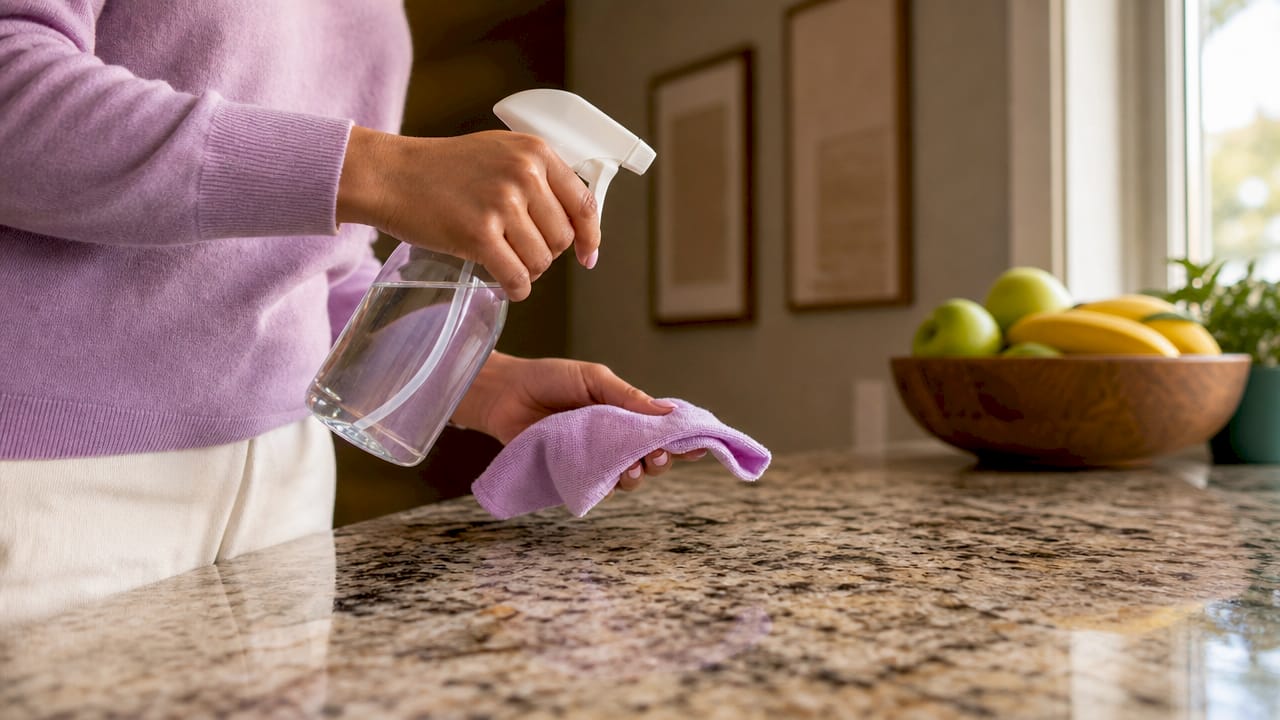
The financial case for non-toxic disinfecting solutions is straightforward. Vinegar, baking soda, and hydrogen peroxide cover 95% of kitchen cleaning tasks and cost under $15 annually. Conventional cleaning product routines typically run $60 to $100 per year. That gap adds up fast, and the savings come with fewer health trade-offs.
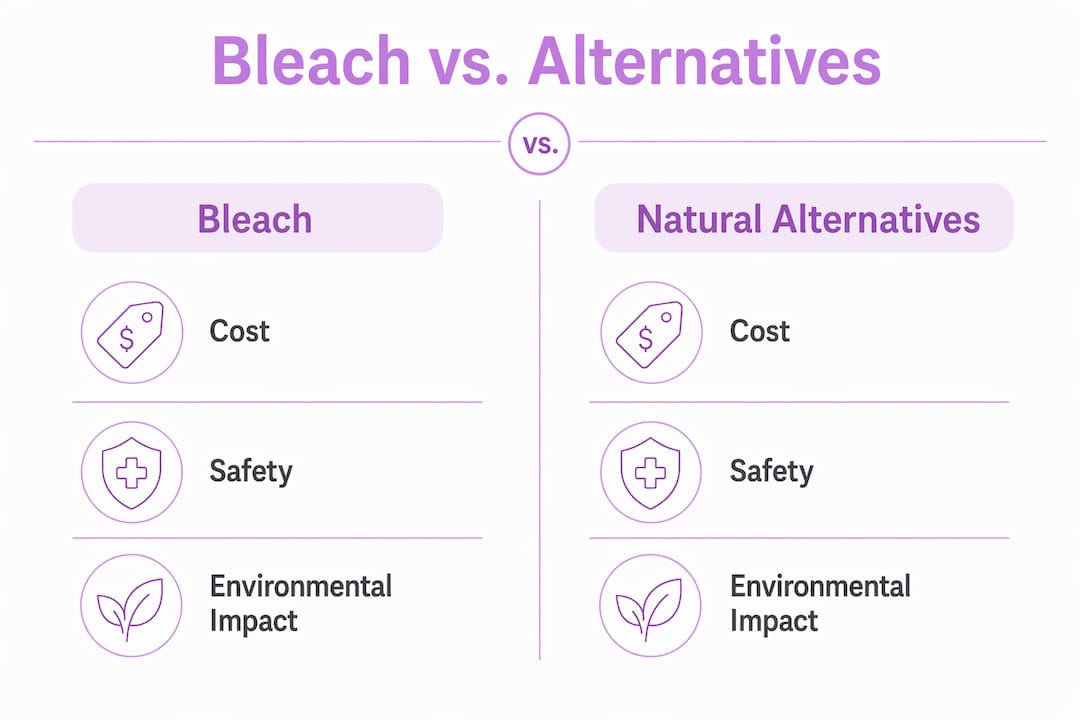
| Factor | Bleach | Natural alternatives |
|---|---|---|
| Annual cost | $60 to $100 for conventional products | Under $15 for vinegar, baking soda, hydrogen peroxide |
| Health risks | Respiratory irritation, toxic gas if mixed with ammonia | Minimal when used correctly; peracetic acid risk if vinegar and H2O2 are mixed |
| Environmental impact | Toxic chemical footprint, harmful to aquatic life | Biodegradable, low environmental load |
| Surface compatibility | Damages stainless steel, discolors fabrics | Varies by product; vinegar unsafe on stone |
| Disinfection power | Broad-spectrum, fast-acting | Hydrogen peroxide and alcohol match bleach for most household needs |
Beyond cost, bleach carries real health risks that are easy to underestimate. Mixing bleach with ammonia-based cleaners produces chloramine gas, which causes severe respiratory damage. Even routine use without mixing generates fumes that irritate the lungs, eyes, and skin, particularly in poorly ventilated kitchens.
When you want a commercial product rather than a DIY solution, look for these indicators of safety and performance:
- EPA Safer Choice certification confirms that every ingredient meets stringent safety and environmental standards.
- EWG VERIFIED label from the Environmental Working Group signals that the product avoids ingredients linked to health concerns.
- Avoid products containing quaternary ammonium compounds (quats) if you or anyone in your household has asthma or skin sensitivities. Quats are common in commercial disinfectant sprays and have been linked to respiratory sensitization with repeated exposure.
What common mistakes to avoid when disinfecting your kitchen without bleach?
Most errors in bleach-free kitchen cleaning fall into one of two categories: safety mistakes and effectiveness mistakes. Both are avoidable.
- Mixing vinegar and hydrogen peroxide. This is the most dangerous mistake in natural cleaning. Combining them creates peracetic acid, which is corrosive and harmful to breathe. Always apply them separately, with a rinse or wipe between applications.
- Using vinegar on marble or granite. The acetic acid in vinegar permanently etches natural stone surfaces. Many people discover this too late. Stick to pH-neutral castile soap on any stone countertop.
- Skipping the cleaning step before disinfecting. A disinfectant sprayed onto a greasy or food-covered surface cannot reach the bacteria underneath. Clean first, always.
- Not respecting dwell time. Wiping hydrogen peroxide off after 30 seconds does not disinfect. The product needs its full contact window to work. Set a timer if you need to.
- Over-disinfecting daily surfaces. Thorough cleaning suffices for 95% of household tasks. Reaching for a disinfectant every time you wipe a counter is unnecessary and can contribute to surface degradation over time.
- Storing homemade cleaners without labels. Any spray bottle containing a DIY solution should be clearly labeled with its contents and date of preparation. Unlabeled bottles are a safety hazard, especially in homes with children.
“The goal is not to sterilize your kitchen. The goal is to remove the pathogens that pose a real risk, using the least aggressive method that gets the job done.”
How to choose commercial non-toxic disinfectants as bleach alternatives
DIY solutions work well for most situations, but there are times when a commercial product makes more sense. After a significant food contamination event, when cleaning for immunocompromised household members, or simply when you want a ready-to-use option, certified commercial cleaners offer reliable performance without harsh chemicals.
When selecting a product, prioritize these criteria:
- Third-party certification. The EPA Safer Choice label and EWG VERIFIED mark are the two most credible indicators of safety. Both require ingredient-level review, not just finished-product testing.
- Hydrogen peroxide or alcohol as the active ingredient. These are the most effective non-bleach disinfectants available in commercial form. Products from brands like Seventh Generation and Method use these as their primary active ingredients.
- Avoid quats if you have sensitivities. Quaternary ammonium compounds appear in many “green” branded products but are not universally safe. Check the ingredient list, not just the marketing label.
- Match the product to the surface. Some commercial sprays are formulated specifically for food-contact surfaces and require no rinsing. Others need a rinse step. Read the label before applying to cutting boards or countertops where food will be prepared.
Integrating commercial products with your natural cleaning routine is simple. Use soap and hot water for daily cleaning, reach for a certified commercial spray or your hydrogen peroxide bottle after high-risk food prep, and reserve steam cleaning for weekly deep-cleaning sessions on tile and grout.
Key takeaways
Effective kitchen disinfection without bleach requires matching the right tool to the task: soap and hot water for daily cleaning, hydrogen peroxide or isopropyl alcohol for high-risk disinfection, and certified commercial products when DIY methods are not enough.
| Point | Details |
|---|---|
| Clean before you disinfect | Soap and hot water remove 99%+ of pathogens and must precede any disinfectant application. |
| Match the tool to the risk | Reserve hydrogen peroxide and isopropyl alcohol for high-risk situations like post-raw-meat prep. |
| Never mix vinegar and hydrogen peroxide | The combination produces peracetic acid, a corrosive irritant harmful to skin and lungs. |
| Protect your surfaces | Avoid vinegar on marble and granite; use pH-neutral castile soap on natural stone instead. |
| Choose certified commercial products | Look for EPA Safer Choice or EWG VERIFIED labels when buying ready-to-use disinfectants. |
Why I stopped reaching for bleach years ago
I spent a long time thinking that a kitchen that smelled like bleach was a clean kitchen. That association runs deep for a lot of people. What changed my thinking was not an article or a study. It was noticing how my hands felt after cleaning, how the air in my kitchen lingered with fumes, and how my stainless steel sink was slowly losing its finish.
The shift to non-bleach methods was not dramatic. I started keeping a spray bottle of 3% hydrogen peroxide under the sink and using it after any raw meat prep. I switched to castile soap for daily wipe-downs. Within a few weeks, I realized my kitchen was just as clean, my hands were less irritated, and I had stopped dreading the cleaning process.
The biggest mindset shift was accepting that cleaning and disinfecting are two different jobs. Most days, you only need to clean. Disinfection is for specific, higher-risk moments. Once you internalize that, you stop over-reaching for the strongest product available and start choosing the right one instead.
One thing I tell people at Jermaphobi4me consistently: respect your surfaces and respect your products. Hydrogen peroxide stored in a clear bottle loses its potency within weeks. Vinegar used on granite causes damage you cannot reverse. These are not edge cases. They are common mistakes that undermine the whole effort. Get the basics right, and non-toxic kitchen hygiene becomes genuinely effortless.
— Gimmi
Clean smarter with Jermaphobi4me’s gentle hygiene products
If you are already committed to keeping your kitchen clean without harsh chemicals, your hand hygiene routine deserves the same standard.
Jermaphobi4me’s Hand Hygiene Starter Kit is built for people who care about what goes on their skin as much as what goes on their countertops. The kit uses skin-friendly, non-toxic formulas that disinfect without stripping or irritating, making it a natural fit for health-conscious households. For a broader selection, the Bundle Collection includes surface and hand hygiene products designed around the same philosophy: clean environments, healthy people, no unnecessary chemicals. Browse the full range of top-selling products and find what fits your routine.
FAQ
Is white vinegar a real disinfectant for kitchen surfaces?
White vinegar reduces bacteria like E. coli and Salmonella but is not EPA-registered as a disinfectant. It works well for everyday cleaning and deodorizing but should not replace a true disinfectant after high-risk food prep.
How long does hydrogen peroxide need to sit to disinfect?
Hydrogen peroxide at 3% concentration requires a contact time of 5 to 10 minutes to effectively kill bacteria and viruses on kitchen surfaces. Wiping it off immediately significantly reduces its effectiveness.
Can I use isopropyl alcohol on kitchen countertops?
Isopropyl alcohol at 70% or higher disinfects hard kitchen surfaces quickly and leaves no residue. It is safe for most countertop materials but should not be used on surfaces where food will be placed without a rinse, since prolonged exposure can dry out some sealants.
What should I never mix when cleaning my kitchen without bleach?
Never mix vinegar and hydrogen peroxide in the same bottle or apply one immediately after the other without rinsing. The combination produces peracetic acid, which is corrosive and harmful to inhale.
How do I know if a commercial cleaner is truly non-toxic?
Look for the EPA Safer Choice certification or EWG VERIFIED label on the product. Both require ingredient-level safety review and confirm the product meets environmental and health standards beyond basic regulatory minimums.
Recommended
- Jermaphobi’s Hand Hygiene Starter Kit (Travel Sizes) – Gimmi Vitality Products dba Jermacilin Store
- Maiden For Her (Plant-Based, pH Balanced, Eco-Friendly) Wet Wipes – Gimmi Vitality Products dba Jermacilin Store
- Gimmi Vitality Products dba Jermacilin Store
- Jermaphobi’s Bundle Collection – Gimmi Vitality Products dba Jermacilin Store