

Types of natural men’s moisturizers are classified by skin barrier function into three core categories: humectants, emollients, and occlusives. Each category works through a distinct hydration mechanism, and moisturizers in dermatology are defined by these functional roles rather than by brand claims or marketing labels. Understanding which type you need, and when to combine them, is the fastest way to stop wasting money on products that feel wrong for your skin.
1. what are humectants and how do they hydrate men’s skin?
Humectants are ingredients that attract water molecules and bind them into the upper layers of your skin, specifically the stratum corneum. They pull moisture from the environment and from deeper skin layers to keep the surface hydrated. For men with oily or dehydrated skin, humectants deliver real hydration without adding grease.
Common natural humectants include:
- Glycerin — plant-derived, widely available, and clinically proven to draw water into skin
- Hyaluronic acid — holds up to 1,000 times its weight in water; found in many natural face creams for men
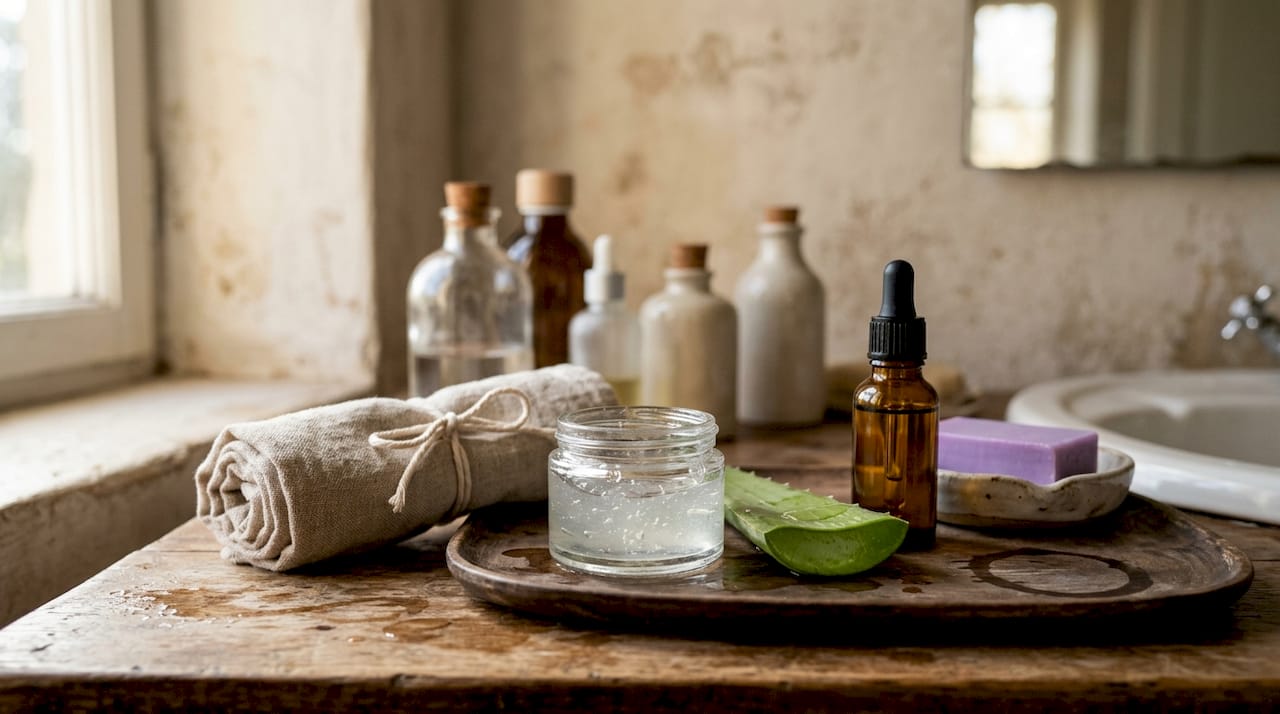
- Aloe vera — a mild humectant with added anti-inflammatory properties, ideal for post-shave use
- Honey — a natural humectant with antimicrobial properties, used in homemade men’s moisturizers
Humectants work best on oily and combination skin because they add water without adding oil. They also suit dehydrated skin regardless of skin type. One important limitation: humectants alone may be insufficient in low-humidity conditions because they can pull moisture out of the skin instead of from the air. That is why pairing them with an occlusive layer matters in dry or cold climates.
Pro Tip: Apply your humectant product immediately after washing your face while skin is still slightly damp. The residual water gives the humectant something to bind to right away, boosting its effectiveness.
2. how emollients smooth skin and support the barrier
Emollients are the smoothing agents in natural moisturizers. They fill in the microscopic gaps between skin cells in the outer barrier, reducing roughness and improving the overall feel and appearance of skin. Think of them as the ingredient that makes your skin feel soft rather than just hydrated.
Key plant-based emollients used in clean grooming products for men include:
- Jojoba oil — technically a liquid wax; closely mimics the skin’s natural sebum
- Squalane — derived from olives or sugarcane; lightweight and non-comedogenic
- Shea butter — rich in fatty acids; excellent for dry and sensitive skin
- Rosehip oil — high in linoleic acid; supports barrier repair and reduces uneven skin tone
Emollients penetrate and remain in the stratum corneum, maintaining hydration with minimal disruption to the skin’s lipid structure. That means the effect lasts well beyond the moment of application. Advanced ester-based emollients like DTTC show sustained hydration even after washing, which explains why a good organic men’s skin lotion keeps working hours after you apply it.
Emollients suit dry, sensitive, and combination skin equally well. Men with sensitive skin or post-shave irritation benefit most from squalane and jojoba oil because both are gentle and unlikely to clog pores.
Pro Tip: If your skin feels tight after cleansing but not visibly flaky, you likely need an emollient more than an occlusive. Reach for a jojoba or squalane-based product before going heavier.
3. the role of occlusives in locking moisture in
Occlusives form a physical barrier on the surface of your skin that slows down transepidermal water loss, commonly called TEWL. They do not add water to the skin. Instead, they trap the moisture already there and prevent it from evaporating. This makes them the final step in any layered moisturizing routine.
Natural occlusive ingredients found in men’s moisturizing products include:
- Beeswax — a classic natural occlusive used in lip balms and body creams
- Candelilla wax — a plant-based alternative to beeswax, vegan-friendly
- Lanolin — derived from wool; one of the most effective natural occlusives available
- Cocoa butter — rich and heavy; best for very dry areas like elbows, knees, and heels
Occlusive moisturizers slow transepidermal water loss by creating a protective film and work best when applied over damp skin or layered on top of a humectant. This is why they perform well in cold weather or dry indoor environments where moisture evaporates quickly.
One caution: occlusives are not the right choice for acne-prone or oily skin when applied to the full face. Their film-forming nature can trap sebum and dead skin cells, which contributes to breakouts. Use them on dry patches, post-shave areas, or the body rather than all over an oily face.
4. lotion, gel, or cream: which texture fits your skin?
Texture is the most overlooked factor when men choose a moisturizer. The wrong texture is the main reason a product feels too heavy, leaves residue, or seems to do nothing. Getting this right makes the difference between a routine you stick with and one you abandon after two weeks.
Lotion or gel textures suit combination, oily, and spot-prone skin by delivering hydration without heaviness. Creams are better for dry, sensitive, or mature skin because they provide richer barrier support. Beard length also matters: gel works best for very short beards, lotion suits medium beards, and cream penetrates better through longer or coarser facial hair.
| Texture | Best Skin Type | Key Benefit | Beard Compatibility |
|---|---|---|---|
| Gel | Oily, combination | Lightweight, no residue | Very short or no beard |
| Lotion | Normal, combination | Balanced hydration | Short to medium beard |
| Cream | Dry, sensitive, mature | Rich barrier support | Medium to long beard |
| Oil | Dry, normal | Deep emollient effect | All beard lengths |
Men with oily skin often make the mistake of skipping moisturizer entirely because creams feel too heavy. A water-based gel containing glycerin or aloe vera gives oily skin the hydration it needs without triggering more oil production. That is a counterintuitive but well-supported fact in dermatology.
5. how to layer natural moisturizer types for best results
Layering moisturizer types in the correct order is clinically shown to enhance hydration more than single-type use, especially in dry or low-humidity environments. The logic follows each ingredient’s function. You start with what draws water in, then seal it progressively.
The correct layering order is:
- Cleanse your face with a gentle, pH-balanced wash to remove barriers to absorption
- Apply humectant (glycerin serum, hyaluronic acid, or aloe gel) on damp skin immediately after cleansing
- Follow with emollient (jojoba oil, squalane, or a natural face cream for men) to smooth and fill the barrier
- Add occlusive last (beeswax balm or lanolin) only on very dry patches or in cold weather conditions
A multicenter randomized study found that a ceramide plus natural oil lotion applied daily for four weeks significantly improved hydration, skin smoothness, and reduced TEWL. It also enhanced skin microbiome diversity. That result shows that combining functional ingredients produces measurable outcomes, not just a better feel.
For a practical travel-friendly version of this routine, a skincare routine for commuting can help you adapt layering to a faster pace without skipping steps.
Pro Tip: You do not need three separate products to layer correctly. Many natural face creams for men already combine humectants, emollients, and light occlusives in one formula. Check the ingredient list for glycerin, jojoba oil, and beeswax together.
6. natural ingredients to know across all moisturizer types
Not all natural ingredients fit neatly into one category. Some function across two types, making them especially useful in clean grooming products for men. Knowing which ingredients do double duty helps you read labels with confidence.
Glycerin acts as both a humectant and a mild emollient. It draws water in and softens the skin surface simultaneously. It appears in nearly every effective natural moisturizer on the market for good reason.
Shea butter functions as both an emollient and a mild occlusive. It fills the skin barrier and provides a light protective layer. This dual function makes it a staple in organic men’s skin lotion formulas designed for dry or cold-weather use.
Aloe vera is a humectant with anti-inflammatory and barrier-supporting properties. It is one of the most versatile natural ingredients in men’s hydration products, working well in gels, lotions, and post-shave formulas. Checking skincare pH balance practices before combining ingredients helps you avoid disrupting your skin’s natural acid mantle when mixing products at home.
For men who prefer homemade men’s moisturizers, a combination of aloe vera gel as the humectant base, jojoba oil as the emollient, and a small amount of beeswax as the occlusive creates a functional three-layer product in a single application. You can also explore a natural body scrub guide to prep your skin before moisturizing for better absorption.
Key takeaways
The most effective natural moisturizing routine for men combines humectants, emollients, and occlusives in the correct layering order to match both skin type and environment.
| Point | Details |
|---|---|
| Classify by function, not marketing | Choose moisturizers based on humectant, emollient, or occlusive action, not brand claims. |
| Layer in the right order | Apply humectants on damp skin first, then emollients, then occlusives only where needed. |
| Match texture to skin and beard type | Use gels for oily skin, creams for dry or mature skin, and consider beard length for penetration. |
| Combine types for better results | Clinical studies show combined functional ingredients outperform single-type moisturizers. |
| Know your multi-function ingredients | Glycerin, shea butter, and aloe vera each serve more than one hydration function. |
What i have learned from years of watching men skip moisturizer
Most men I have talked to about skincare fall into one of two camps. They either use nothing because everything feels greasy, or they grab whatever is cheapest and wonder why their skin still looks dull. Both problems trace back to the same mistake: choosing a product without understanding what it actually does.
The functional classification of moisturizers is not academic. It is the most practical tool you have for making a good decision at the shelf. When you know that a gel with glycerin is a humectant and a shea butter cream is an emollient with occlusive properties, you stop guessing. You match the product to what your skin actually needs.
Men with oily skin consistently tell me moisturizer makes their face feel worse. That is almost always a texture problem, not a moisturizer problem. A lightweight gel with aloe vera and hyaluronic acid will not make oily skin worse. A heavy cream will. The clean environments and healthy skin connection is real too. Your skin barrier performs better when your environment is not constantly stripping it.
My honest recommendation: start with one good humectant and one emollient. Get consistent with those two before adding anything else. Consistency with simple, functional products beats an elaborate routine you abandon after a week.
— Gimmi
Build your natural skincare routine with Jermaphobi4me
Jermaphobi4me curates clean, functional grooming products designed for men who take their skin health seriously. The focus is always on ingredients that work, not on packaging or marketing language.
The top-selling natural skincare products at Jermaphobi4me cover all three moisturizer types, from lightweight humectant gels to rich emollient creams and targeted occlusive balms. Every formula is built around real skin barrier science and free from unnecessary chemicals. If you are building a routine from scratch, the hand hygiene starter kit is a practical entry point that includes travel-size hydrating and cleansing products to test what works for your skin before committing to full sizes.
FAQ
What are the main types of natural men’s moisturizers?
The three main types are humectants, emollients, and occlusives. Each works through a different mechanism: humectants attract water, emollients smooth the barrier, and occlusives seal moisture in.
Which natural moisturizer type suits oily skin?
Humectant-based gels containing glycerin or aloe vera are best for oily skin. They deliver hydration without adding oil or heaviness to the skin.
Can you use all three moisturizer types together?
Yes, and layering all three produces better results than using one alone. Apply humectants first on damp skin, then emollients, then occlusives only on dry patches.
What natural ingredients work as occlusives for men?
Beeswax, lanolin, candelilla wax, and cocoa butter are the most effective natural occlusives. Use them on very dry areas or in cold weather rather than all over the face.
How does beard length affect moisturizer choice?
Gel penetrates best through very short or no beard, lotion suits medium beards, and cream works better for longer or coarser facial hair due to its richer texture and deeper penetration.
Recommended
- Types of Chemical-Free Body Wash: Your 2026 Guide – Gimmi Vitality Products dba Jermacilin Store
- How to Make a Natural Body Scrub at Home – Gimmi Vitality Products dba Jermacilin Store
- Why Natural Deodorant Works: the Science Explained – Gimmi Vitality Products dba Jermacilin Store
- Why Men Need Clean Environments for Better Health – Gimmi Vitality Products dba Jermacilin Store