

Eliminating harmful cleaning chemicals means replacing synthetic toxins with five natural ingredients that cover every routine cleaning task in your home. Conventional cleaners routinely contain quaternary ammonium compounds, synthetic fragrances, and chlorine bleach, all of which the EPA flags as risks to indoor air quality and respiratory health. The good news: five natural ingredients costing under $20 total handle everything from grease to mold without a single toxic compound. Jermaphobi4me built its entire product philosophy around this principle. Clean environments and healthy people are not competing goals.
What are the five natural ingredients that eliminate harmful cleaning chemicals?
White distilled vinegar, baking soda, 3% hydrogen peroxide, liquid castile soap, and 70% isopropyl alcohol are the five core ingredients that replace virtually every synthetic cleaner in your home. Each one targets a specific cleaning need, and together they cover the full range of routine tasks. You can find all five at any grocery or pharmacy for a combined cost well under $20.
Here is what each ingredient does and why it works:
- White distilled vinegar (5% acidity): Acts as an acid cleaner that cuts through mineral deposits, soap scum, and grease. Its mild antibacterial properties make it effective on countertops and bathroom fixtures.
- Baking soda: Functions as a mild abrasive that scrubs without scratching and neutralizes odors. Use it on sinks, tubs, and stovetops.
- 3% hydrogen peroxide: An oxidizing disinfectant that kills bacteria, viruses, and mold spores on contact. The EPA recognizes hydrogen peroxide at concentrations of 3% or higher as a safer active ingredient for pathogen control.
- Liquid castile soap: A plant-based surfactant derived from vegetable oils. It lifts dirt and grease from surfaces and skin without synthetic detergents or petroleum byproducts.
- 70% isopropyl alcohol: Disinfects hard surfaces and cleans glass streak-free. Consumer Reports experts recommend ethanol at 70% or higher as a proven safer alternative to quaternary ammonium compounds.
Pro Tip: Store each ingredient in a clearly labeled container. Keeping them separate prevents accidental mixing and makes it easy to grab exactly what you need for each task.
The cost advantage of these five ingredients is real. A single bottle of commercial multi-surface spray often costs more than your entire natural cleaning supply for a month. Switching also reduces the number of products under your sink, which lowers the risk of accidental exposure for children and pets.
How to avoid dangerous chemical mixtures when switching to natural cleaners
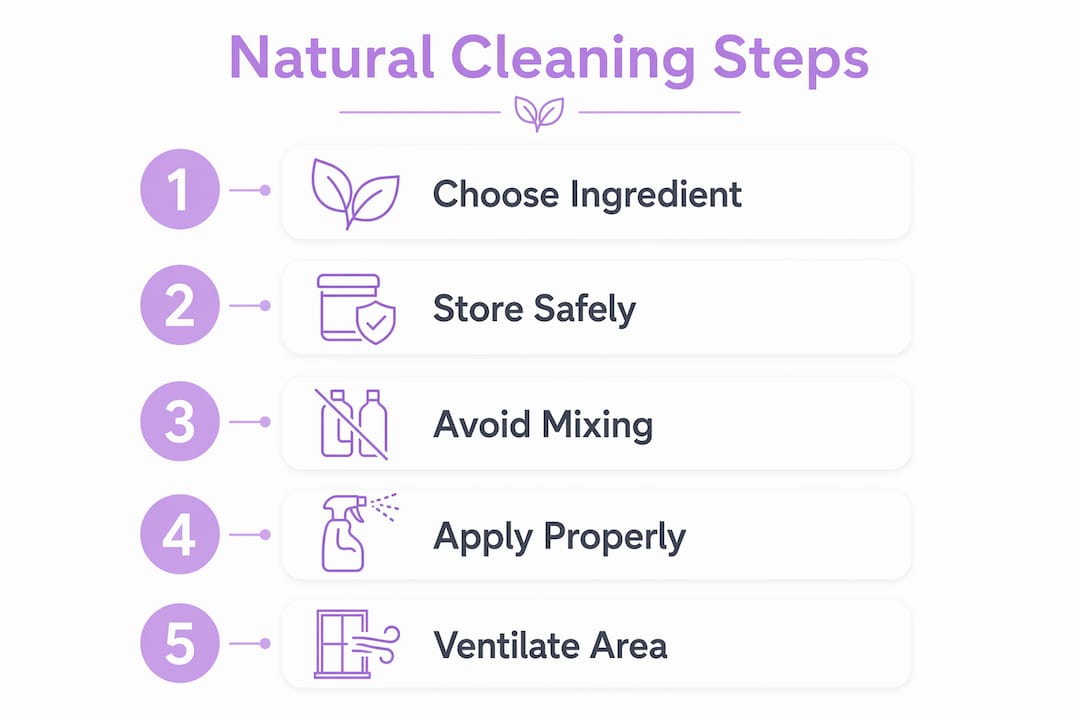
The biggest safety risk when you reduce toxic cleaning products is not the natural ingredients themselves. It is mixing the wrong ones together. Three combinations are particularly dangerous and must be avoided without exception.
- Bleach plus vinegar produces chlorine gas, a respiratory irritant that causes coughing, shortness of breath, and chest pain even at low concentrations.
- Bleach plus ammonia forms chloramine vapors, which damage lung tissue and can cause fluid buildup in the lungs with prolonged exposure.
- Vinegar plus hydrogen peroxide creates peracetic acid, a corrosive compound that irritates skin, eyes, and airways.
These reactions happen fast. You do not need to combine large amounts to produce harmful concentrations indoors.
Safety rule: Never mix cleaning ingredients in the same container unless a tested recipe specifically calls for it. Apply each ingredient separately, allow contact time, then rinse before applying the next.
Transitioning from synthetic to natural cleaners also requires attention to your spray bottles. Spray bottles that previously held bleach, ammonia, or hydrogen peroxide should never be refilled with vinegar mixtures. Residual chemicals trapped in the spray mechanism can react with the new solution and release toxic gases. Buy new bottles for your natural cleaners. Label every bottle with its contents and the date you mixed it.
Proper ventilation matters even with natural products. Open a window or run an exhaust fan when cleaning enclosed spaces like bathrooms. The US EPA recommends a formal Chemical Management System for any cleaning program, including natural ones. That means proper storage, clear labeling, and controlled handling, not just choosing greener products.
How to make natural cleaning solutions for every surface in your home
Natural cleaning works best when you match the right ingredient to the right surface. Generic all-purpose sprays often underperform because they compromise between tasks. Targeted recipes do not.
Kitchen surfaces and appliances
- Mix 1 cup white distilled vinegar with 1 cup water in a spray bottle. Add 10 drops of tea tree oil for added antimicrobial effect. Spray on countertops, stovetops, and appliance exteriors. Wait 30 seconds, then wipe clean.
- For grease buildup, sprinkle baking soda directly on the surface, spray with the vinegar solution, and scrub with a damp cloth. Rinse thoroughly.
- Disinfect cutting boards with undiluted 3% hydrogen peroxide. Apply, wait 1 minute, then rinse with water.
Bathroom tiles, tubs, and toilets
- Sprinkle baking soda on the surface. Add a few drops of liquid castile soap. Scrub with a brush, then rinse.
- Spray undiluted white vinegar on mineral deposits and soap scum. Let it sit for 5 minutes before scrubbing.
- Apply 3% hydrogen peroxide to mold-prone grout lines. Wait 10 minutes, scrub, and rinse.
Glass and mirrors
- Mix equal parts 70% isopropyl alcohol and water. Add 1 tablespoon of white vinegar. Spray on glass and wipe with a lint-free cloth for a streak-free finish.
Floors
- Add ¼ cup liquid castile soap to 2 gallons of warm water. Mop as usual. No rinsing needed for most sealed floors.
| Surface | Best ingredient | Contact time |
|---|---|---|
| Kitchen countertops | Vinegar solution | 30 seconds |
| Bathroom grout | Hydrogen peroxide | 10 minutes |
| Glass and mirrors | Isopropyl alcohol mix | Immediate wipe |
| Tile and tubs | Baking soda and castile soap | 2–5 minutes |
| Cutting boards | Undiluted hydrogen peroxide | 1 minute |
Surfaces to avoid with acidic cleaners: Never use vinegar or citric acid solutions on marble, granite, limestone, or other natural stone. Acid etches the surface permanently. Use a diluted castile soap solution on stone instead.
Pro Tip: Store DIY solutions in amber glass spray bottles with silicone boots. Amber glass blocks UV light that degrades essential oils, and the silicone sleeve prevents breakage when bottles tip on hard surfaces.
What are the health benefits of chemical-free cleaning for your home?
Chemical-free cleaning, the practice of using only non-toxic, biodegradable ingredients to clean your home, delivers measurable health benefits that go beyond avoiding a bad smell. The benefits show up in your air, your skin, and your long-term health.
- Reduced respiratory irritation: Conventional cleaners release volatile organic compounds (VOCs) that irritate airways. Switching to natural solutions lowers VOC exposure immediately.
- Lower carcinogen and endocrine disruptor risk: Many synthetic cleaners contain formaldehyde-releasing preservatives and phthalates, both of which disrupt hormone function with repeated exposure.
- Better indoor air quality: The EPA consistently identifies indoor air as a significant source of chemical exposure. Replacing synthetic products with natural alternatives directly reduces that load.
- Safer for children and pets: Natural ingredients break down quickly and do not leave toxic residues on floors or surfaces where children and animals spend time.
- Environmental benefit: Biodegradable ingredients like castile soap and vinegar do not persist in waterways or harm aquatic life after they wash down the drain.
Routine cleaning with plain soap and water removes over 99% of germs through mechanical action alone. That finding reframes the entire argument for harsh disinfectants. Most households do not need hospital-grade chemicals for everyday cleaning. Soap, water, and the right natural disinfectant handle the job. For a deeper look at what makes a product truly safe, the criteria for safe cleaning products go beyond just ingredient lists.
What common mistakes to avoid when switching to natural cleaning products?
Switching to non-toxic cleaning options is straightforward, but a few common errors reduce effectiveness or create new safety risks.
- Mixing vinegar and baking soda directly: This is the most widespread DIY cleaning myth. When combined, vinegar and baking soda neutralize each other in an acid-base reaction that produces saltwater and carbon dioxide. The fizzing looks impressive but cancels out the cleaning power of both ingredients. Use them separately and sequentially instead.
- Reusing incompatible spray bottles: As noted above, residual bleach or ammonia in a spray bottle reacts dangerously with vinegar. Always use new, clean bottles for natural solutions.
- Overusing essential oils: Tea tree, lavender, and eucalyptus oils have real antimicrobial properties, but more is not better. High concentrations irritate skin and airways. Stick to 10–15 drops per cup of solution.
- Using acidic cleaners on the wrong surfaces: Vinegar damages marble, granite, and unsealed grout. Always check surface compatibility before applying any acidic cleaner.
- Failing to label DIY mixtures: Unlabeled bottles create confusion and risk. Write the contents, concentration, and mix date on every bottle. This also helps you track freshness, since hydrogen peroxide loses potency over time.
Pro Tip: Keep a simple reference card inside your cleaning cabinet listing which ingredient goes with which surface. It takes two minutes to make and prevents months of mistakes.
Proper storage extends the life of your ingredients and keeps your home safe. Store hydrogen peroxide in its original dark bottle away from light. Keep isopropyl alcohol away from heat sources. Vinegar and castile soap are stable at room temperature and need no special handling. For a full breakdown of eco-friendly cleaner standards, Jermaphobi4me covers what those labels actually mean in practice.
Key takeaways
Switching to natural cleaning ingredients eliminates harmful chemical exposure while maintaining the cleaning power your home needs for genuine hygiene.
| Point | Details |
|---|---|
| Five ingredients cover everything | Vinegar, baking soda, hydrogen peroxide, castile soap, and isopropyl alcohol handle all routine cleaning tasks. |
| Never mix incompatible chemicals | Bleach with vinegar, bleach with ammonia, and vinegar with hydrogen peroxide all produce toxic gases or corrosives. |
| Surface compatibility matters | Avoid acidic cleaners on marble, granite, and natural stone to prevent permanent etching. |
| Soap and water remove most germs | Routine cleaning with plain soap removes over 99% of germs without harsh disinfectants. |
| Label and store DIY solutions properly | Clear labeling and correct storage prevent accidents and preserve ingredient potency. |
Why I think most people overcomplicate the switch to natural cleaning
People ask me all the time whether natural cleaners actually work. My honest answer: they work better than most people expect, and the learning curve is shorter than it looks. The real barrier is not performance. It is habit.
Most households have accumulated a dozen or more synthetic cleaning products over the years, one for every surface and situation. Replacing that collection with five ingredients feels like a downgrade. It is not. What you are actually doing is removing redundancy and replacing it with chemistry you can understand and trust.
The one thing I push back on is the idea that natural cleaning is automatically safe with zero thought. Mixing the wrong ingredients, using the wrong surface, or grabbing an unlabeled bottle creates real risk. Natural does not mean consequence-free. It means the consequences are far more manageable when you follow basic protocols.
Start with one room. Replace your kitchen spray with a vinegar and water solution this week. Notice the difference in smell, in residue, and in how your hands feel after cleaning. That single swap builds the confidence to keep going. The full transition happens naturally from there, without pressure or a complete overhaul on day one.
— Gimmi
Natural cleaning products from Jermaphobi4me for a healthier home
Jermaphobi4me carries a curated range of natural hygiene and cleaning products built around the same principles covered here: plant-based ingredients, no synthetic toxins, and real performance.

The hand hygiene starter kit is a practical entry point, with travel-size chemical-free products that fit a natural cleaning routine at home and on the go. The top-selling collection includes options for everyday hygiene that align with a non-toxic lifestyle. If you want plant-based wipes that are pH balanced and free of harsh chemicals, the Maiden For Her wipes are a strong choice for gentle, daily use. Every product Jermaphobi4me offers reflects the same commitment: clean environments and healthy people, without compromise.
FAQ
What are the safest natural cleaning ingredients?
White distilled vinegar, baking soda, 3% hydrogen peroxide, liquid castile soap, and 70% isopropyl alcohol are the safest and most effective natural cleaning ingredients. Together they cover all routine household cleaning tasks for under $20 total.
Can natural cleaners disinfect as well as chemical products?
Yes. The EPA recognizes hydrogen peroxide at 3% or higher and ethanol at 70% or higher as effective disinfectants against common pathogens. Routine cleaning with soap and water alone removes over 99% of germs through mechanical action.
Is it safe to mix vinegar and baking soda for cleaning?
No. Vinegar and baking soda neutralize each other in a chemical reaction that produces saltwater and carbon dioxide, canceling out the cleaning power of both. Use them separately on the same surface for better results.
Which surfaces should I avoid cleaning with vinegar?
Avoid using vinegar or any acidic cleaner on marble, granite, limestone, and unsealed natural stone. The acid etches and permanently damages these surfaces. Use diluted castile soap instead.
How do I store DIY natural cleaning solutions safely?
Store hydrogen peroxide in its original dark bottle away from light. Keep isopropyl alcohol away from heat. Label every DIY solution with its contents and mix date, and never reuse bottles that previously held bleach or ammonia.
Recommended
- What Is a Safe Cleaning Product? Your 2026 Guide – Gimmi Vitality Products dba Jermacilin Store
- Types of Non-Toxic Home Cleaning Products: 2026 Guide – Gimmi Vitality Products dba Jermacilin Store
- What Is Chemical-Free Cleaning? A Practical Guide – Gimmi Vitality Products dba Jermacilin Store
- Types of Chemical-Free Body Wash: Your 2026 Guide – Gimmi Vitality Products dba Jermacilin Store