

Non-toxic home cleaning products are defined as formulas verified to pose no harmful effects to people or the environment, based on third-party certification standards rather than federal law. The term “non-toxic” carries no regulated federal definition for cleaning products, which means the label alone offers no legal guarantee. Certifications like EPA Safer Choice and Design for the Environment (DfE) fill that gap. Knowing the types of non-toxic home cleaning products, what ingredients to look for, and which certifications to trust gives you real control over what enters your home.
What are the main types of non-toxic home cleaning products?
The core categories of green cleaning alternatives cover most household needs without harsh chemicals. Each type serves a distinct purpose, and choosing the right one for the right task matters as much as the ingredients inside.
- All-purpose surface cleaners. These use plant-based surfactants or soap-based formulas to cut grease and grime on countertops, sinks, and appliances. They are the workhorse of any natural household cleaner routine.
- Safer disinfectants and sanitizers. These products contain EPA-registered active ingredients at effective concentrations. Hydrogen peroxide at 3% or higher, ethanol at 70% or higher, and citric acid at 0.5% or higher are the safer disinfectant actives that control pathogens without the risks tied to harsher compounds.
- Certified greener products. Products carrying the EPA Safer Choice or DfE label have passed stringent reviews for both human health and environmental impact. These labels are the most reliable shortcut when you do not have time to read every ingredient.
- Plant-based multi-surface sprays. Formulated with glucosides and coconut-derived surfactants, these sprays work across kitchens, bathrooms, and living areas. They biodegrade faster than petroleum-based alternatives.
- Concentrated refillable cleaners. These reduce plastic waste and often carry eco-friendly cleaning solutions certifications. You dilute them at home, which also lowers the cost per use.
Cleaning and disinfecting are not the same task. Routine cleaning with soap and water or an all-purpose cleaner removes dirt and most surface germs effectively. Disinfecting kills specific pathogens and is recommended only when germ risk is genuinely elevated, such as after illness or raw meat contact. Reaching for a disinfectant every time you wipe a counter increases chemical exposure without a meaningful health benefit.
Key safer ingredients to look for and what to avoid
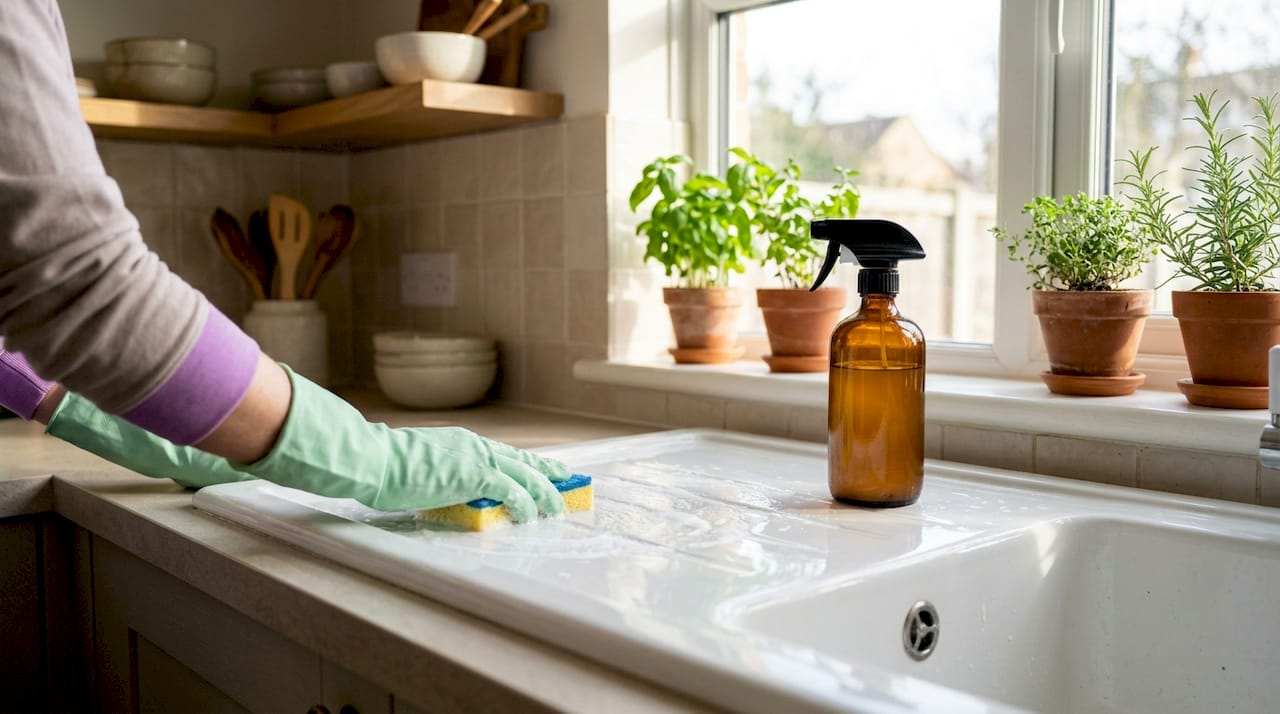
Reading a cleaning product label is a skill. Most homeowners scan for buzzwords and miss the ingredient list entirely. That habit is exactly what greenwashing relies on.
Ingredients to look for:
- Potassium cocoate and sodium cocoate. These are soap-based surfactants derived from coconut oil. They clean effectively and break down safely in the environment.
- Decyl glucoside and coco glucoside. These are mild, plant-derived surfactants common in safer cleaner formulas. They are well-tolerated by sensitive skin and safe around children.
- Citric acid. A natural descaler and mild disinfectant active at the right concentration. It removes mineral deposits from faucets and tiles without fumes.
- Hydrogen peroxide (3% or higher). An EPA-registered disinfectant that breaks down into water and oxygen. It is one of the best plant-based cleaning product alternatives to chlorine bleach for targeted disinfection.
Ingredients to avoid:
- Quaternary ammonium compounds (quats). These are common disinfectant actives linked to respiratory irritation and skin sensitization. They persist in the environment and have been flagged in multiple EPA assessments.
- “Fragrance” or “parfum” without disclosure. These terms can legally mask dozens of undisclosed chemicals, including known allergens. Products that hide ingredients behind vague terms fail the transparency test.
- “Cleaning agent” without specification. This catch-all phrase on a label signals that the manufacturer is not disclosing the actual surfactant. Choose products that name every active ingredient.
Many cleaning product labels lack full ingredient disclosure because no federal law requires complete transparency. That gap makes certification marks more reliable than ingredient lists alone for most homeowners.
Pro Tip: Search the EPA Safer Choice product database at epa.gov before buying. If a product is not listed, its “non-toxic” or “green” claim is marketing, not verification.
How to interpret cleaning product certifications and avoid greenwashing
Certifications are the most reliable tool for identifying genuinely safe, eco-friendly cleaning solutions. Here is how the major programs rank in terms of rigor.
- EPA Safer Choice. The most reliable indicator of a truly safer product. Every ingredient is reviewed for human health and environmental impact before the label is granted.
- Design for the Environment (DfE). An EPA program that evaluates formulation chemistry. Products with this label meet high criteria for both safety and environmental responsibility.
- Green Seal. An independent nonprofit certification that covers cleaning performance, ingredient safety, and packaging sustainability. It is widely recognized in commercial and residential markets.
- Made Safe. Screens for known toxic chemicals using a hazard list approach. It is one of the stricter certifications for personal care and household products.
- EWG Verified. The Environmental Working Group’s mark confirms that a product meets its standards for ingredient transparency and safety. It is useful as a secondary check alongside EPA programs.
“Greenwashing is common; marketing terms alone, such as eco-friendly or green, are unreliable without certification proof.” — EPA guidance on greener cleaning products.
Generic phrases like “natural,” “plant-powered,” or “earth-friendly” carry no certification requirement. The EPA warns that vague marketing claims require skepticism. A product can legally print “green” on its label while containing quaternary ammonium compounds or undisclosed fragrance chemicals. The fix is simple: look for the certification mark, not the marketing copy.
Practical non-toxic cleaning recommendations by area
Applying the right cleaner to the right surface is what makes a chemical-free cleaning method actually work. Here is how to match product types to household areas.
Kitchen surfaces and appliances:
- Use a plant-based all-purpose spray for daily countertop cleaning. Glucoside-based formulas cut food grease without leaving residue.
- Reserve a hydrogen peroxide-based sanitizer for cutting boards and sink basins after raw meat contact. Learn how to disinfect your kitchen without harsh bleach for step-by-step guidance.
- Avoid mixing any two cleaning products, even natural ones. Citric acid and hydrogen peroxide combined can produce irritating compounds.
Bathrooms:
- Citric acid-based sprays dissolve soap scum and mineral deposits on tile and fixtures without scrubbing.
- For toilet disinfection, a 3% hydrogen peroxide solution applied and left for 10 minutes meets EPA efficacy standards.
Floors and general surfaces:
- A diluted castile soap solution works on sealed hardwood, tile, and laminate. It is one of the most practical homemade non-toxic cleaner options available.
- Baking soda acts as a mild abrasive for scrubbing without scratching. Pair it with a small amount of liquid castile soap for tougher spots.
A word on DIY limits:
Vinegar and baking soda are popular homemade non-toxic cleaner ingredients, but their effectiveness has limits. Vinegar is acidic and can damage natural stone surfaces like marble and granite. Baking soda is a mild abrasive, not a disinfectant. Neither meets EPA concentration thresholds for pathogen control. Use them for general cleaning, not for situations that require verified disinfection.
Pro Tip: Switch from disposable paper towels to reusable microfiber cloths. Microfiber lifts bacteria mechanically, reducing how much cleaner you need per wipe and cutting microplastic shedding from synthetic sponges.
Non-toxic products also reduce your exposure to volatile organic compounds (VOCs) common in conventional cleaners. VOCs off-gas into indoor air and have been linked to respiratory irritation, headaches, and long-term health risks. Switching to certified safer formulas improves indoor air quality directly.
A small set of multi-purpose formulas reduces chemical exposure more effectively than a large collection of specialized products. Fewer products mean fewer ingredients in your home, simpler storage, and less risk of accidental mixing.
Key Takeaways
Non-toxic home cleaning products are only as safe as their certifications and ingredient transparency confirm, not as their marketing claims suggest.
| Point | Details |
|---|---|
| Certifications over claims | EPA Safer Choice and DfE labels are more reliable than “natural” or “green” marketing language. |
| Safer disinfectant actives | Hydrogen peroxide (≥3%), ethanol (≥70%), and citric acid (≥0.5%) are EPA-registered safer alternatives. |
| Avoid quats and vague fragrance | Quaternary ammonium compounds and undisclosed “fragrance” are the top ingredients to eliminate from your routine. |
| Clean first, disinfect selectively | Soap and water handles most household cleaning; reserve disinfectants for genuine germ-risk situations. |
| Fewer products, lower exposure | A small set of certified multi-purpose cleaners reduces total chemical exposure more than a full cabinet of specialized products. |
What I have learned from years of watching homeowners clean the wrong way
Most homeowners I have spoken with own 12 or more cleaning products. They have a separate spray for the stovetop, the bathroom mirror, the toilet, the floor, and the “all-purpose” bottle they use for everything anyway. That cabinet full of products does not make a home cleaner. It multiplies chemical exposure and creates confusion about what actually works.
The shift that makes the biggest difference is not finding the perfect product. It is reducing the number of products you use and verifying the ones you keep. One certified all-purpose cleaner, one safer disinfectant for high-risk moments, and a simple abrasive like baking soda cover 95% of household cleaning needs. That is not a compromise. That is a cleaner approach.
I also think the disinfection habit in American homes has gotten out of hand. Disinfecting every surface every day does not protect your family. It exposes them to more active chemicals than necessary and, over time, can contribute to surface resistance issues. Certified non-toxic products used with a practical routine protect health and the environment without that tradeoff.
The other thing I push back on is the idea that safe products do not clean as well. That belief keeps people reaching for harsh conventional products out of habit. A glucoside-based all-purpose cleaner on a microfiber cloth outperforms a VOC-heavy spray on a paper towel every time. The tool matters as much as the formula.
Start with your certifications. Verify your ingredients. Simplify your cabinet. That is the routine that actually works.
— Gimmi
Certified non-toxic products from Jermaphobi4me
Jermaphobi4me builds products around the principle that a clean home and a healthy body go together. Every product in the collection is formulated with ingredient transparency and safety standards at the center.
The top-selling product collection includes certified safer formulas suited for environmentally conscious homeowners who want cleaning power without the chemical tradeoff. For homeowners building a new routine from scratch, the bundle collection offers a practical starting point with multiple certified products in one order. Each option is selected to align with the EPA Safer Choice standards and ingredient transparency principles covered in this article.
FAQ
What does “non-toxic” mean on a cleaning product label?
“Non-toxic” has no federally regulated definition for cleaning products. The term is a marketing claim unless backed by a recognized certification like EPA Safer Choice or DfE.
Which certifications are most trustworthy for safer cleaning products?
EPA Safer Choice is the most rigorous government-backed certification. Green Seal, Made Safe, and EWG Verified are credible independent options worth checking.
Are homemade non-toxic cleaners as effective as certified products?
Vinegar and baking soda work well for general cleaning but do not meet EPA concentration thresholds for disinfection. Use certified products when pathogen control is the goal.
What ingredients should I avoid in cleaning products?
Avoid quaternary ammonium compounds, undisclosed “fragrance,” and vague terms like “cleaning agent.” These can hide allergens, respiratory irritants, and environmentally persistent chemicals.
Is it safe to use non-toxic cleaners around children and pets?
Certified safer products with plant-based surfactants and disclosed ingredients are the best choice for safe cleaning around kids and pets. Always store all cleaning products out of reach regardless of their safety profile.
Recommended
- What Is a Safe Cleaning Product? Your 2026 Guide – Gimmi Vitality Products dba Jermacilin Store
- How to Disinfect Your Kitchen Without Harsh Bleach – Gimmi Vitality Products dba Jermacilin Store
- What Is Chemical-Free Cleaning? A Practical Guide – Gimmi Vitality Products dba Jermacilin Store
- Types of Chemical-Free Body Wash: Your 2026 Guide – Gimmi Vitality Products dba Jermacilin Store