

Natural deodorant works by neutralizing odor-causing bacteria rather than blocking your sweat glands, which is a fundamentally different approach from conventional antiperspirants. Sweat itself is odorless. The smell comes from bacteria like Corynebacterium breaking down sweat compounds into short-chain fatty acids and ammonia. Modern formulations using magnesium hydroxide, zinc ricinoleate, and baking soda interrupt that bacterial process at the source. If you have been wondering why natural deodorant works for some people and not others, the answer almost always comes down to ingredients, skin chemistry, and the transition period most brands never explain properly.
Why natural deodorant works: the biology of body odor
Your underarm sweat is mostly water, salts, and metabolites. On its own, it produces no smell. The odor you notice is a byproduct of bacterial metabolism. Bacteria like Corynebacterium and Staphylococcus colonize the underarm and feed on sweat compounds, releasing volatile acids in the process. Those acids are what you actually smell.
Your skin microbiome plays a direct role in how strong that odor becomes. A microbiome dominated by Corynebacterium produces more pungent acids than one with a healthier bacterial balance. This is why two people with identical diets and activity levels can have very different odor profiles. Natural deodorant works with the microbiome instead of suppressing it entirely, which matters more than most product labels suggest.
Natural deodorants intervene in two main ways. Some alter the skin’s pH to make the underarm environment less hospitable to odor-producing bacteria. Others physically bind to odor molecules before they become airborne. Neither approach stops sweating, which is the key distinction from antiperspirants.
Pro Tip: If you notice stronger odor on some days than others while using a natural deodorant, check your diet before blaming the product. High-protein meals and processed foods increase the concentration of compounds that bacteria convert into odor.
- Sweat is odorless at the point of production
- Corynebacterium and Staphylococcus are the primary odor-generating bacteria
- Skin pH in the underarm averages between 5.0 and 6.5, a range that supports bacterial growth
- Natural deodorants shift that pH or trap odor molecules to reduce smell
- A balanced microbiome produces less odor over time, even without deodorant
What are the active ingredients in natural deodorants?
The effectiveness of any natural deodorant comes down to its active ingredients. Not all natural formulas are equal, and understanding what each ingredient does helps you choose the right product for your skin type.
Magnesium hydroxide is the standout ingredient in modern formulations. It creates a mildly alkaline environment that neutralizes the acids bacteria produce, and magnesium-based deodorants provide 16 to 20 hours of odor protection. That range is competitive with many conventional deodorants and significantly less irritating than baking soda formulas. The mechanism is straightforward: raise the pH, reduce bacterial acid production, reduce odor.
Baking soda (sodium bicarbonate) works on the same pH principle but is more aggressive. It neutralizes odor effectively but can cause contact dermatitis in sensitive skin because it pushes pH too high. Many 2026 formulations have moved away from baking soda as the primary active ingredient, replacing it with magnesium hydroxide or pairing it with buffering agents.
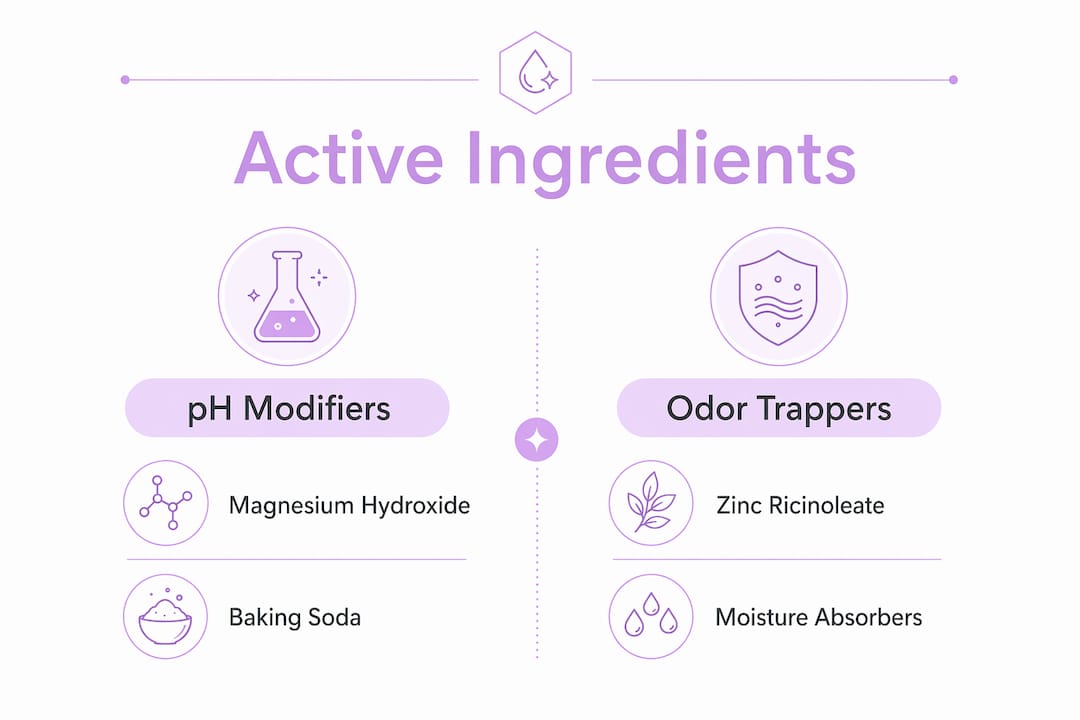
Zinc ricinoleate takes a different approach entirely. It physically traps odor molecules without changing the skin’s pH at all. This makes it a strong option for people whose skin reacts poorly to pH-altering ingredients. It does not kill bacteria or prevent sweating. It simply captures the volatile compounds before they reach your nose.
Moisture absorbers like arrowroot powder, cornstarch, kaolin clay, and activated charcoal round out most formulas. They do not control odor directly but reduce the wet environment bacteria thrive in, which lowers overall odor production.
| Ingredient | Mechanism | Best for |
|---|---|---|
| Magnesium hydroxide | Raises pH, neutralizes bacterial acids | Most skin types, sensitive skin |
| Baking soda | Neutralizes acids via pH shift | Normal skin, not sensitive skin |
| Zinc ricinoleate | Traps odor molecules physically | Sensitive or reactive skin |
| Arrowroot / cornstarch | Absorbs moisture | Reducing wetness and bacterial growth |
| Activated charcoal | Absorbs moisture and odor compounds | High-sweat users |
Pro Tip: If you have tried one natural deodorant and found it ineffective or irritating, the formula was likely the mismatch, not the concept. A magnesium hydroxide formula is the most reliable starting point for first-time switchers.
How does natural deodorant compare to antiperspirants?
This is where most people get confused, and the confusion is worth clearing up directly. Antiperspirants and natural deodorants do not do the same job. They solve different problems using different chemistry.
Antiperspirants contain aluminum compounds, typically aluminum chlorohydrate or aluminum zirconium. These compounds block sweat gland openings by reacting with electrolytes in sweat to form a gel inside the duct. No sweat reaches the skin surface. No sweat means no bacterial breakdown, which means no odor. The tradeoff is that you are physically plugging a biological function your body uses for temperature regulation and waste elimination.
Natural deodorants allow sweating. They control odor through the mechanisms described above but do not reduce sweat volume. For people with hyperhidrosis or those in physically demanding jobs, that distinction matters. For most people in everyday situations, odor control is the actual goal, not sweat suppression.
The cancer concern comes up frequently in this conversation. Dr. Kwan confirmed in 2026 that no scientific evidence links aluminum antiperspirants to cancer, a position consistent with the American Cancer Society’s long-standing guidance. The concern persists in consumer culture despite the science. If your reason for switching is cancer prevention, the evidence does not support that specific motivation. If your reason is skin health, microbiome preservation, or avoiding synthetic compounds, those are well-supported reasons.
| Feature | Natural deodorant | Antiperspirant |
|---|---|---|
| Stops sweating | No | Yes |
| Controls odor | Yes | Yes (by preventing sweat) |
| Alters microbiome | Minimally | Significantly |
| Aluminum content | None | Yes |
| Cancer risk | None | None (per current evidence) |
| Skin irritation risk | Low to moderate | Low to moderate |
One underreported benefit of long-term natural deodorant use: supporting beneficial bacteria over time leads to less odor even on days you skip application. Antiperspirant users who stop using their product often experience a sharp odor increase because the microbiome has been suppressed rather than balanced.
How to make the switch to natural deodorant successfully
The transition from antiperspirant to natural deodorant is real, and it is the most common reason people give up before the product has a chance to work. Understanding what happens biologically makes the process far more manageable.
When you stop using antiperspirant, the underarm microbiome shifts. Corynebacterium populations temporarily spike because the suppression is lifted. This causes a 2 to 4 week window of stronger odor that has nothing to do with your new deodorant’s effectiveness. Most people who quit during this period conclude that natural deodorant does not work. They are actually quitting right before the microbiome rebalances.
Here is a practical approach to getting through the transition:
- Start during a lower-activity period. Launching your switch during a vacation or work-from-home stretch reduces social pressure during the adjustment window.
- Wash the underarm area thoroughly once or twice daily. Reducing bacterial load through hygiene is more effective than applying more deodorant. A chemical-free body wash avoids reintroducing synthetic compounds that disrupt the microbiome you are trying to rebalance.
- Exfoliate the underarm skin weekly. Dead skin cells trap bacteria. Removing them reduces the surface area available for bacterial colonization. A natural body scrub works well here without irritating freshly transitioned skin.
- Adjust your diet. High-protein diets, processed foods, and low water intake all increase the concentration of compounds bacteria convert into odor. Diet and hydration directly affect sweat composition, and this is one of the most overlooked variables in natural deodorant effectiveness.
- Reapply midday if needed. Natural deodorants do not create a 24-hour plug the way antiperspirants do. A midday reapplication during the transition period is not a sign of failure. It is just how the product works.
- Give it at least four weeks. The microbiome needs time to rebalance. Consumers who understand the transition period show significantly better adherence than those who switch without any preparation.
Pro Tip: Wearing natural, breathable fabrics like cotton or linen during the transition period reduces bacterial buildup on clothing, which can re-contaminate clean skin and make the transition feel longer than it is.
Key takeaways
Natural deodorant works by neutralizing or trapping odor-causing bacterial acids, not by blocking sweat, and its long-term effectiveness improves as the underarm microbiome rebalances.
| Point | Details |
|---|---|
| Odor source | Bacteria like Corynebacterium break down sweat into smelly acids, not sweat itself. |
| Key ingredients | Magnesium hydroxide and zinc ricinoleate are the most skin-friendly active ingredients in 2026 formulas. |
| Antiperspirant difference | Antiperspirants block sweat glands with aluminum; natural deodorants neutralize odor without stopping sweat. |
| Transition period | Expect 2 to 4 weeks of microbiome adjustment with temporarily stronger odor before balance is restored. |
| Lifestyle factors | Diet, hydration, and skin hygiene directly affect how well any natural deodorant performs. |
What I have learned after years of watching people switch
The single biggest mistake I see is treating natural deodorant as a direct substitute for antiperspirant. It is not. It is a different product solving the same problem through a different mechanism, and expecting identical performance on day one sets people up to quit too early.
What I find genuinely interesting is the microbiome angle. Most personal care conversations focus on what you put on your skin. The more compelling question is what you are cultivating on your skin over time. People who stick with natural deodorant for three to six months consistently report that their odor becomes less intense overall, not just when they are wearing the product. That outcome does not happen with antiperspirants because you are suppressing the system rather than working with it.
I also think the aluminum-cancer debate has done real damage to honest conversations about why someone might choose natural deodorant. The fear-based marketing around aluminum is not supported by evidence, and leading with it undermines credibility. The real reasons to consider switching are skin health, microbiome preservation, and the long-term benefit of a more balanced underarm environment. Those reasons are solid and do not require exaggerating risk.
My honest recommendation: if you are sensitive to baking soda, start with a magnesium hydroxide formula. If you sweat heavily, pair it with an arrowroot or charcoal-based formula for moisture control. And give it a full month before you decide whether it works for you.
— Gimmi
Clean ingredients, real results from Jermaphobi4me

Jermaphobi4me builds personal care products around one principle: clean environments and healthy people start with what you put on your body. The top-selling natural products in the Jermaphobi4me collection are formulated for sensitive skin, pH balance, and effective odor control without synthetic compounds. For those building a full natural hygiene routine, the Jermaphobi’s Bundle Collection pairs deodorant-friendly body care with plant-based, eco-conscious options designed to support the microbiome you are working to rebalance. Every product in the line is selected to complement the switch, not complicate it.
FAQ
Does natural deodorant really work for heavy sweaters?
Natural deodorant controls odor but does not reduce sweat volume. Heavy sweaters can improve results by choosing formulas with arrowroot or activated charcoal for moisture absorption and reapplying midday as needed.
How long does the transition to natural deodorant take?
The transition period typically lasts 2 to 4 weeks. During this time, Corynebacterium populations spike as the microbiome adjusts, causing temporary stronger odor that resolves once beneficial bacteria rebalance.
Is magnesium hydroxide better than baking soda in natural deodorant?
Magnesium hydroxide provides comparable odor control with significantly less irritation risk. Baking soda is effective but raises skin pH aggressively, which causes contact dermatitis in many users.
Why choose natural deodorant over antiperspirant?
Natural deodorant preserves the skin’s microbiome and allows healthy sweating. Long-term use supports a more balanced underarm environment, which can reduce odor even on days without application.
Does aluminum in antiperspirant cause cancer?
No. The American Cancer Society and dermatologists including Dr. Kwan confirm there is no scientific link between aluminum antiperspirants and cancer. Consumer concern persists but is not supported by current evidence.
Recommended
- Types of Chemical-Free Body Wash: Your 2026 Guide – Gimmi Vitality Products dba Jermacilin Store
- How to Make a Natural Body Scrub at Home – Gimmi Vitality Products dba Jermacilin Store
- Why Men Need Clean Environments for Better Health – Gimmi Vitality Products dba Jermacilin Store
- How to Disinfect Your Kitchen Without Harsh Bleach – Gimmi Vitality Products dba Jermacilin Store