

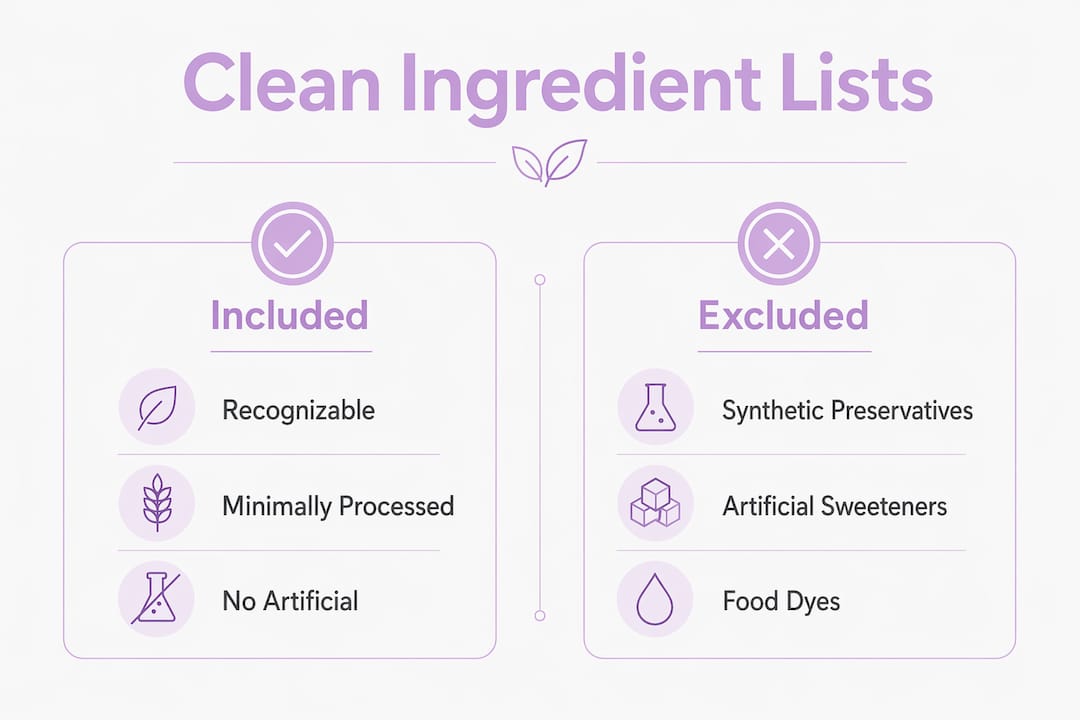
A clean ingredient list is defined as a product’s formula that contains a limited number of recognizable, minimally processed ingredients with no artificial colors, flavors, or synthetic preservatives. The term “clean label” is not a legal standard. No government agency enforces it. Instead, it is a consumer-driven concept shaped by growing demand for transparency in food, beauty, and wellness products. Understanding what a clean ingredient list means gives you real power at the shelf, whether you are choosing a moisturizer, a body wash, or a hand sanitizer.
What does a clean ingredient list mean in practice?
A clean ingredient list shares four common attributes: a limited number of ingredients, familiar recognizable names, no artificial additives, and minimal processing. Think of it as the “pantry test.” If you could find the ingredient in your kitchen cabinet, it likely passes. If you cannot pronounce it or picture what it looks like in nature, it probably does not meet clean label expectations.
Clean ingredients typically include:
- Plant-derived oils and extracts such as coconut oil, shea butter, and aloe vera
- Simple preservatives like vitamin E (tocopherol) or rosemary extract
- Natural colorants from sources like beet root or turmeric
- Recognizable acids such as citric acid, which occurs naturally in citrus fruits
- Water, salt, and other pantry staples that need no explanation
What clean ingredients exclude is equally telling. Artificial sweeteners, synthetic preservatives like sodium nitrite, and certain food dyes are primary additives to avoid in a clean lifestyle. The Environmental Working Group flags emulsifiers like polysorbate 80 for potential health risks as well.
Pro Tip: Apply the home kitchen test before buying any new product. Read the full ingredient list and ask yourself: could I buy each of these at a grocery store? If more than two or three ingredients fail that test, reconsider the product.

For beauty shoppers specifically, a clean body lotion checklist can help you cross-reference what you see on the label against accepted clean standards.
Is there an official legal definition of a clean ingredient list?
No official legal definition exists for a clean ingredient list, and that gap matters more than most shoppers realize. Terms like “organic” and “gluten-free” carry strict regulatory definitions enforced by agencies like the USDA and FDA. “Clean label” does not. Industry self-regulation and retailer standards fill that void instead of unified government rules.
This creates a fragmented system where one brand’s “clean” may look very different from another’s. A retailer might ban 50 ingredients from its clean beauty program while a competing retailer bans 1,500. Neither is wrong within their own framework, but neither is a universal standard either.
“Independent certifications are essential to address the fragmented regulatory environment and build consumer trust in clean label claims.” — Safic-Alcan industry analysis
Third-party certifications are increasingly how retailers standardize clean label criteria and give shoppers a reliable signal. Major retailers like Target and Sephora have launched their own clean labeling systems to help shoppers find personal care products free of many concerning ingredients. These programs are imperfect, but they are currently the most consistent guidance available to everyday shoppers.
The practical implication is straightforward. When a brand says “clean,” treat it as a starting point for investigation, not a final answer. The label is a marketing claim until a credible third party or your own ingredient research confirms it.
Common controversies around clean ingredient claims
The biggest tension in clean labeling is this: some additives exist for good reasons. A tension exists between consumer expectations for short, simple ingredient lists and the industry’s need for additives to ensure safety and shelf life. A preservative that extends a product’s life by 12 months may also prevent bacterial contamination that could harm you.
The “health halo” effect compounds this problem. A product marketed as clean may still be high in added sugar, sodium, or refined starches. The WHO recommends keeping added sugars below 10% of daily calories, yet a product with a short, natural-sounding ingredient list can easily exceed that threshold. A short list does not equal a healthy product.
| Ingredient | Sounds Concerning | Reality |
|---|---|---|
| Citric acid | Chemical name, E330 | Natural, found in citrus fruit, widely safe |
| Tocopherol | Scientific term | Vitamin E, a natural antioxidant |
| Ascorbic acid | Lab-sounding | Vitamin C, naturally occurring |
| Polysorbate 80 | Complex chemical name | Synthetic emulsifier, flagged for potential gut impact |
| Sodium nitrite | Preservative | Linked to health concerns, commonly avoided |
The distinction between consumer-driven “clean” and technical “clean” is real and important. Avoiding every ingredient with a scientific name or an E-number leads shoppers to reject safe, natural additives. Citric acid is a perfect example. It sounds like a lab chemical but occurs naturally in lemons and limes and poses no known health risk at standard doses.
Pro Tip: Search any unfamiliar ingredient on the EWG Skin Deep database before rejecting or accepting it. The database rates cosmetic ingredients by safety evidence, giving you a fact-based answer in under 30 seconds.
How to identify truly clean products
Reading an ingredient list correctly is a skill, and it takes about three minutes per product once you know what to look for. The home kitchen test is your first filter: scan the list and mentally flag any ingredient you could not buy at a grocery store. That does not mean every flagged ingredient is harmful, but it tells you where to focus your research.
Follow these steps when evaluating any product:
- Read the full ingredient list, not just the front label. Front-of-pack claims like “all-natural” or “free from” are marketing. The ingredient list is the legal record.
- Check for hidden sugars. Ingredients ending in “-ose” (sucrose, fructose, dextrose) are sugars. A product can list five different sugars and still appear “clean” on the front.
- Look for sodium in unexpected places. Sodium benzoate and disodium EDTA are preservatives, not seasoning. They count toward your sodium load.
- Cross-reference the nutrition panel. A three-part harmony between front claims, ingredient list, and nutrition facts is the clearest signal of a genuinely clean product.
- Prioritize third-party certified products. Certifications from organizations like the Environmental Working Group, NSF International, or USDA Organic add a layer of independent verification.
Avoid a wholesale product swap all at once. Replacing products gradually is the recommended approach, both for your budget and for giving your body time to adjust to new formulas. Start with the products you use most often and on the largest surface area of your skin.
A few red flags worth watching for:
- Vague claims like “all-natural” or “pure” with no certification to back them up
- Long lists of fragrance components hidden under the single word “fragrance”
- Products that avoid cleanwashing by listing natural-sounding ingredients first while burying synthetic ones at the end
For shoppers exploring chemical-free body wash options, the same principles apply. The ingredient list tells the full story that the front label never will.
Key Takeaways
A clean ingredient list means recognizable, minimally processed ingredients with no artificial additives, but no legal standard enforces that definition, so your own label-reading skills are the most reliable tool you have.
| Point | Details |
|---|---|
| No legal definition exists | “Clean label” is consumer-driven; no government agency enforces it like organic or gluten-free. |
| Four core attributes | Clean products have limited ingredients, familiar names, no artificial additives, and minimal processing. |
| Short lists are not always safer | A brief ingredient list can still hide high sugar, sodium, or synthetic compounds. |
| Third-party certifications help | Programs from EWG, NSF International, and major retailers add independent verification to clean claims. |
| Gradual replacement works best | Swap products one at a time, starting with those you use most and apply to the largest skin surface. |
My honest read on the clean label world
I have spent years watching the clean beauty and wellness space evolve, and the single biggest mistake I see is treating “clean” as a binary. Either a product is clean or it is not. That framing sets people up for frustration and, frankly, for being misled by clever marketing.
The reality is that clean is a spectrum. A product with 12 recognizable plant-based ingredients and one synthetic preservative is meaningfully different from a product loaded with artificial dyes and fragrance compounds. Both might carry a “clean” claim on the front. Neither is perfectly clean by every standard. Knowing that difference is what separates an informed shopper from one who just pays more for the same thing in prettier packaging.
What I have found actually works is building a short personal list of ingredients you will not accept, based on your own health priorities and any sensitivities you know you have. That list is more useful than any brand’s marketing. It travels with you to every store and every product category. It does not require you to trust a retailer’s definition of clean. It requires you to trust your own research.
The gradual transition approach is also genuinely underrated. Switching everything at once is expensive and disorienting. Replacing one product per month, starting with what touches your skin most, builds real knowledge over time. You notice what works, what your skin responds to, and what claims turn out to be hollow. That kind of firsthand experience is worth more than any certification.
Clean is not a destination. It is a practice of paying attention.
— Gimmi
Jermaphobi4me products built on clean ingredient principles
Jermaphobi4me was built on the belief that clean environments and healthy people go hand in hand. That belief shows up directly in the ingredient choices behind every product.
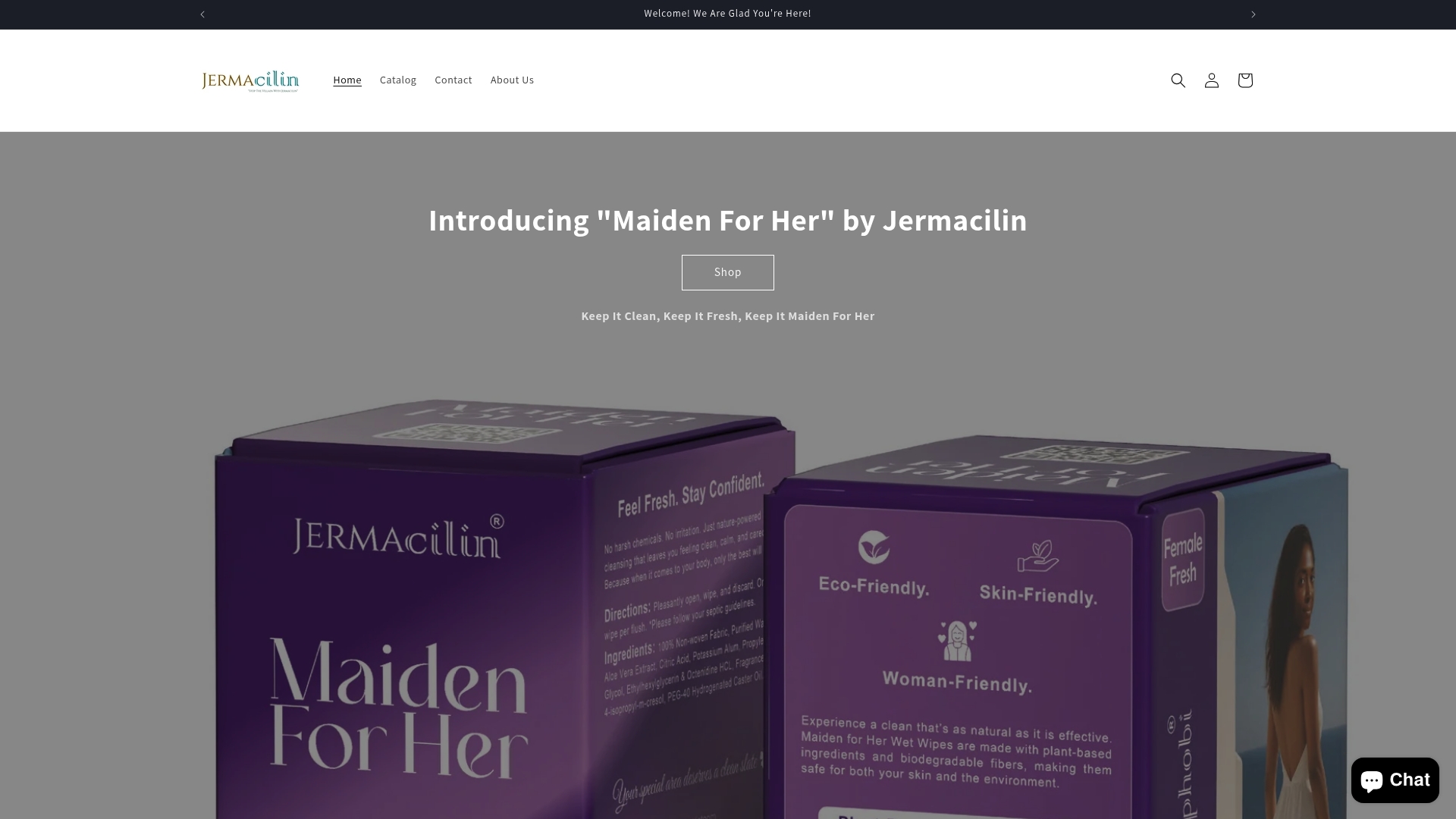
The Hand Hygiene Starter Kit brings together travel-sized hand hygiene essentials formulated with ingredient transparency at the center. No mystery compounds, no unnecessary fillers. For personal care on the go, the Maiden For Her wet wipes are plant-based, pH balanced, and eco-friendly, exactly the kind of product a clean ingredient checklist would approve. Both products reflect what this article has laid out: fewer ingredients, recognizable sources, and nothing that fails the home kitchen test.
FAQ
What does a clean ingredient list mean?
A clean ingredient list means a product contains a limited number of recognizable, minimally processed ingredients with no artificial colors, flavors, or synthetic preservatives. The term is consumer-driven and has no official legal definition.
Are clean labels regulated by the FDA or USDA?
No. Unlike “organic” or “gluten-free,” the term “clean label” carries no legal enforcement from the FDA or USDA. Industry self-regulation and third-party certifications currently fill that gap.
Is a shorter ingredient list always cleaner?
Not necessarily. A short ingredient list can still contain high levels of added sugar, sodium, or synthetic compounds. Always cross-reference the ingredient list with the nutrition facts panel for a complete picture.
What ingredients should I avoid for a clean lifestyle?
Artificial sweeteners, synthetic preservatives like sodium nitrite, certain food dyes, and emulsifiers like polysorbate 80 are commonly flagged. The EWG’s Dirty Dozen guide to food chemicals is a reliable reference for identifying ingredients to avoid.
How do I know if a clean label claim is trustworthy?
Look for third-party certifications from organizations like EWG, NSF International, or USDA Organic. Check that the front-of-pack claim, the full ingredient list, and the nutrition facts panel all tell a consistent story before trusting any clean label claim.
Recommended
- Clean Body Lotion Ingredients Checklist for 2026 – Gimmi Vitality Products dba Jermacilin Store
- What Is Chemical-Free Cleaning? A Practical Guide – Gimmi Vitality Products dba Jermacilin Store
- What Does Eco-Friendly Cleaner Mean for Your Home? – Gimmi Vitality Products dba Jermacilin Store
- What Does Biodegradable Cleaner Mean? A Clear Guide – Gimmi Vitality Products dba Jermacilin Store