

The role of gut health in skin condition is direct and measurable: your gut microbiome regulates the immune responses, inflammatory signals, and metabolic compounds that determine whether your skin stays clear or breaks down. The gut-skin axis, as researchers now call this bidirectional network, connects trillions of gut bacteria to visible skin outcomes through pathways involving immune cells, short-chain fatty acids (SCFAs), and neuroendocrine signaling. Chronic skin conditions like acne, psoriasis, and atopic dermatitis all show a consistent pattern of disrupted gut bacterial diversity. Understanding this connection gives you a real target for improving your skin from the inside out.
How does the gut microbiome affect skin health?
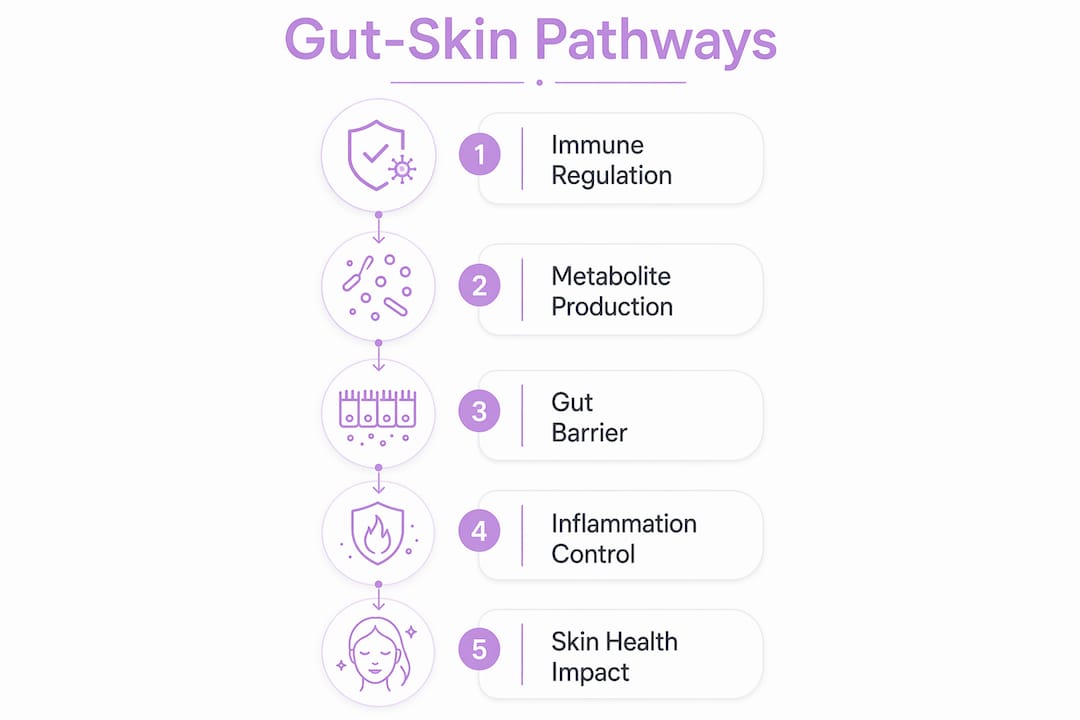
The gut microbiome influences skin through three primary pathways: immune modulation, metabolite production, and gut barrier integrity. Each one has a direct effect on how your skin looks and behaves.
SCFAs and inflammation control
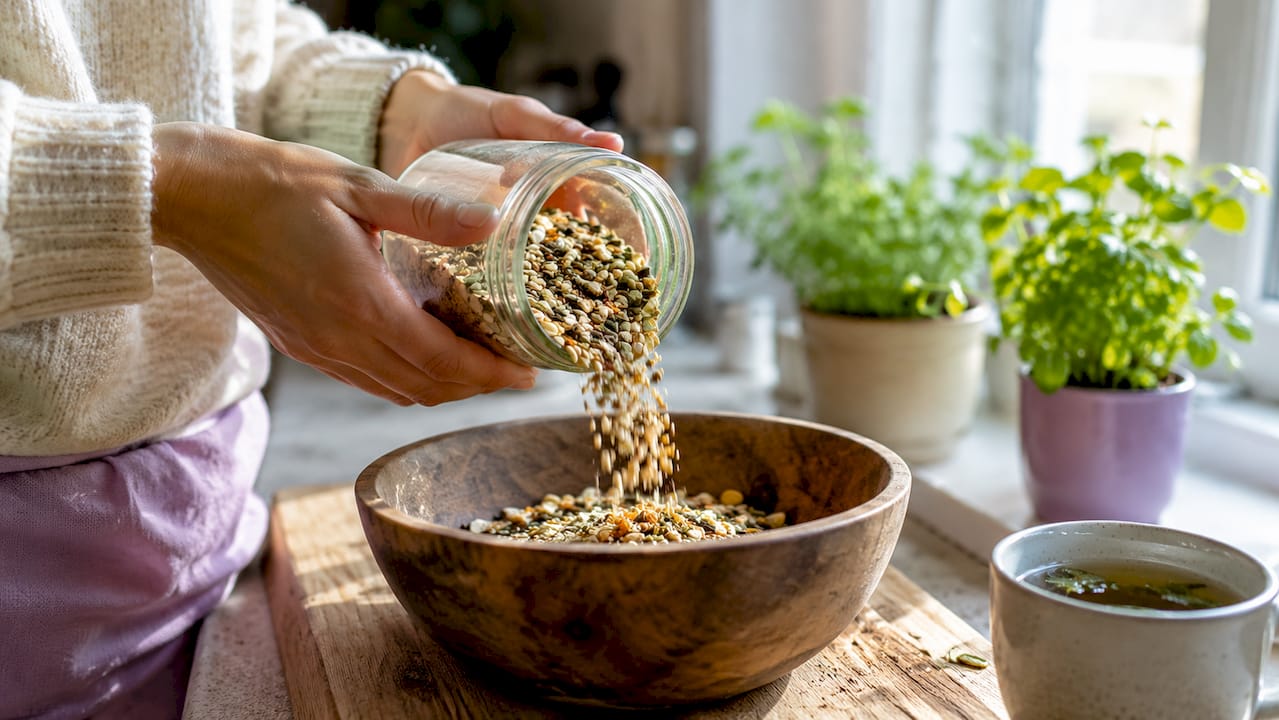
Gut bacteria ferment dietary fiber to produce SCFAs, including butyrate, propionate, and acetate. These compounds inhibit inflammatory cytokines and block NF-κB signaling, one of the main molecular switches that triggers skin inflammation. That means a fiber-rich diet does not just feed your gut. It actively suppresses the inflammatory signals that cause redness, breakouts, and flares.
Gut barrier integrity
A healthy gut lining prevents bacteria, toxins, and undigested food particles from leaking into the bloodstream. When the gut barrier weakens, a condition researchers call increased intestinal permeability, these particles trigger systemic inflammation. That inflammation shows up on your skin. Water quality and skin health research confirms that systemic inflammatory triggers, including those from gut permeability, directly affect skin condition.
Immune cell modulation
The gut houses roughly 70% of the body’s immune cells. Gut bacteria regulate T-cell populations, including regulatory T cells that suppress overactive immune responses. The gut-skin connection is mediated specifically through T-cell pathway activations implicated in psoriasis and atopic dermatitis. When gut bacteria are out of balance, T-cell regulation fails, and the immune system attacks skin tissue.
- SCFAs produced by gut bacteria reduce skin inflammation at the molecular level
- A damaged gut barrier allows inflammatory triggers to reach the skin via the bloodstream
- T-cell dysregulation from gut imbalance drives chronic skin diseases like psoriasis
- Beneficial genera including Faecalibacterium, Bifidobacterium, and Akkermansia are consistently lower in people with chronic skin conditions
Pro Tip: Eating 30 or more different plant foods per week is one of the most studied methods for increasing gut bacterial diversity and SCFA production.
What evidence supports probiotics for skin conditions?
The clinical evidence for probiotics in skin health is specific and growing. Two areas have the strongest data: acne vulgaris and atopic dermatitis.
| Skin Condition | Intervention | Key Finding |
|---|---|---|
| Acne vulgaris | Probiotic supplementation | Mean total lesion reduction of 45%; inflammatory lesions reduced by over 60% |
| Atopic dermatitis | Probiotic supplementation | Significant risk reduction in adults; Effect Size = -6.61, P = 0.000 |
| Skin inflammation | Dietary fiber + probiotics | SCFA production increases, reducing cytokine-driven skin flares |
| Gut dysbiosis | Synbiotic therapy | Adjunctive improvement in skin condition alongside standard treatment |
The acne data is particularly striking. A mean 45% reduction in total lesions is not a marginal effect. It is the kind of result that changes how dermatologists think about adjunct treatment. The atopic dermatitis finding carries equal weight: an effect size of -6.61 with a P value of 0.000 indicates a statistically strong relationship, not a coincidence.
Probiotics also work through pathways beyond simple bacterial balance. They increase production of conjugated linoleic acid and influence tryptophan metabolism via aryl hydrocarbon receptor (AHR) signaling. AHR signaling directly regulates skin barrier function and immune tolerance. This is why the role of probiotics in skin health extends well beyond basic gut support.
Dietary fiber is the essential partner to probiotics. Supplements alone often fail without adequate fiber intake because SCFAs require fiber as their raw material. Probiotic bacteria need something to ferment. Without fiber, the metabolic output that benefits your skin simply does not occur.
Pro Tip: Pair a probiotic supplement with a high-fiber meal, such as lentils, oats, or roasted vegetables, to maximize SCFA production from each dose.
What other factors shape the gut-skin connection?
The gut-skin axis does not operate in isolation. Three factors consistently modify outcomes: chronic stress, treatment timelines, and the use of synbiotics.
Chronic stress overrides gut improvements
Psychological stress activates the hypothalamic-pituitary-adrenal (HPA) axis. When the HPA axis fires chronically, it disrupts gut motility, alters microbial composition, and increases intestinal permeability. The result is that stress can override even a well-structured probiotic and fiber protocol. Skin flares during high-stress periods are not random. They reflect a measurable disruption in the gut-skin axis driven by neuroendocrine signaling.
Realistic timelines for skin improvement
Gut-focused skin improvements are not immediate. Clinical evidence suggests several weeks to months before tangible skin changes appear. This is because microbiome shifts take time, and the downstream effects on immune regulation and SCFA production accumulate gradually. Setting realistic expectations prevents people from abandoning effective protocols too early.
Synbiotics as adjunct therapy
Synbiotics combine prebiotics and probiotics in a single formulation. The prebiotic component feeds the probiotic bacteria, improving their survival and activity in the gut. The gut-skin axis responds better to synbiotics than to probiotics alone in several studies, making them a stronger choice for people dealing with persistent skin conditions.
- Chronic stress disrupts the gut-skin axis through HPA axis activation, not just through diet
- Skin results from gut interventions typically require weeks to months, not days
- Synbiotics outperform standalone probiotics for people with chronic skin conditions
- The brain-gut-skin axis connects psychological state, gut bacteria, and skin inflammation in one continuous loop
How can you improve your skin by supporting gut health?
Practical gut-skin support follows a clear sequence. Each step builds on the previous one.
-
Increase dietary fiber to 25–38 grams per day. Fiber from sources like oats, legumes, flaxseed, and leafy greens fuels SCFA production. Without adequate fiber, beneficial gut bacteria cannot produce the anti-inflammatory compounds your skin needs. Start by adding one high-fiber food to each meal rather than overhauling your entire diet at once.
-
Add a probiotic or synbiotic supplement with documented strains. Look for products containing Lactobacillus and Bifidobacterium strains, which have the most clinical evidence for skin-related outcomes. Take them consistently for at least eight weeks before evaluating results. Pairing them with fiber-rich meals improves their effectiveness.
-
Manage stress with structured techniques. Mindfulness-based stress reduction (MBSR) and cognitive behavioral therapy (CBT) are the two most studied approaches for reducing HPA axis overactivation. Even 10 minutes of daily mindfulness practice reduces cortisol levels enough to measurably affect gut function. Stress management is not optional for gut-skin health. It is part of the protocol.
-
Avoid gut-disrupting substances. Alcohol, ultra-processed foods, and unnecessary antibiotic use all reduce gut bacterial diversity and damage the gut barrier. Artificial sweeteners like sucralose and saccharin also alter gut microbiome composition in ways that reduce beneficial bacteria. Removing these is as important as adding probiotics.
-
Incorporate fermented foods alongside supplements. Yogurt, kefir, kimchi, sauerkraut, and miso introduce live bacteria directly into the gut. They also contain organic acids that support gut barrier integrity. Fermented foods work synergistically with fiber and probiotic supplements rather than replacing them.
-
Track your skin alongside your diet. Keep a simple log of what you eat, your stress levels, and your skin condition. Patterns typically emerge within four to six weeks. This data helps you identify which specific foods or stressors correlate with flares, giving you a personal map of your gut-skin axis. Exploring clean skincare products alongside dietary changes can further reduce the external triggers that compound gut-driven inflammation.
Key Takeaways
The gut microbiome directly controls skin health through SCFA production, gut barrier integrity, and immune cell regulation, making diet and stress management the most effective tools for clear skin.
| Point | Details |
|---|---|
| SCFAs reduce skin inflammation | Gut bacteria convert dietary fiber into SCFAs that block inflammatory signals at the molecular level. |
| Probiotics show strong clinical results | Probiotic supplementation reduces acne lesions by a mean of 45% and significantly lowers atopic dermatitis risk. |
| Stress disrupts gut-skin progress | Chronic stress activates the HPA axis and overrides dietary improvements, requiring active stress management. |
| Results take weeks to months | Microbiome shifts and their skin effects accumulate gradually; expect tangible results after several weeks of consistent effort. |
| Synbiotics outperform probiotics alone | Combining prebiotics and probiotics improves bacterial survival and produces stronger skin outcomes than probiotics alone. |
Why I think most people are fixing the wrong end of the problem
Most people dealing with acne or eczema reach for a new topical product first. I understand the instinct. The skin is where the problem is visible. But after spending years looking at the research on the gut-skin axis, I am convinced that topical treatments address the symptom while the gut drives the cause.
What surprises people most is the stress piece. You can eat a near-perfect diet, take a high-quality synbiotic, and still see skin flares during a stressful month. The HPA axis is that powerful. Mind-body practices are not a soft add-on to a gut health protocol. They are a core requirement.
The other thing I have learned is that diversity matters more than any single strain or supplement. A gut microbiome with 200 different bacterial species handles inflammation far better than one dominated by three or four. That diversity comes from eating a wide range of whole plant foods, not from taking a single probiotic capsule. The capsule helps. The food variety is what builds the foundation.
Patience is the hardest part. People expect skin to respond in two weeks. The clinical data says several weeks to months. Commit to the full protocol, track your results honestly, and resist the urge to switch strategies before the current one has had time to work.
— Gimmi
Jermaphobi4me and your gut-skin wellness
Jermaphobi4me was built on one idea: clean environments and healthy people go together. That same thinking applies to what you put inside your body.

Jermaphobi4me carries products designed to support the gut-skin connection from both directions, including prebiotic and probiotic formulations paired with clean skincare options that do not disrupt your microbiome. Every product reflects the same standard: evidence-based, free from unnecessary additives, and suited to people who take their health seriously. Visit Jermaphobi4me to find gut and skin support products that match the science behind what you have just read.
FAQ
What is the gut-skin axis?
The gut-skin axis is the bidirectional communication network between the gut microbiome and the skin, operating through immune, metabolic, and neuroendocrine signaling pathways. Disruptions in gut bacterial balance directly trigger inflammatory skin conditions including acne, psoriasis, and atopic dermatitis.
Can gut health improve skin conditions like acne?
Yes. Probiotic supplementation reduces acne lesions by a mean of 45% and inflammatory lesions by over 60% in clinical studies. Combining probiotics with a high-fiber diet produces the strongest results by maximizing SCFA production.
How long does it take for gut health changes to improve skin?
Clinical evidence indicates several weeks to months before tangible skin improvements appear from gut-focused interventions. Consistency with diet, probiotics, and stress management throughout that period is what determines the outcome.
What foods most directly support the gut-skin connection?
High-fiber foods like oats, legumes, and leafy greens fuel SCFA production, while fermented foods like kefir, kimchi, and sauerkraut introduce beneficial bacteria directly. Both categories work together to support gut barrier integrity and reduce skin inflammation.
Do stress levels really affect skin through the gut?
Chronic stress activates the HPA axis, which disrupts gut motility, reduces microbial diversity, and increases intestinal permeability. This cascade triggers systemic inflammation that surfaces as skin flares, making stress management a non-negotiable part of any gut-skin protocol.
Recommended
- How Water Quality Affects Your Skin Health – Gimmi Vitality Products dba Jermacilin Store
- What Is a Clean Home Environment? Your Health Guide – Gimmi Vitality Products dba Jermacilin Store
- How to Balance Skin Without Harsh Chemicals – Gimmi Vitality Products dba Jermacilin Store
- What Is Double Cleansing? Your Skin-Clearing Guide – Gimmi Vitality Products dba Jermacilin Store