

Water quality is a direct determinant of skin health, shaping your skin’s hydration levels, barrier function, and sensitivity every time you wash, shower, or drink. The role of water quality in skin goes far beyond simple cleanliness. Minerals like calcium and magnesium, disinfectants like chlorine, and even water temperature each alter how your skin looks and feels. Dermatology research confirms that hard water raises eczema risk by up to 200%, and daily exposure to chlorinated water strips the protective oils your skin depends on. Understanding these mechanisms gives you real control over your skin’s condition.
How do hard water minerals affect your skin barrier?
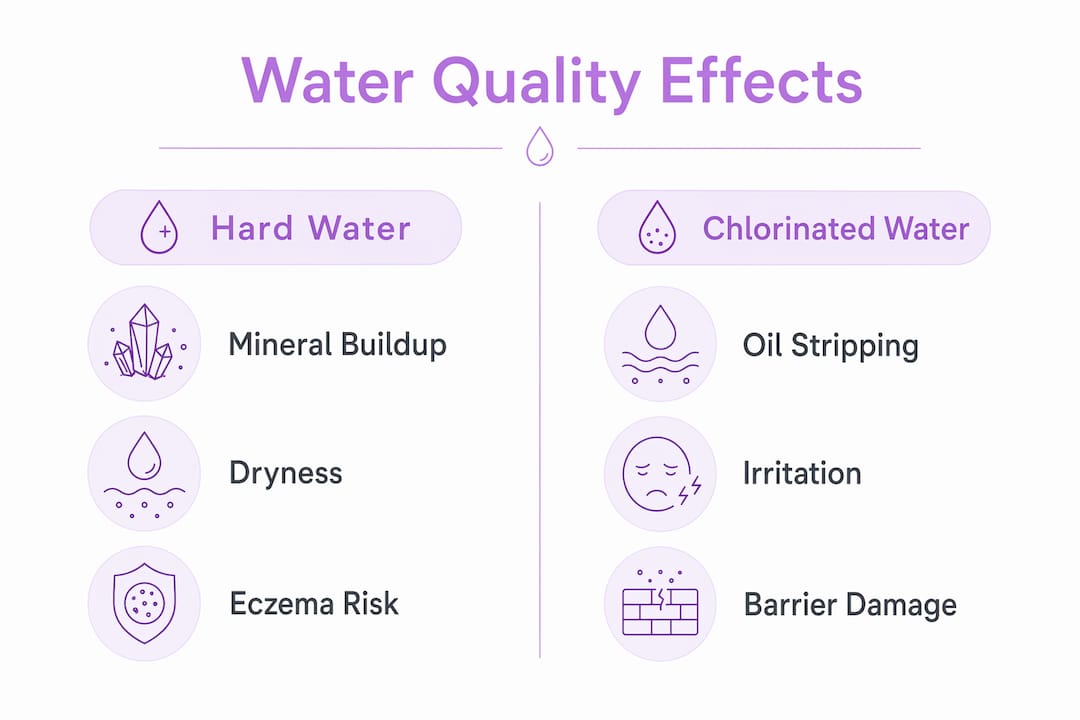
Hard water is defined as water containing elevated concentrations of dissolved calcium and magnesium. These minerals are harmless to drink, but they cause measurable damage when they contact your skin repeatedly.
The core problem is soap scum. When hard water mixes with soap or cleanser, calcium and magnesium bind to the soap’s fatty acids to form insoluble calcium and magnesium stearate. This residue coats your skin rather than rinsing away cleanly. That “squeaky clean” feeling after washing in hard water is not a sign of good cleansing. It signals that soap scum is sitting on your skin, blocking your pores and preventing moisturizers from absorbing properly.
The consequences compound over time:
- Increased transepidermal water loss: Soap scum disrupts the skin’s lipid barrier, allowing moisture to escape faster than normal.
- Blocked moisturizer absorption: The mineral film on skin reduces how much of your lotion or serum actually penetrates.
- Elevated eczema risk: Research links hard water exposure to eczema risk increases of up to 200%, particularly in children and people with sensitive skin.
- Chronic dryness and irritation: Mineral buildup raises skin pH, which weakens the acid mantle that protects against bacteria and environmental irritants.
Pro Tip: If your skin feels tight and dry after washing but your moisturizer seems to “sit on top” without absorbing, hard water mineral residue is likely the cause. A water softener or a chelating cleanser can break this cycle.
The skin barrier is built from lipids, ceramides, and natural moisturizing factors. Hard water minerals interfere with all three. Choosing a chemical-free body wash formulated for mineral-heavy water can reduce the irritation load significantly.
What does chlorine in shower water do to your skin?
Chlorine and chloramines are standard disinfectants in municipal water supplies. They keep drinking water safe, but their effects on skin during showering are a separate issue entirely.
Shower water exposure is fundamentally different from drinking water exposure. When you shower in warm water, your pores open and your skin becomes more permeable. Warm water opens pores, increasing absorption of volatile contaminants in unfiltered shower water. Steam also carries chlorine byproducts directly into your lungs, compounding the exposure beyond what skin alone absorbs.
Chlorine is an oxidizing agent. On skin, it does the following:
- Strips sebum: Chlorine oxidizes the natural oils your skin produces, leaving the surface dry and unprotected.
- Disrupts the skin microbiome: The same antimicrobial action that kills waterborne pathogens also kills beneficial bacteria on your skin’s surface.
- Degrades the skin barrier: Repeated chlorine exposure leads to chronic dryness, sensitivity, and eczema flare-ups, especially in areas with chloraminated water.
- Triggers cumulative damage: The effects are not immediate. Daily exposure over months and years gradually degrades barrier integrity and microbiome diversity.
People with eczema, rosacea, or naturally sensitive skin feel these effects faster and more intensely. But even people with no diagnosed skin condition experience dryness and dullness from long-term chlorinated shower exposure.
Pro Tip: Install a carbon-block shower filter rated for chloramine removal, not just chlorine. Many basic filters only address free chlorine and leave chloramines untouched. Check the filter’s certification against NSF/ANSI Standard 177 for shower filtration.
Shower chemistry is a neglected factor in skin conditions that do not respond to topical treatments. If your skincare routine is not delivering results, your shower water may be undoing the work.
Does drinking more water actually improve your skin?
Drinking water supports skin health through systemic hydration, but the mechanism is more specific than most people assume. Water does not travel directly to the outer epidermis where dryness is visible. Instead, it moves through aquaporin channels to support cellular functions in the deeper dermis.
The practical implication is important. Drinking more water benefits people who are already dehydrated more than it benefits those who are adequately hydrated. A controlled study of 34 healthy women found that increasing daily water intake by 2 liters significantly improved both superficial and deep skin hydration, with no change in body weight. The result indicates that the additional water redistributed to skin tissue rather than being excreted. For people who are chronically under-hydrated, this effect is real and measurable.
| Hydration source | Where it acts | Primary benefit |
|---|---|---|
| Drinking water | Deep dermis via bloodstream | Supports cellular function and deep skin hydration |
| Topical moisturizer | Outer epidermis and stratum corneum | Seals moisture and repairs surface barrier |
| Filtered shower water | Skin surface during cleansing | Reduces irritant exposure and preserves barrier lipids |
Water intake supports cellular health but does not replace skincare or diet. Hydration forms a foundation rather than a cure for skin appearance. Moisturizers and serums work on the outer layers that drinking water cannot directly reach. The two approaches are complementary, not interchangeable.
What practical steps protect your skin from poor water quality?
The impact of poor water quality on skin is incremental. Cumulative daily exposure to hard water and chlorinated water degrades the skin barrier and microbiome over years, not days. That slow timeline makes it easy to overlook water as the source of chronic skin problems.
Filtration and softening
Water softeners replace calcium and magnesium ions with sodium ions, eliminating soap scum formation and reducing transepidermal water loss. Shower filters with carbon block or KDF media reduce chlorine and chloramine levels at the point of contact. Both solutions address different problems and work best together in hard, chlorinated water areas.
Temperature and timing
Hot showers accelerate barrier damage. Warm water, not hot, is the practical standard for skin protection. Limiting shower time to 10 minutes or less reduces cumulative chlorine exposure per session. Applying moisturizer within 3 minutes of stepping out of the shower locks in residual moisture before the skin surface dries completely.
Skincare product selection
Hard water minerals reduce cleanser efficacy and block moisturizer absorption. This means expensive serums and creams deliver less benefit when applied after washing in unfiltered hard water. Chelating agents in cleansers, such as EDTA, bind to mineral ions and prevent soap scum formation. Reviewing your body lotion ingredients for chelating and barrier-supporting compounds is a practical first step.
Signs your water may be harming your skin
- Skin feels tight or itchy immediately after washing
- Moisturizer absorbs poorly or leaves a greasy film
- Eczema or dryness worsens in winter when indoor heating concentrates mineral exposure
- Skin conditions improve noticeably when you travel to areas with different water
Thermal spring waters offer a contrast worth noting. Thermal spring waters exhibit anti-inflammatory and barrier-repairing effects, with clinical evidence supporting their use in psoriasis and acne management. Their mineral profiles differ fundamentally from hard tap water, containing silica, selenium, and bicarbonates rather than calcium and magnesium at damaging concentrations.
Key takeaways
Water quality directly and cumulatively shapes skin health through mineral content, chemical disinfectants, and temperature, making filtration and informed skincare choices the most effective response.
| Point | Details |
|---|---|
| Hard water raises eczema risk | Calcium and magnesium in hard water can increase eczema risk by up to 200% and block moisturizer absorption. |
| Chlorine strips skin oils daily | Chlorine and chloramines in shower water oxidize sebum and disrupt the skin microbiome with every wash. |
| Drinking water helps the dehydrated most | Increasing water intake improves deep skin hydration significantly in people who are chronically under-hydrated. |
| Filtration protects your skincare investment | Hard water minerals reduce cleanser and moisturizer efficacy, making filters a practical tool for better results. |
| Damage accumulates over years | Skin barrier degradation from poor water quality is slow and cumulative, requiring consistent long-term management. |
Water quality is the missing variable in most skincare routines
Most people troubleshoot their skin by changing products. They switch cleansers, try new serums, and add steps to their routine. What they rarely change is the water those products are applied with or rinsed off in. That oversight is where I see the most wasted effort in skin care.
I’ve watched people invest heavily in barrier-repair creams while showering daily in hard, chlorinated water. The cream addresses the symptom. The water recreates the problem every morning. It’s a cycle that keeps skin perpetually reactive without ever resolving the root cause.
The insight that shifted my thinking was understanding that tap water directly undermines the effectiveness of cleansers and moisturizers. A $60 serum applied after washing in mineral-heavy water is working at a fraction of its potential. The water is not neutral. It is an active variable in your skin’s daily environment.
My recommendation is to treat water quality as a first-order concern, not an afterthought. Start with a simple shower filter. Notice whether your skin feels different after two weeks. If you live in a hard water area, consider a whole-home softener or at minimum a point-of-use filter at the shower. Pair that with a double cleansing routine that removes mineral residue before applying treatment products.
The people who see the most dramatic skin improvements are often those who address water quality and skincare together. Neither alone is as effective as both combined.
— Gimmi
Skin care that works with your water, not against it
Jermaphobi4me builds products for people who take their skin environment seriously. If you’ve addressed your water quality and want a skincare routine that matches that effort, the Lemeric Cleanser and Natural Brightening Stick is designed to complement cleaner water conditions and support sensitive or dry skin types.

Jermaphobi4me’s approach centers on clean ingredients that work with your skin’s natural barrier rather than against it. For people managing hard water or chlorine exposure, pairing a quality filter with a gentle, barrier-respecting cleanser closes the loop between your water environment and your skin results. Clean environments and healthy skin are not separate goals. They are the same goal.
FAQ
What is the role of water quality in skin health?
Water quality directly affects skin hydration, barrier function, and irritation levels through mineral content, chemical disinfectants, and pH. Both the water you drink and the water you wash with contribute to your skin’s daily condition.
Does hard water cause skin problems?
Hard water minerals, primarily calcium and magnesium, form soap scum on skin that blocks moisturizer absorption and raises eczema risk by up to 200%. The damage is cumulative and worsens with daily exposure over time.
How does chlorine in shower water affect skin?
Chlorine oxidizes skin’s natural oils, disrupts the microbiome, and degrades the skin barrier with repeated exposure. People with sensitive skin or eczema experience these effects more intensely and more quickly than others.
Can drinking more water improve your skin’s appearance?
Increasing water intake improves deep skin hydration, particularly in people who are chronically dehydrated. Drinking water supports the dermis through aquaporin channels but does not directly hydrate the outer epidermis where surface dryness occurs.
How can I tell if my water is harming my skin?
Key signs include skin tightness after washing, poor moisturizer absorption, worsening dryness in winter, and skin that improves noticeably when you travel. A shower filter or water softener is the most direct way to test whether water quality is a factor.
Recommended
- Why a Clean Environment Boosts Wellness and Health – Gimmi Vitality Products dba Jermacilin Store
- DIY Natural Face Mask Recipes for Every Skin Type – Gimmi Vitality Products dba Jermacilin Store
- Why Men Need Regular Handwashing for Better Health – Gimmi Vitality Products dba Jermacilin Store
- Clean Body Lotion Ingredients Checklist for 2026 – Gimmi Vitality Products dba Jermacilin Store