

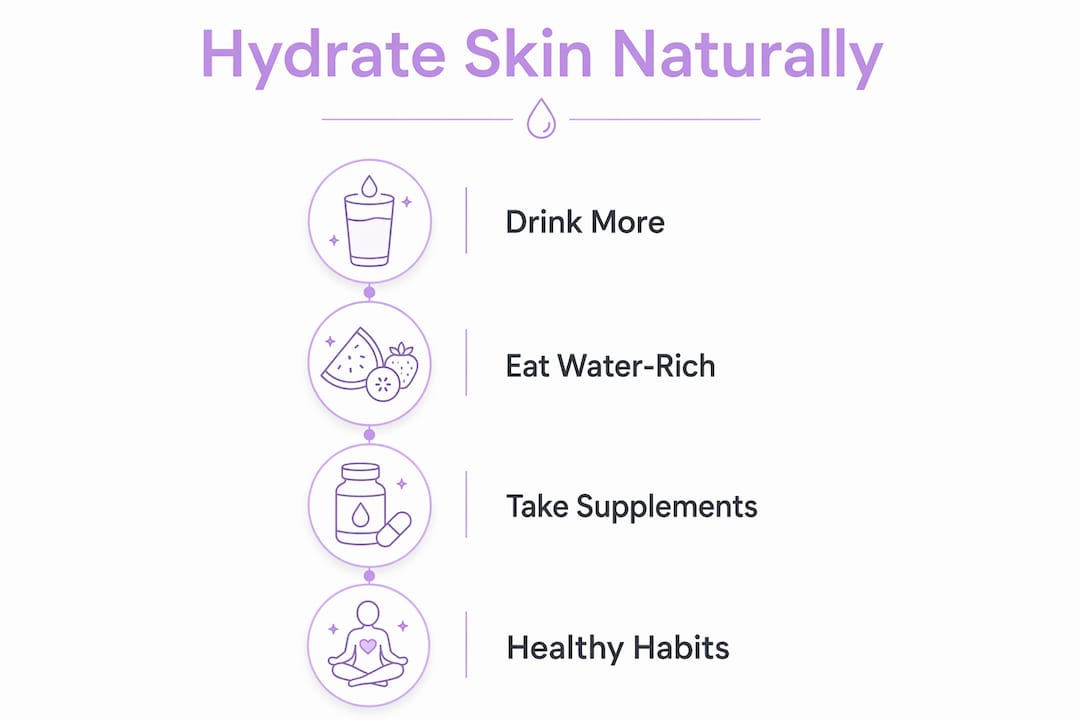
Skin hydration from the inside out is defined as the process of supplying your skin cells with moisture through what you eat, drink, and supplement rather than relying solely on topical creams. The most effective ways to hydrate skin naturally from inside combine daily fluid intake, water-rich whole foods, targeted oral supplements like sodium hyaluronate and piceatannol, and lifestyle habits that protect your skin barrier. Recent clinical research confirms that internal hydration strategies produce measurable improvements in skin moisture and texture that topical products alone cannot replicate. This guide breaks down each layer of that approach with specific foods, proven supplements, and daily habits you can start today.
How do you hydrate skin naturally from inside?
The foundation of internal skin moisture is fluid intake. Most adults need 8–10 glasses of water daily to maintain adequate skin hydration, and the type of fluid matters as much as the quantity. Plain water is the most direct source, but herbal teas like chamomile and green tea also contribute to your daily total while delivering antioxidants that support skin health.
Caffeinated and alcoholic beverages dehydrate the body when consumed in excess, pulling moisture away from skin cells. One cup of coffee is unlikely to cause visible dryness, but three or more cups daily without compensating water intake will show up on your skin over time.

Electrolyte-rich drinks deserve more credit than they get for natural skin hydration. Coconut water, for example, delivers potassium and magnesium that help cells retain water more efficiently than plain water alone. Sports drinks work too, though many contain added sugars that offset their benefits.
Here is a practical daily fluid plan to support skin moisture from within:
- Drink one large glass of water first thing in the morning before coffee or food.
- Carry a 32-ounce water bottle and refill it at least twice before dinner.
- Replace one caffeinated drink per day with herbal tea or coconut water.
- Drink an extra glass of water for every alcoholic beverage you consume.
- Check your urine color. Pale yellow means you are well hydrated. Dark yellow means drink more.
Pro Tip: Set a phone reminder every 90 minutes to drink water. Most people underestimate how much fluid they lose through breathing and daily activity, especially in air-conditioned environments.
What foods actually hydrate your skin from within?
Foods for skin hydration work on two levels. Water-rich fruits and vegetables directly increase your body’s fluid content, while specific nutrients strengthen the skin barrier so moisture stays locked in longer.
Cucumber, watermelon, celery, strawberries, and oranges all contain more than 90% water by weight. Eating a cup of watermelon delivers roughly half a cup of water directly into your system. That adds up meaningfully across a day of varied eating.
Nutrients are the second layer. Vitamin C supports collagen production, which keeps skin firm and better able to retain moisture. Vitamin E acts as a fat-soluble antioxidant that protects cell membranes from oxidative damage. Zinc regulates oil production and supports skin repair. Linoleic acid, found in sunflower seeds and flaxseeds, is a fatty acid that reinforces the skin barrier and reduces transepidermal water loss.
Piceatannol, a stilbenoid antioxidant found in passion fruit seeds and grapes, has emerged as a standout nutrient for skin moisture. A 2026 randomized trial with 86 adult women found that daily piceatannol supplementation for 8 weeks significantly increased stratum corneum hydration and reduced wrinkle severity compared to placebo. That is a measurable cosmetic result from a dietary compound, not a topical cream.
The best foods for skin hydration include:
- Watermelon and cucumber for direct water content
- Avocado for healthy fats and vitamin E
- Salmon and sardines for omega-3 fatty acids that support the lipid barrier
- Sunflower seeds for linoleic acid and vitamin E
- Bell peppers and citrus fruits for vitamin C
- Leafy greens like spinach and kale for zinc and antioxidants
- Walnuts for alpha-linolenic acid, a plant-based omega-3
Pro Tip: Pair vitamin C-rich foods with iron-rich greens at the same meal. Vitamin C enhances iron absorption, and iron supports healthy circulation that delivers nutrients to skin cells.
Which oral supplements are proven to boost skin hydration?
Oral supplements for skin hydration have moved well beyond marketing claims. Two compounds now have strong clinical backing: sodium hyaluronate and piceatannol.
Sodium hyaluronate is the water-soluble salt form of hyaluronic acid. A 2025 randomized double-blind study of 150 healthy adults found that 120 mg of oral sodium hyaluronate daily for 12 weeks increased cheek skin hydration by 11.5% compared to placebo. That study also showed improvements in skin barrier function and signs of aging. The mechanism is straightforward: hyaluronic acid molecules hold up to 1,000 times their weight in water, and oral intake raises systemic levels that reach the dermis.
Piceatannol, as noted above, showed significant results in an 8-week trial. The compound works by activating pathways that increase ceramide production in the skin, which directly strengthens the barrier and reduces water evaporation.
| Supplement | Dose Studied | Duration | Key Result |
|---|---|---|---|
| Sodium hyaluronate | 120 mg/day | 12 weeks | 11.5% increase in cheek skin hydration |
| Piceatannol | Beverage form | 8 weeks | Increased stratum corneum hydration, reduced wrinkles |
| Vitamin C | 500–1,000 mg/day | Ongoing | Supports collagen synthesis and antioxidant defense |
| Omega-3 fatty acids | 1,000–2,000 mg/day | 12+ weeks | Reinforces lipid barrier, reduces dryness |
When selecting supplements, look for third-party tested products with clear dosage labeling. Sodium hyaluronate supplements from reputable brands typically range from 100–200 mg per serving. Avoid products that list “hyaluronic acid complex” without specifying the molecular weight or dose.
Pro Tip: Take sodium hyaluronate supplements with a full glass of water. The compound needs available water to function. Taking it dry or with minimal fluid reduces its effectiveness.
What lifestyle habits support internal skin moisture?
Diet and supplements work best when your daily habits do not actively undermine them. Several lifestyle factors directly affect how well your body retains and delivers moisture to skin cells.
Exercise improves blood circulation, which increases nutrient and oxygen delivery to the skin. Even 30 minutes of moderate cardio three times per week produces visible improvements in skin tone and texture over several months. The sweating that comes with exercise also flushes out toxins that can clog pores and disrupt the skin barrier.
Sleep is when your skin does most of its repair work. During deep sleep, your body increases blood flow to the skin and produces growth hormone that supports cell turnover. Chronic sleep deprivation raises cortisol levels, which breaks down collagen and impairs the skin barrier. Seven to nine hours per night is the standard recommendation for adults.
Environmental controls matter more than most people realize. Running a humidifier in your bedroom during dry months keeps ambient humidity above 40%, which directly reduces transepidermal water loss while you sleep. This is especially relevant in winter when indoor heating strips moisture from the air.
For topical support that complements internal hydration, natural oils like sunflower seed and coconut oil applied after bathing seal in moisture by forming a protective layer over the skin. Sunflower seed oil is particularly effective because of its high linoleic acid content, which mimics the skin’s natural lipid structure.
Key lifestyle habits that reinforce skin hydration from within:
- Exercise at least 3 times per week to boost circulation and nutrient delivery.
- Sleep 7–9 hours nightly to allow skin barrier repair.
- Use a humidifier in dry indoor environments, especially during winter.
- Apply a natural oil or thick cream immediately after bathing while skin is still damp.
- Limit alcohol to 1–2 drinks per occasion and compensate with extra water.
- Avoid long, hot showers, which strip the skin’s natural oils.
Common mistakes that undermine natural skin hydration
The biggest mistake people make is treating skin hydration as a topical problem only. Applying the best hyaluronic acid serum on the market will not compensate for chronic dehydration, a poor diet, or six hours of sleep per night. Topical hydration alone is insufficient without systemic support.
The second most common mistake is applying hydrating serums to dry skin. Hyaluronic acid is a humectant, meaning it draws moisture from its surroundings. Applied to dry skin in a low-humidity environment, it can actually pull water out of the deeper skin layers and make dryness worse. Hydrating serums must be applied to slightly damp skin to work correctly.
Here are the most common errors and how to fix them:
- Relying only on topicals. Add internal hydration through water, food, and supplements before expecting visible results from creams.
- Applying serums to dry skin. Mist your face with water or apply serum immediately after cleansing while skin is still damp.
- Taking hot showers daily. Switch to lukewarm water and limit shower time to 10 minutes.
- Drinking too much coffee without compensating. Match every caffeinated drink with an equal amount of water.
- Quitting too soon. Skin cell turnover takes 28–40 days. Give any new hydration strategy at least 6 weeks before evaluating results.
Pro Tip: After applying a hydrating serum, follow immediately with an emollient or occlusive like a thick cream or ointment to seal in the moisture. Serums alone evaporate quickly without a barrier layer on top.
Key takeaways
The most effective way to hydrate skin naturally from inside combines daily fluid intake, water-rich foods, proven oral supplements, and consistent lifestyle habits that protect the skin barrier.
| Point | Details |
|---|---|
| Fluid intake is the foundation | Drink 8–10 glasses daily, prioritizing water and electrolyte-rich drinks over caffeine and alcohol. |
| Food delivers nutrients and water | Cucumber, watermelon, salmon, and sunflower seeds each target a different layer of skin hydration. |
| Supplements have clinical proof | Oral sodium hyaluronate at 120 mg/day increased skin hydration by 11.5% in a 12-week trial. |
| Lifestyle habits protect your investment | Sleep, exercise, and humidifier use prevent moisture loss that diet and supplements cannot fully offset. |
| Topical application technique matters | Apply serums to damp skin and seal with an emollient to prevent the reverse osmosis effect. |
Why i think most people are solving skin hydration backwards
Most people I talk to start with a $60 serum and wonder why their skin still feels tight. The honest answer is that no topical product can compensate for what your body is not getting internally. I have seen this play out repeatedly: someone switches to a cleaner diet, adds sodium hyaluronate supplements, and drinks consistently throughout the day, and within six weeks their skin looks noticeably different without changing a single product in their bathroom.
The science backs this up. The 2025 sodium hyaluronate trial produced an 11.5% hydration increase from a supplement alone. That is a meaningful result from something you swallow, not something you spread on your face.
What I find most interesting is the piceatannol research. Most people have never heard of it, yet it is sitting in passion fruit seeds and grapes. The idea that a functional food compound can reduce wrinkle severity in 8 weeks is the kind of finding that should change how we think about diet and skin aging. It is not magic. It is biochemistry.
My honest recommendation is to build your approach in layers. Start with water and food. Add a quality sodium hyaluronate supplement at week two. Adjust your skincare application technique so serums go on damp skin. Use a humidifier at night. Give it six weeks. The results will speak for themselves, and you will not need to spend a fortune to get there.
— Gimmi
How Jermaphobi4me supports your skin from the inside out
Jermaphobi4me is built around one principle: clean environments and healthy people go together. That same thinking applies to your skin. When you are working to build internal skin moisture through diet and supplements, the products you put on your body should support that effort, not work against it.

Jermaphobi4me’s top-selling vitality products are formulated with clean, natural ingredients that align with a holistic approach to skin health. From pH-balanced wipes to skin-friendly formulations, every product is designed to complement what you are already doing from the inside. If you want to go further, the bundle collection pairs internal and external care products for a complete daily routine. Clean skin starts with clean choices, inside and out.
FAQ
How long does it take to hydrate skin naturally from inside?
Most people see noticeable improvement in skin texture and moisture within 4–6 weeks of consistent internal hydration through water, diet, and supplements. Skin cell turnover takes 28–40 days, so results require sustained effort before they become visible.
What is the best supplement to hydrate skin from within?
Oral sodium hyaluronate at 120 mg per day is the most clinically supported option, with a 12-week randomized trial showing an 11.5% increase in cheek skin hydration compared to placebo. Piceatannol and omega-3 fatty acids are strong secondary options.
Can drinking more water alone fix dry skin?
Water intake is necessary but not sufficient on its own. Skin moisture also depends on barrier integrity, nutrient availability, and avoiding dehydrating habits like excess caffeine and alcohol. A combination of fluids, foods, and supplements produces the best results.
What foods hydrate skin the fastest?
Water-rich foods like watermelon, cucumber, and celery provide the most immediate hydration boost. For longer-term barrier support, salmon, avocado, and sunflower seeds deliver the fatty acids and vitamins that keep moisture locked in at the cellular level.
Does applying moisturizer help if you are not hydrated internally?
Topical moisturizers reduce water evaporation from the skin surface but cannot replace internal hydration. Dr. Jose Rossello notes that a multi-layered approach using humectants, emollients, and occlusives works best when combined with adequate systemic hydration.
Recommended
- DIY Natural Face Mask Recipes for Every Skin Type – Gimmi Vitality Products dba Jermacilin Store
- How to Make a Natural Body Scrub at Home – Gimmi Vitality Products dba Jermacilin Store
- What Is Double Cleansing? Your Skin-Clearing Guide – Gimmi Vitality Products dba Jermacilin Store
- Types of Chemical-Free Body Wash: Your 2026 Guide – Gimmi Vitality Products dba Jermacilin Store