

Cleaning your car interior without chemicals is defined as using natural, non-toxic ingredients like white vinegar, baking soda, and plant-based dish soap to remove dirt, grease, and odors from all interior surfaces. This approach, also called chemical-free detailing, reduces your exposure to synthetic solvents and allergens that conventional products leave behind. Jermaphobi4me promotes this method because a clean environment and a healthy body go hand in hand. The ingredients cost almost nothing, require no special training, and work on most surfaces you encounter inside a vehicle.
What natural ingredients work best for car interior surfaces?
The most effective natural cleaner for hard interior surfaces is a warm water and vinegar mix with a few drops of dish soap. Vinegar’s mild acidity breaks down oily films left by plastic and vinyl outgassing. Dish soap lifts grease from high-touch areas like door handles and the center console. Together, they handle the majority of everyday grime without leaving a chemical residue.
Different surfaces call for different natural solutions. Here is a breakdown of what works where:
- Dashboards and door panels: Mix one cup of warm water, two tablespoons of white vinegar (5% acidity), and one teaspoon of dish soap in a labeled spray bottle. Apply to a microfiber cloth first, never directly to the surface.
- Fabric seats and carpets: Sprinkle baking soda generously, let it sit for 15 minutes to absorb odors, then vacuum thoroughly. For stains, apply a small amount of the vinegar-soap mix to a cloth and blot the area.
- Leather seats: Vinegar-based cleaners strip the natural oils from leather and cause cracking over time. Use a dedicated pH-balanced leather conditioner instead.
- Infotainment screens: Liquids damage anti-reflective coatings on touchscreens. Use only a dry microfiber towel, folded to a clean section each pass.
- Air vents: A soft detailing brush loosens dust from vent slats. Follow with a dry microfiber wipe.
A few drops of lavender or tea tree essential oil added to your spray bottle give the interior a fresh scent without synthetic fragrance chemicals. Use sparingly since strong concentrations can irritate sensitive skin.
Pro Tip: Label your spray bottle with the recipe and the surfaces it is safe for. This prevents accidental use on leather or screens and saves time during your next cleaning session.
Which tools support chemical-free car interior cleaning?
The right tools make natural cleaning as effective as any commercial product. A cordless vacuum with strong suction handles dry debris removal before any liquid touches the interior. This step matters because wiping dust into a damp cloth just spreads it around. Removing loose dirt first protects surfaces and keeps your cleaning cloths cleaner longer.
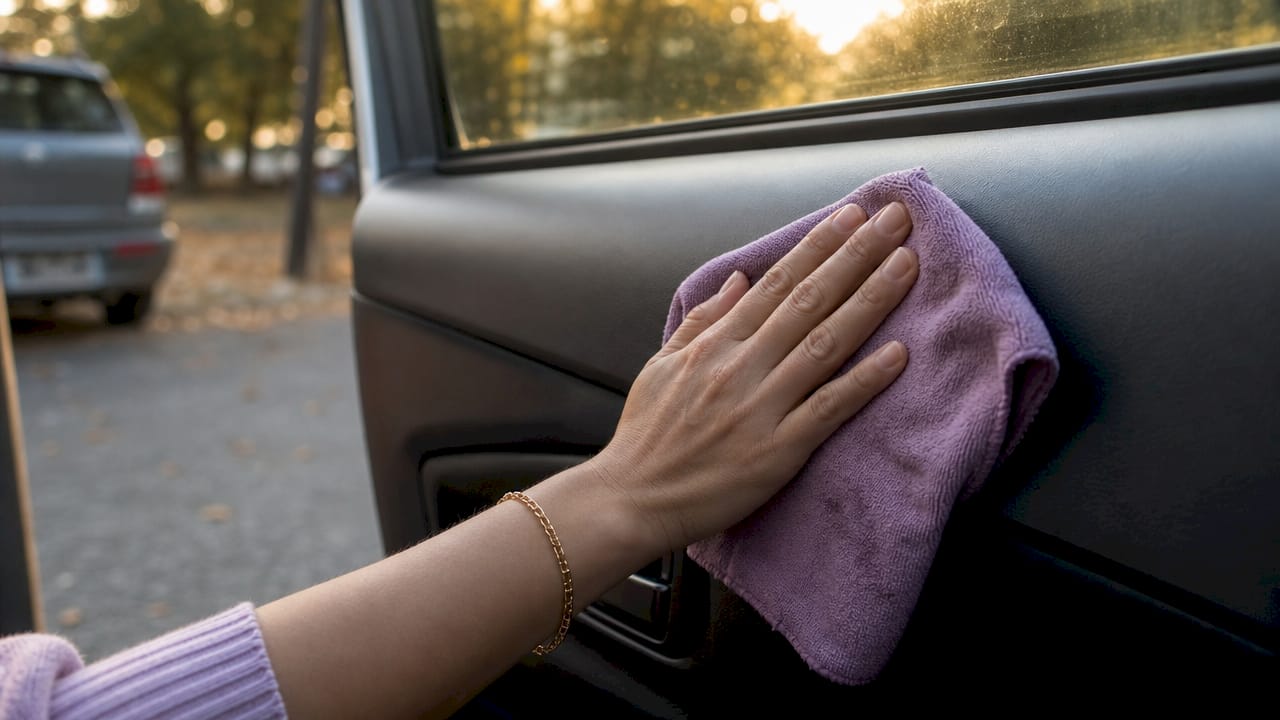
Microfiber cloths are the single most important tool in chemical-free detailing. Their fine fibers trap particles mechanically without needing chemical agents. Use separate cloths for different surfaces to avoid cross-contamination. Soft detailing brushes reach crevices around buttons, seams, and vents that cloths cannot access.
| Tool | Best use | Key benefit |
|---|---|---|
| Cordless vacuum | Seats, mats, carpets | Removes dry debris before wet cleaning |
| Microfiber cloth | Dashboards, panels, screens | Traps particles without chemicals |
| Soft detailing brush | Vents, seams, buttons | Reaches tight spaces safely |
| Labeled spray bottle | Applying DIY solutions | Controls moisture and prevents overuse |
| pH-balanced conditioner | Leather surfaces | Protects and conditions without damage |
Rinse-less wash products are a practical option when DIY solutions are not enough. Rinse-less washes diluted at 1:256 encapsulate dirt for low-moisture cleaning and are pH-neutral and PFAS-free. That ratio means one bottle lasts a very long time, making it cost-effective and eco-friendly.
Low-moisture cleaning protects electronics and prevents mold growth inside seat cushions and carpet padding. Excess water trapped in upholstery creates the exact conditions mold needs to grow. Wring out cloths until they are barely damp before touching any fabric surface.
Pro Tip: Always vacuum first, then wipe down with a barely damp cloth. Working in this sequence prevents you from grinding loose grit into surfaces and scratching them during the wipe-down phase.
Step-by-step method to clean your car interior naturally
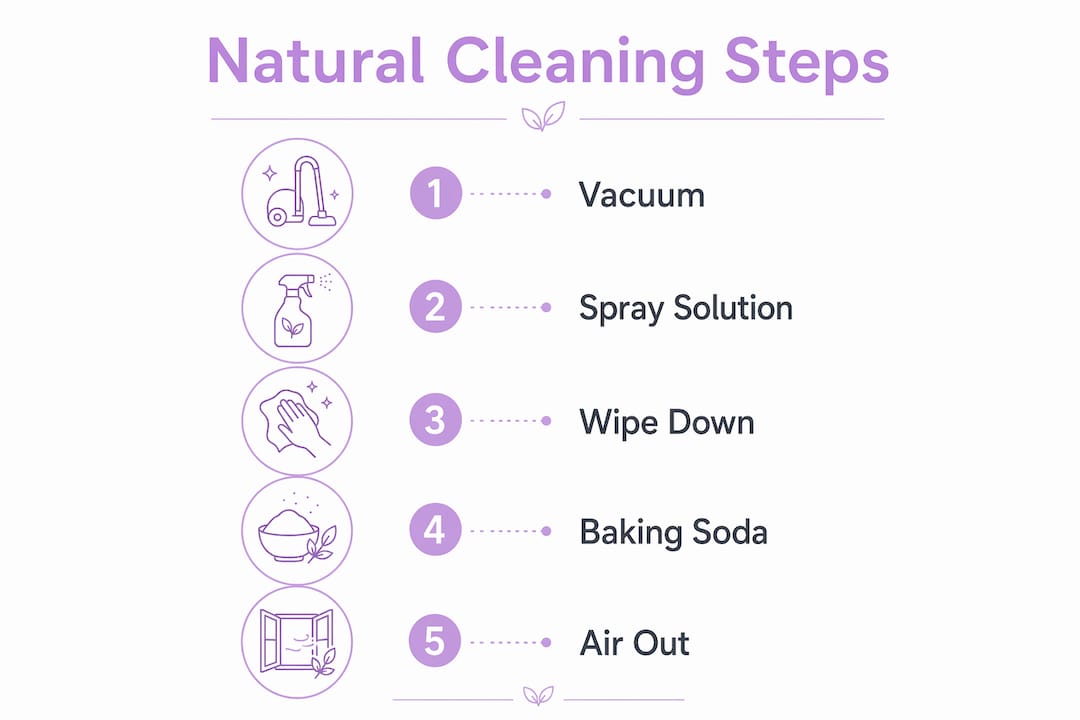
A full chemical-free car detailing session takes 20–30 minutes with the right sequence. Working in order prevents you from re-dirtying surfaces you have already cleaned.
- Vacuum all surfaces. Start with the seats, then move to the floor mats, carpets, and trunk. Remove floor mats and vacuum them separately. Use the brush attachment on seat seams and crevices.
- Dust the dashboard and panels. Use a dry microfiber cloth or soft brush to knock loose dust off the dashboard, door panels, and center console before applying any liquid.
- Apply the vinegar-soap spray to hard surfaces. Spray your DIY solution onto a microfiber cloth, not directly onto the surface. Wipe dashboards, door panels, and the steering wheel in straight strokes. Flip the cloth to a clean section frequently.
- Treat fabric seats and carpets. Sprinkle baking soda on fabric seats and carpets. Let it sit for at least 15 minutes. For visible stains, blot with a cloth dampened with the vinegar-soap mix. Do not rub. Vacuum up all baking soda residue completely.
- Condition leather seats. Apply a small amount of pH-balanced leather conditioner to a clean cloth. Work it into the leather in circular motions. Buff off any excess with a dry cloth.
- Wipe the infotainment screen. Use only a dry, clean microfiber cloth. Fold it to expose a fresh surface and wipe gently in one direction. Never spray anything directly onto the screen.
- Clean air vents. Use a soft detailing brush to loosen dust from vent slats. Follow immediately with a dry microfiber wipe to collect loosened particles.
- Replace floor mats and air out the car. Leave windows open for 10 minutes to let any residual vinegar smell dissipate. The odor fades quickly and leaves no lasting scent.
Troubleshooting common issues:
Persistent odor after baking soda treatment: The odor source may be embedded deeper in the padding. Apply baking soda a second time and leave it overnight before vacuuming.
Greasy film returning to the dashboard: Plastic and vinyl outgas continuously, especially in heat. Wipe down the dashboard weekly to stay ahead of buildup.
Stain not lifting from fabric: Blot with cold water first to dilute the stain, then reapply the vinegar-soap solution. Heat sets stains, so never use warm water on a fresh spill.
How do you handle persistent odors and stains without chemicals?
Vinegar and baking soda neutralize most everyday smells, but they have limits. Strong organic odors from pet urine, mildew, or smoke require a different approach. Understanding where natural methods stop and specialized treatments begin saves you time and frustration.
Enzyme-based cleaners are the next step for organic stains like pet urine or blood. These products use biological enzymes to break down the odor-causing molecules at their source rather than masking them. They are biodegradable and far gentler than chemical degreasers. Look for products labeled as mineral-based or plant-derived, since mineral-based formulas reduce skin irritation and environmental impact compared to solvent-heavy alternatives.
Plant-based cleaners using agave extracts and similar natural solvents handle tough grime while remaining safe for car owners and the environment. This category of product sits between a DIY home remedy and a harsh commercial cleaner. It gives you real cleaning power without the allergy and toxicity risks.
For smoke and mildew odors that surface cleaning cannot reach, ozone generators costing $60–$100 are the professional standard. An ozone generator floods the car interior with ozone gas, which oxidizes odor molecules embedded in fabric, foam, and plastic. This is not a DIY product. It requires leaving the car sealed and unoccupied during treatment.
| Method | Best for | Limitation |
|---|---|---|
| Baking soda + vacuum | Mild fabric odors | Does not reach deep padding |
| Vinegar-soap solution | Surface grime and light stains | Ineffective on organic stains |
| Enzyme-based cleaner | Pet urine, blood, organic stains | Requires dwell time to work |
| Ozone generator | Smoke, mildew, deep odors | Professional use, not DIY |
Avoid harsh chemical degreasers even when natural methods fall short. These products can trigger allergic reactions, damage plastic trim, and leave residues that off-gas inside a closed cabin. Choosing a biodegradable, eco-friendly cleaner protects both your health and your interior materials.
Key Takeaways
Natural cleaning with vinegar, baking soda, and microfiber tools handles the vast majority of car interior grime safely, with enzyme-based or ozone treatments reserved for persistent organic odors.
| Point | Details |
|---|---|
| Vinegar-soap mix for hard surfaces | Combine warm water, white vinegar, and dish soap to clean dashboards and panels effectively. |
| Baking soda for fabric odors | Sprinkle on seats and carpets, let sit 15 minutes, then vacuum for reliable odor control. |
| Leather needs pH-balanced care | Never use vinegar on leather; apply a dedicated conditioner to prevent cracking. |
| Dry microfiber for screens | Use only a dry cloth on infotainment screens to protect anti-reflective coatings. |
| Ozone for deep odors | Smoke and mildew odors require a $60–$100 ozone generator when surface methods fail. |
What I have learned from years of chemical-free car care
The biggest mistake car owners make is waiting until the interior looks dirty before cleaning it. A five-minute weekly wipe-down with a dry microfiber cloth prevents the kind of buildup that makes a full session feel like a chore. Consistency beats intensity every time.
I used to think natural solutions were a compromise. They are not. The vinegar-soap spray handles dashboard grime as well as anything I have used from a store shelf, and it costs almost nothing. The one area where I still reach for a specialized product is leather. Leather is unforgiving, and a pH-balanced conditioner is not optional. It is the one place where “natural” does not mean “any natural ingredient.”
The health argument for going chemical-free is real. A car cabin is a small, enclosed space. Synthetic solvents and fragrance chemicals linger in that air far longer than they would in an open room. For families with children or anyone with respiratory sensitivities, reducing that chemical load matters. Jermaphobi4me exists because clean environments and healthy people are directly connected, and your car interior is part of that equation.
— Gimmi
Natural car care products from Jermaphobi4me
Jermaphobi4me carries products built around the same principles covered here: natural ingredients, safe for people, and gentle on surfaces. The non-toxic cleaning options on the site align directly with what works inside a vehicle.
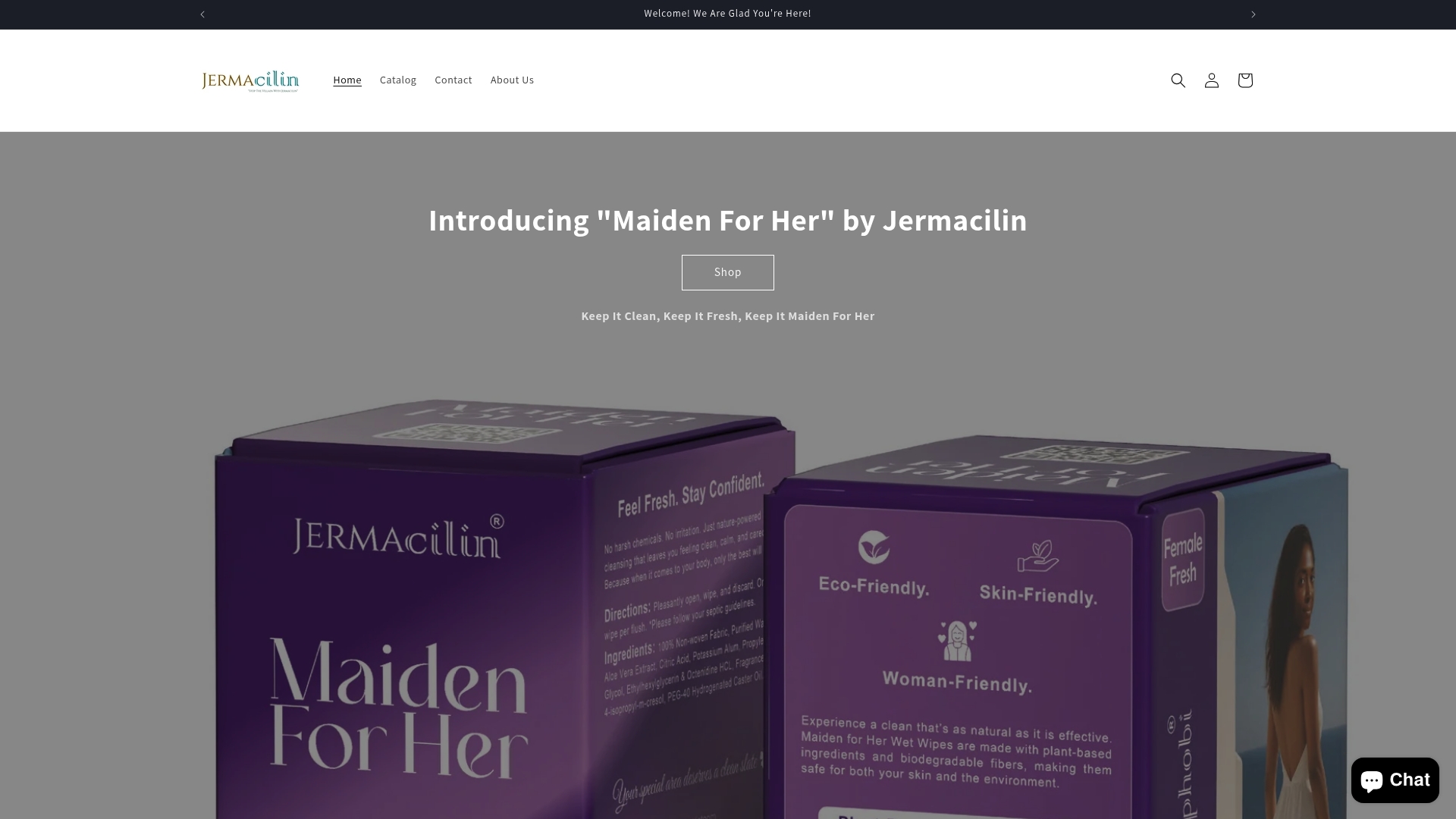
The Lemeric Cleanser and Natural Brightening Stick is a coming-soon addition to the Jermacilin Store lineup. It is designed for gentle, effective cleaning without harsh chemicals, consistent with the chemical-free approach described throughout this guide. Check the product page for availability updates and add it to your natural cleaning kit when it launches.
FAQ
What is the best homemade cleaner for car interiors?
A mix of warm water, white vinegar (5% acidity), and a few drops of dish soap cleans most hard interior surfaces effectively. Apply it to a microfiber cloth first, never directly to the surface.
Can I use baking soda on car seats?
Baking soda works well on fabric seats and carpets for odor removal. Sprinkle it on, let it sit for 15 minutes, then vacuum it up completely.
Why should I avoid vinegar on leather car seats?
Vinegar strips the natural oils from leather, which causes drying and cracking over time. Use a dedicated pH-balanced leather conditioner instead to protect the material.
How do I remove smoke smell from a car without chemicals?
Surface cleaning with baking soda reduces mild smoke odors, but deep smoke smell requires an ozone generator. Ozone generators in the $60–$100 range are the professional standard for odors that surface methods cannot reach.
Is chemical-free car interior cleaning as effective as using commercial products?
For everyday dirt, grease, and mild odors, natural methods are equally effective. Stubborn organic stains or deep odors may require enzyme-based or ozone treatments, but these are still far gentler than harsh chemical degreasers.
Recommended
- What Is Chemical-Free Cleaning? A Practical Guide – Gimmi Vitality Products dba Jermacilin Store
- Eliminate Harmful Cleaning Chemicals: Your 2026 Guide – Gimmi Vitality Products dba Jermacilin Store
- How to Disinfect Your Kitchen Without Harsh Bleach – Gimmi Vitality Products dba Jermacilin Store
- Types of Non-Toxic Home Cleaning Products: 2026 Guide – Gimmi Vitality Products dba Jermacilin Store