

Clean eating is defined as the practice of consuming whole, nutrient-dense foods that nourish your skin from the inside out, reducing inflammation and supporting a healthier complexion. The connection between diet and skin health is not a wellness trend. It is backed by nutritional dermatology, a recognized field that studies how dietary patterns directly affect skin structure, function, and appearance. The clean eating skin benefits you gain come from specific nutrients: antioxidants like vitamins A, C, and E, omega-3 fatty acids, and probiotics. Each one targets a different layer of skin health, from collagen production to the gut-skin axis. Understanding how these nutrients work together gives you a real advantage over anyone chasing single-ingredient beauty hacks.
What are the skin benefits of clean eating?
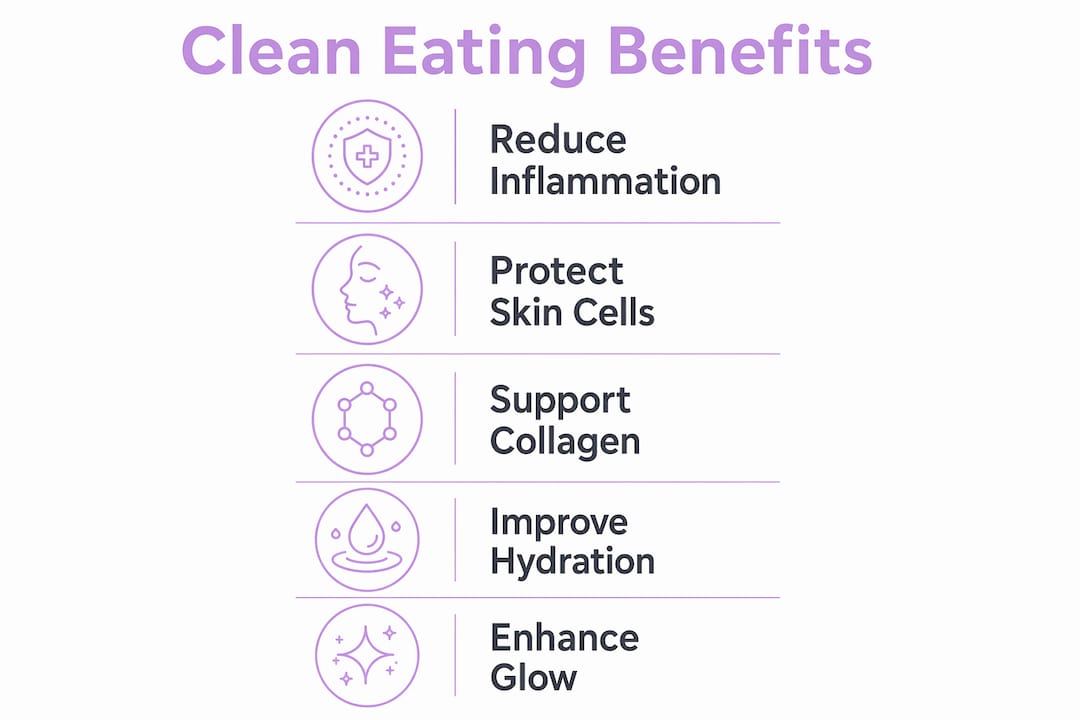
Clean eating delivers skin benefits through three primary mechanisms: reducing oxidative stress, controlling inflammation, and supporting the skin barrier. These are not separate effects. They work together, and the foods you eat either support or undermine all three at once.
Antioxidants are the most studied nutrient category in skin health. Vitamins A, C, and E protect skin cells from free radical damage, which causes collagen breakdown and premature aging. Carotenoids reduce skin redness and improve skin tone when consumed consistently through foods like sweet potatoes, carrots, and leafy greens. Vitamin C, found in bell peppers and citrus fruits, is a direct cofactor in collagen synthesis. Without adequate vitamin C, your skin cannot build or repair collagen effectively.

Omega-3 fatty acids address hydration and inflammation simultaneously. Omega-3 aids cell membranes and maintains moisture within skin cells, which is why people who eat fatty fish like salmon or plant sources like flaxseed tend to have more supple, less reactive skin. Omega-3s also suppress the inflammatory signals that trigger acne flares and redness.
Probiotics and prebiotics work through the gut-skin axis. Fiber and probiotics support systemic skin health by maintaining a balanced gut microbiome, which in turn reduces the systemic inflammation that shows up on your face as breakouts, redness, or dullness. Fermented foods like yogurt, kefir, kimchi, and sauerkraut are the most direct dietary sources.
- Vitamin A: Found in liver, eggs, and orange vegetables; supports skin cell turnover
- Vitamin C: Found in citrus, strawberries, and bell peppers; drives collagen production
- Vitamin E: Found in nuts, seeds, and avocado; protects cell membranes from oxidative damage
- Omega-3 fatty acids: Found in salmon, sardines, walnuts, and chia seeds; reduce inflammation and improve hydration
- Probiotics: Found in yogurt, kefir, kimchi, and miso; support the gut-skin axis
- Collagen peptides: Found in bone broth and supplements; improve skin hydration and elasticity
Pro Tip: Pair vitamin C-rich foods with iron-rich plant foods in the same meal. Vitamin C increases iron absorption, and adequate iron supports the oxygen delivery your skin cells need to stay healthy.
What skin problems can clean eating help prevent?
Chronic inflammation is the root cause of the most common skin problems, including acne, eczema, psoriasis, and accelerated aging. A clean diet directly targets that inflammation at its source.
A medical nutrition therapy consensus confirms that diet manages acne, psoriasis, and hidradenitis suppurativa by modulating the chronic inflammation that drives these conditions. This is not a fringe claim. Dermatological associations now include dietary counseling in treatment guidelines for inflammatory skin diseases. The Mediterranean diet, which is rich in antioxidants and unsaturated fats, is the most studied dietary pattern for skin inflammation reduction.
Processed foods work in the opposite direction. Inflammatory diets promote collagen degradation, while diets built around lean proteins and vegetables actively support skin structure. High-glycemic foods spike blood sugar, which triggers insulin release and a cascade of hormonal signals that increase sebum production and worsen acne. Refined sugars also bind to collagen through a process called glycation, making skin stiffer and more prone to wrinkling.
The skin conditions most responsive to dietary change include:
- Acne: Low-glycemic, antioxidant-rich diets reduce sebum overproduction and hormonal triggers
- Eczema: Omega-3 fatty acids and probiotic-rich foods reduce the inflammatory response that causes flares
- Psoriasis: Anti-inflammatory dietary patterns, particularly the Mediterranean diet, reduce plaque severity
- Premature aging: Antioxidants neutralize free radicals that break down collagen and elastin
- Dull or uneven skin tone: Carotenoids and vitamin C improve skin luminosity and reduce pigmentation over time
Clean eating does not replace dermatological treatment for severe conditions. A clean diet for healthy skin works best as a foundation that makes clinical treatments more effective, not as a substitute for them.
How to build a clean diet for better skin
The most effective approach to clean eating for skin health is not a restrictive elimination diet. It is a consistent pattern of whole food choices that supply your skin with the nutrients it needs every day.
Start with the basics. Fill half your plate with vegetables and fruits at every meal. Prioritize dark leafy greens, orange and red vegetables, and berries. These foods deliver the highest concentration of antioxidants per calorie. Add a palm-sized portion of lean protein, such as chicken, fish, legumes, or eggs, to support collagen synthesis and skin repair. Include a source of healthy fat at each meal: avocado, olive oil, nuts, or fatty fish.
Hydration matters, but not in the way most people think. Water intake supports skin suppleness, but drinking more water alone does not hydrate the outer layer of skin. You need topical moisturizers for surface hydration. Think of internal hydration as maintaining the foundation, and your skin care routine as the finishing layer.
Alcohol dehydrates skin and accelerates collagen breakdown. Moderating alcohol consumption is one of the highest-impact dietary changes you can make for skin appearance, often producing visible results within weeks.
- Eat at least five servings of fruits and vegetables daily, prioritizing color variety
- Include fatty fish two to three times per week for omega-3 intake
- Add fermented foods like yogurt or kimchi to at least one meal per day
- Replace refined grains with whole grains to lower the glycemic load of your diet
- Limit added sugars, processed snacks, and trans fats, which drive glycation and inflammation
- Drink water consistently throughout the day and eat water-rich foods like cucumber and watermelon
Cooking method also affects nutrient delivery. Cooked carrots support hormone balance and improve fiber function, which aids skin health through better digestion and hormonal regulation. Raw foods preserve heat-sensitive vitamins like vitamin C. Rotating between raw and cooked preparations gives you the full spectrum of benefits.
Pro Tip: Swap your afternoon processed snack for a small handful of walnuts and a few strawberries. You get omega-3s, vitamin C, and antioxidants in one move, with no preparation required.
What are the limits of clean eating for skin health?
Clean eating supports skin health, but it is not a cure-all. Understanding its limits prevents frustration and sets realistic expectations.
Visible improvements from dietary changes require months of consistent adherence. Skin cells turn over on a cycle of roughly four to six weeks. You will not see dramatic changes in two weeks from eating more salmon. The people who benefit most from dietary interventions are those who commit to the pattern long-term, not those who try a “skin detox” for a month.
Single-ingredient focus is a common mistake. Overconsumption of vitamin A can be toxic, and isolating any one nutrient misses the point of clean eating entirely. Nutrients work in concert. Vitamin E regenerates vitamin C after it neutralizes a free radical. Zinc helps vitamin A transport through the body. The whole foods approach ensures these interactions happen naturally without the risk of toxicity from supplements.
Genetics also shape outcomes. Two people following identical diets will not have identical skin. Factors like skin type, hormonal profile, and existing conditions all influence how much improvement diet alone can produce. Clean eating raises your baseline. It does not override biology.
| Factor | What clean eating can do | What it cannot do |
|---|---|---|
| Inflammation | Reduce systemic inflammation driving acne and eczema | Eliminate severe inflammatory disease without clinical care |
| Collagen | Supply nutrients that support collagen synthesis | Reverse significant collagen loss from aging or sun damage alone |
| Hydration | Improve internal skin suppleness through water-rich foods | Replace topical moisturizers for surface skin hydration |
| Skin tone | Improve luminosity and reduce dullness over months | Correct deep pigmentation or scarring without dermatological treatment |
| Aging | Slow oxidative damage and glycation over time | Stop the aging process or produce instant visible results |
Diet supports dermatology but does not replace it. The most effective approach combines a clean diet with a consistent topical routine and professional care when needed. Knowing how water quality affects your skin is one example of how environmental factors layer on top of dietary ones to shape your skin’s condition.
Key Takeaways
Clean eating improves skin health through nutrient synergy, reducing inflammation, supporting collagen production, and strengthening the skin barrier over consistent months of dietary practice.
| Point | Details |
|---|---|
| Nutrients work together | Antioxidants, omega-3s, and probiotics each target different skin functions and amplify each other’s effects. |
| Inflammation is the core target | Clean eating reduces the chronic inflammation behind acne, eczema, psoriasis, and premature aging. |
| Results take months | Visible skin improvement from dietary changes requires consistent adherence over a full skin cell turnover cycle. |
| Diversity beats single ingredients | A whole foods pattern prevents nutrient toxicity and ensures the antioxidant interplay that protects collagen. |
| Diet complements topical care | Internal nutrition supports skin from within, but topical moisturizers and professional treatments remain necessary. |
Why I think clean eating is the most underrated skin strategy
I have watched people spend hundreds of dollars on serums while eating a diet that actively undermines their skin. The frustrating part is that the serums often do work, but they are fighting an uphill battle against daily inflammation from processed food, refined sugar, and alcohol.
What I have found, both personally and through years of paying attention to this space, is that the people with consistently good skin are not the ones with the most elaborate topical routines. They are the ones who eat well most of the time. Not perfectly. Not obsessively. Just consistently. Salmon a few times a week. Vegetables at most meals. Fermented foods regularly. That pattern does more for skin texture and tone than any single product.
The misconception I hear most often is that clean eating means restriction. It does not. The best clean eating strategy for skin mimics balanced, varied eating rather than elimination. When you frame it as adding nutrient-dense foods rather than removing everything enjoyable, it becomes sustainable. Sustainability is the only thing that produces long-term skin results.
My honest advice: do not wait until your skin is in crisis to think about what you eat. Build the dietary foundation now, pair it with a simple topical routine, and give it three to four months before you judge the results. The combination of clean food and a clean environment, inside and out, is what actually moves the needle.
— Gimmi
How Jermaphobi4me supports your clean health routine
Clean eating builds skin health from the inside. What touches your skin from the outside matters just as much. At Jermaphobi4me, the mission is clean environments and healthy people, because the two are inseparable.

The Jermaphobi’s Hand Hygiene Starter Kit gives you travel-sized essentials that keep your hands clean without harsh chemicals that strip or irritate skin. When you are eating clean to reduce inflammation, the last thing you want is to introduce irritants through what you put on your hands. The starter kit fits your bag, your routine, and your commitment to a cleaner, healthier life. Pair it with the dietary habits in this article and you cover both sides of the skin health equation.
FAQ
What is clean eating and how does it benefit skin?
Clean eating is the practice of choosing whole, minimally processed foods rich in antioxidants, omega-3 fatty acids, and probiotics. These nutrients reduce inflammation, support collagen production, and strengthen the skin barrier for a healthier complexion.
How long does it take to see skin improvements from clean eating?
Visible results from dietary changes typically require several months of consistent eating. Skin cells turn over on a four-to-six-week cycle, so meaningful improvement takes at least two to three full cycles.
Does clean eating help with acne?
A low-glycemic, antioxidant-rich diet reduces the hormonal and inflammatory triggers behind acne. Medical nutrition therapy research confirms that dietary patterns directly modulate the chronic inflammation driving acne and other inflammatory skin conditions.
Can clean eating replace my skincare routine?
Clean eating supports skin from within but cannot replace topical treatments. Topical moisturizers hydrate the skin surface in ways that diet alone cannot, and clinical treatments remain necessary for moderate to severe skin conditions.
Which foods most directly improve skin health?
Fatty fish, leafy greens, berries, fermented foods, nuts, and colorful vegetables deliver the highest concentration of skin-supportive nutrients. These foods supply omega-3s, vitamins A, C, and E, and probiotics that work together to reduce inflammation and support collagen.
Recommended
- What Is Double Cleansing? Your Skin-Clearing Guide – Gimmi Vitality Products dba Jermacilin Store
- How to Balance Skin Without Harsh Chemicals – Gimmi Vitality Products dba Jermacilin Store
- How Water Quality Affects Your Skin Health – Gimmi Vitality Products dba Jermacilin Store
- DIY Natural Face Mask Recipes for Every Skin Type – Gimmi Vitality Products dba Jermacilin Store