

Natural nail care is the practice of maintaining and strengthening your nails using gentle, non-damaging methods and products free from harsh chemicals. The industry term for this approach is “natural nail maintenance,” and it centers on protecting the nail matrix, the cuticle, and the nail plate as living structures that respond to what you put on and around them. About 20% of people suffer from brittle nails caused by frequent hand washing, chemical exposure, and aging. That number shows just how common nail damage is and why a gentler, more deliberate routine matters. Biotin, protective base coats, and nourishing oils like jojoba are the foundation of any effective natural approach.
What is natural nail care and why does it matter?
Natural nail care is a practice built on one core idea: your nails are living tissue, not decoration. The nail matrix sits beneath the base of each nail and produces the keratin cells that form the nail plate. Damage to the matrix, whether from cutting the cuticle, aggressive filing, or harsh chemicals, disrupts growth and creates lasting weakness. Protecting these structures is the starting point for every decision you make about your nails.
The cuticle is the most misunderstood part of nail anatomy. It acts as a living seal that protects the nail matrix from bacteria and environmental damage. Cutting it removes that seal and opens the door to infection and irregular growth. Gently pushing it back with a rubber-tipped tool after a warm soak is the correct technique.
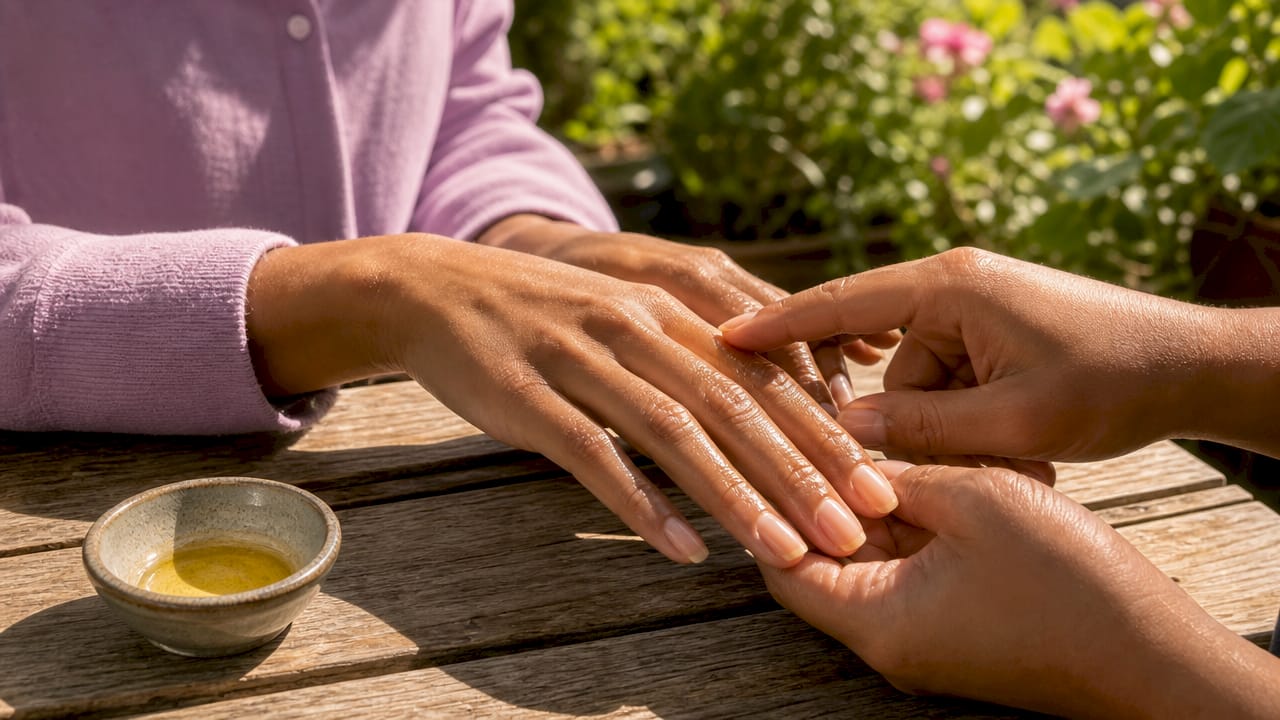
Nails are also hygroscopic, meaning they absorb water and then contract as they dry. This expansion and contraction cycle creates microscopic structural stress that leads to peeling and splitting over time. A keratin or calcium-infused base coat applied two to three times weekly disrupts this cycle and keeps the nail plate stable.
What are the essential steps in a natural nail care routine?
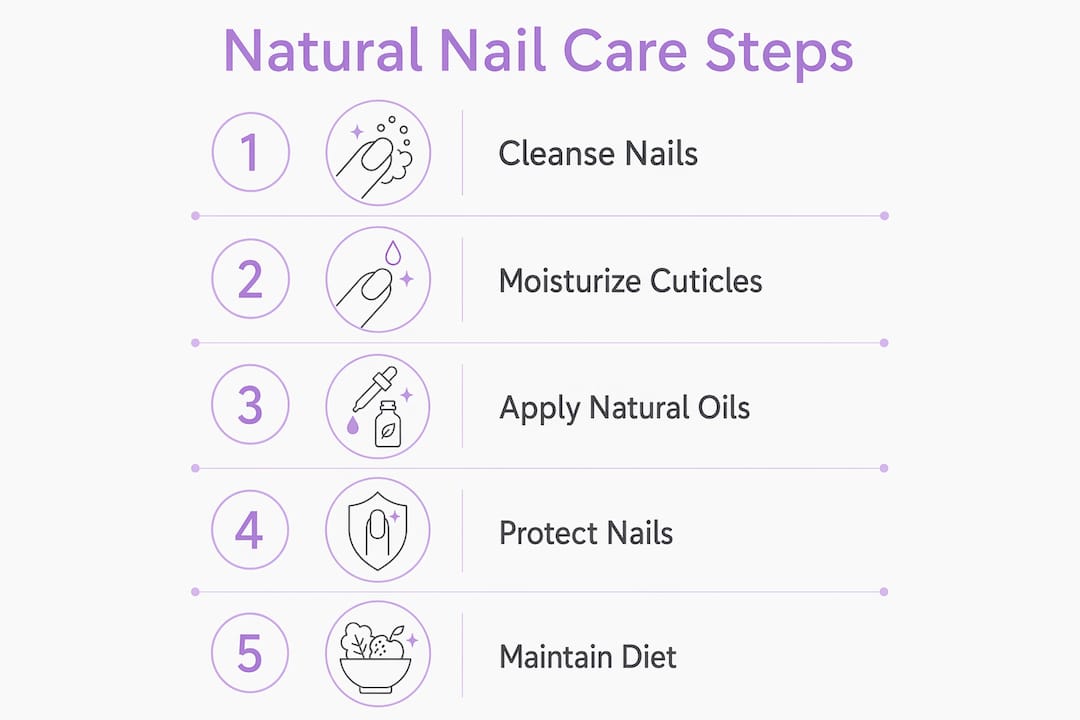
A well-structured routine does not require expensive tools or hours of time. A natural nail routine takes about 20 minutes per week and focuses on hydration, gentle shaping, and cuticle care. Consistency matters far more than intensity.
Follow these steps each week:
- Soak briefly. Soak your fingertips in warm water for two to three minutes to soften the cuticle area. Do not soak longer, as overly wet nails are more prone to damage during filing.
- Push back cuticles gently. Use a rubber-tipped cuticle pusher. Never cut the cuticle. Cutting it increases infection risk and disrupts the nail matrix.
- File nails dry. Filing dry nails prevents microscopic tears and peeling. Filing wet nails causes immediate splits and fractures. Use a fine-grit crystal or glass file and move in one direction only.
- Apply a nourishing oil. Massage jojoba oil into the nail plate and surrounding skin. Jojoba oil penetrates the nail plate effectively due to its molecular structure, and adding vitamin E amplifies its benefits.
- Seal with a protective base coat. Apply a keratin or calcium-infused base coat to shield the nail from water absorption cycles.
- Moisturize your hands. Apply a clean hand lotion to keep the skin around your nails supple. Dry skin pulls at the nail edge and causes hangnails.
Pro Tip: Apply jojoba oil every night before bed and wear thin cotton gloves while you sleep. The warmth drives the oil deeper into the nail plate and cuticle, and you will notice a difference in flexibility within two weeks.
Which natural ingredients and products best support healthy nails?
Choosing the right products is where most people lose ground. Labels make big promises, but the ingredient list tells the real story. Active ingredients like biotin, peptides, and vitamin E must appear in the top five positions on the ingredient list to be present in meaningful concentrations. If they appear near the bottom, the product contains trace amounts that will not produce results.
The ingredients worth looking for:
- Biotin (vitamin B7): Strengthens the keratin structure of the nail plate. Look for it in serums and oral supplements.
- Vitamin E (tocopherol): Repairs and protects the nail plate from oxidative stress. Works best when combined with jojoba oil.
- Peptides: Short chains of amino acids that signal keratin production. Effective in nail serums applied directly to the nail plate.
- Jojoba oil: Mimics the skin’s natural sebum and penetrates the nail plate more effectively than most other oils.
- Calcium and keratin: Found in protective base coats; reduce the damage caused by water absorption cycles.
The ingredients to avoid are just as important. Formaldehyde, toluene, dibutyl phthalate, and acetone strip the nail’s natural lipids and thin the nail plate with repeated use. When reading labels, look for products marketed as “3-free,” “5-free,” or “10-free,” which indicate the number of harmful chemicals excluded from the formula.
Pro Tip: When evaluating a new nail product, check the ingredient list carefully before the marketing claims. If the active ingredient you are paying for appears after “fragrance” on the label, the concentration is too low to matter.
Common mistakes and myths to avoid in natural nail care
Most nail damage is self-inflicted, and the habits responsible are widely considered normal. Knowing what to stop doing produces faster results than adding new products.
- Cutting the cuticle. This is the single most damaging habit in nail care. The cuticle protects the nail matrix. Removing it creates an entry point for bacteria and disrupts the growth cycle.
- Filing wet nails. Wet keratin is soft and tears easily. Filing immediately after washing or soaking causes splits that worsen over time.
- Scrubbing during polish removal. The professional technique involves a 10-second soak with remover held against the nail, followed by one smooth wipe. Scrubbing thins the nail plate with every removal session.
- Overusing acetone. Acetone removes polish quickly, but it also strips the natural lipids that keep nails flexible. Non-acetone removers take slightly longer and cause significantly less damage.
- Ignoring mechanical stress. Forceful typing creates invisible, cumulative damage that contributes to splits and breaks. Keeping nails at a length that does not contact the keyboard reduces this stress considerably.
- Treating nails as tools. Using nails to open packages, scrape surfaces, or pry objects transfers force directly to the nail plate and causes breakage at the stress point.
The most persistent myth is that nails “breathe.” Nails do not have a respiratory function. They receive nutrients from the bloodstream, not from the air. Leaving nails unpolished does not improve their health. What matters is the condition of the nail plate and the habits surrounding it.
How do nutrition and supplements impact natural nail health?
What you eat shows up in your nails within weeks. Nails are made of keratin, a protein that requires adequate dietary protein, iron, zinc, and B vitamins to form correctly. A diet consistently low in these nutrients produces thin, ridged, or slow-growing nails regardless of what you apply topically.
Biotin is the most studied supplement for nail strength. Clinical guidelines recommend 5–10 mg of biotin daily for brittle nails, with visible improvements appearing in 3–6 months. That timeline reflects the rate at which nails grow, roughly 3 millimeters per month, so patience is required.
| Nutrient | Role in nail health | Primary food sources |
|---|---|---|
| Biotin (vitamin B7) | Strengthens keratin structure | Eggs, almonds, sweet potato |
| Iron | Supports oxygen delivery to the nail matrix | Red meat, lentils, spinach |
| Zinc | Aids keratin production and cell repair | Pumpkin seeds, beef, chickpeas |
| Protein | Provides the amino acids that form keratin | Chicken, fish, legumes, dairy |
| Vitamin E | Protects nail cells from oxidative damage | Sunflower seeds, avocado, olive oil |
One caution about biotin supplementation: high doses can interfere with certain lab test results, particularly thyroid and cardiac biomarker tests. Tell your doctor if you are taking biotin before any blood work. Topical care and nutrition work best together. Neither alone produces the same results as both combined.
Key takeaways
Natural nail care works best when you protect the nail matrix, avoid harsh chemicals, and support keratin production through both diet and targeted topical ingredients.
| Point | Details |
|---|---|
| Protect the cuticle | Never cut it; gently push it back to guard the nail matrix from damage and infection. |
| File only dry nails | Filing wet nails causes microscopic tears that lead to peeling and long-term breakage. |
| Read ingredient lists | Active ingredients like biotin and peptides must appear in the top five positions to be effective. |
| Support nails from within | Take 5–10 mg of biotin daily and eat protein, iron, and zinc-rich foods for visible results in 3–6 months. |
| Use a protective base coat | A keratin or calcium-infused base coat applied two to three times weekly reduces water absorption damage. |
Why I stopped chasing perfect nails and started caring for them
The turning point for me was realizing that most nail problems are not a product problem. They are a habit problem. I spent years buying serums and treatments while still filing my nails right after a shower, cutting my cuticles because a nail technician told me it looked cleaner, and scrubbing off polish with a cotton ball soaked in acetone. The products never had a chance.
What actually changed my nails was stopping the damage first. Once I stopped cutting my cuticles and switched to a glass file used only on dry nails, my nails stopped peeling within a month. No new product. Just fewer bad habits.
The nutrition piece surprised me most. I added biotin and made sure I was eating enough protein, and within about four months my nails were noticeably thicker and less prone to breaking at the tip. The science on this is consistent, and the timeline is honest. There is no shortcut that bypasses the growth cycle.
My honest advice: treat your nails the way you treat your skin. You would not scrub your face with acetone or cut away healthy skin tissue. The same logic applies here. Gentle, consistent care with the right ingredients produces results that no amount of aggressive treatment can match. Natural nail care is not a trend. It is just biology done right.
— Gimmi
Clean nail care products from Jermaphobi4me
Jermaphobi4me is built around one principle: clean environments and healthy people. That same thinking applies to what goes on your nails and hands every day.

The top-selling nail and hand care products at Jermaphobi4me are formulated without formaldehyde, toluene, or phthalates, and they include active ingredients like jojoba oil and biotin at concentrations that actually work. If you are starting fresh, the hand hygiene starter kit gives you the core products for a complete routine in one convenient bundle. For hands that need gentle daily cleaning without stripping natural oils, the Maiden For Her wet wipes are an eco-friendly option that fits any routine. Clean nails start with clean products.
FAQ
What is natural nail care?
Natural nail care is the practice of maintaining nail health using gentle, chemical-free methods and products that protect the nail matrix, cuticle, and nail plate. It avoids harsh chemicals like formaldehyde, toluene, and acetone in favor of nourishing ingredients like biotin, jojoba oil, and vitamin E.
How long does it take to see results from natural nail care?
Visible improvements in nail strength and thickness typically appear in 3–6 months, reflecting the natural nail growth rate of about 3 millimeters per month. Consistent hydration and gentle handling produce noticeable changes in texture and peeling within four to six weeks.
Can biotin really strengthen nails?
Yes. Clinical guidelines recommend 5–10 mg of biotin daily for brittle nails, with results visible in 3–6 months. Biotin strengthens the keratin structure of the nail plate, but high doses can interfere with certain lab tests, so inform your doctor before starting supplementation.
Should you cut your cuticles for healthier nails?
No. The cuticle is a living seal that protects the nail matrix from bacteria and disrupts growth when cut. Gently pushing the cuticle back with a rubber-tipped tool after a warm soak is the correct and safe technique.
What natural oils are best for nail health?
Jojoba oil is the most effective option because its molecular structure allows it to penetrate the nail plate directly. Adding vitamin E to jojoba oil enhances its protective and restorative benefits. Apply nightly for best results.
Recommended
- Natural Hair Care: Your Complete Guide for Healthy Hair – Gimmi Vitality Products dba Jermacilin Store
- Types of Chemical-Free Body Wash: Your 2026 Guide – Gimmi Vitality Products dba Jermacilin Store
- What Is a Safe Cleaning Product? Your 2026 Guide – Gimmi Vitality Products dba Jermacilin Store
- Clean Body Lotion Ingredients Checklist for 2026 – Gimmi Vitality Products dba Jermacilin Store