

Body wash pH is a measure of how acidic or alkaline a product is on a scale of 0 to 14, and it directly determines whether your cleanser supports or damages your skin’s natural barrier. The pH scale is neutral at 7.0. Anything below 7.0 is acidic, and anything above is alkaline. Healthy skin sits in the slightly acidic range of 4.5 to 6.0, a zone dermatologists call the acid mantle. When your body wash pH level falls outside that range, your skin pays the price in dryness, irritation, and a weakened barrier. Understanding what body wash pH means is the first step toward choosing products that actually work with your skin, not against it.
What does body wash pH mean for daily skin health?
The pH scale runs from 0 to 14, with 7.0 being neutral. Skin’s acid mantle sits between 4.5 and 6.0. That slight acidity is not accidental. It protects against bacteria, locks in moisture, and keeps the skin barrier intact.

When you wash with a product that falls outside that range, you disrupt the acid mantle. A body wash with a pH above 7.0 is alkaline. Alkaline cleansers strip the skin’s natural oils and raise surface pH, which weakens the barrier and opens the door to irritation. The skin barrier disruption caused by high-pH products leads to dryness, sensitivity, and inflammation.
The importance of body wash pH becomes clear when you think of the acid mantle as a security system. A pH-balanced body wash keeps that system armed. A high-pH product disables it, sometimes after just one shower.
Pro Tip: If your skin feels tight or itchy right after showering, your body wash pH may be too alkaline. That post-wash tightness is the acid mantle signaling distress.
How does pH affect ingredient effectiveness in body wash?
pH does more than protect your skin. It controls whether the active ingredients in your body wash actually do their job. Exfoliating acids like salicylic acid only work within a narrow pH window. Humectants like glycerin bind moisture most effectively when the formula’s pH stays in the 4.5 to 6.0 range. Outside that window, these ingredients lose potency or become unstable.
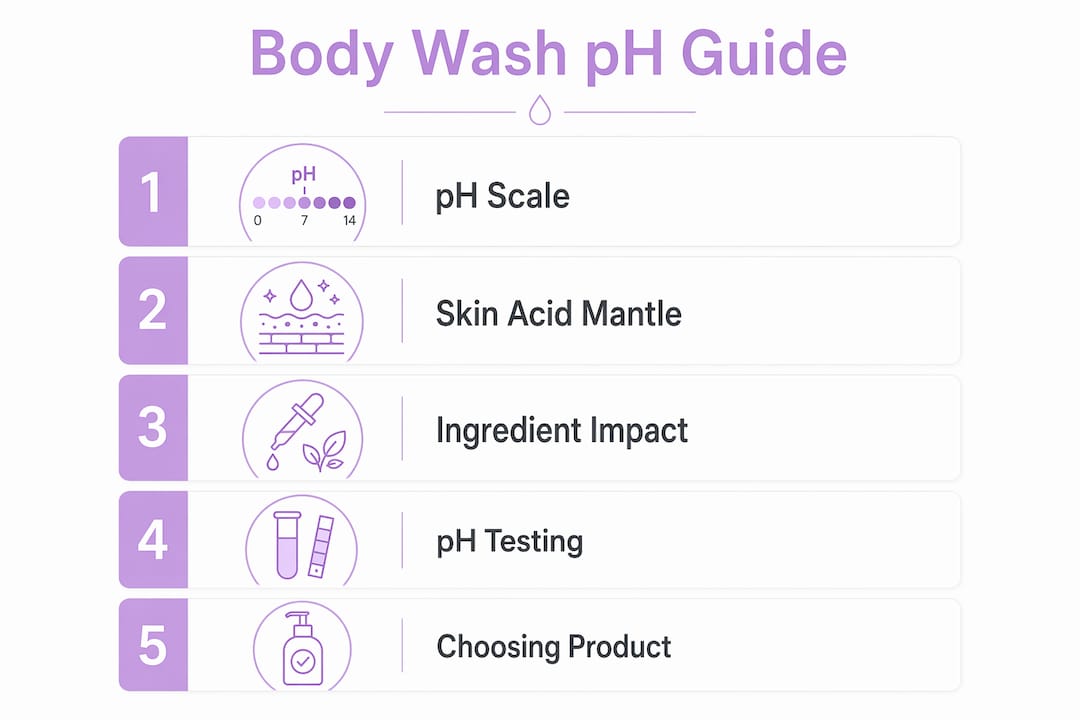
Salicylic acid, for example, requires an acidic environment to penetrate pores and clear dead skin cells. If the body wash formula sits at pH 8.0, the salicylic acid is essentially inactive. You are paying for an ingredient that cannot function. The same applies to lactic acid, a common hydrating exfoliant found in body washes marketed for dry or rough skin.
The skin’s microbiome adds another layer of complexity. Your skin hosts billions of beneficial bacteria that thrive in an acidic environment. A pH-balanced body wash supports microbiome stability, which in turn supports barrier health. A high-pH cleanser disrupts that microbial community, leaving skin more vulnerable to harmful bacteria and inflammation.
Dermatologists consistently point to ingredient formulation as the deciding factor in skin health outcomes. pH balance is the foundation that makes every other ingredient work. Without it, even the best actives in a formula cannot deliver results.
Botanical extracts like aloe vera and chamomile also perform best in a controlled pH environment. Body washes that combine botanical ingredients and pH balance deliver measurably better skin comfort than those relying on fragrance and high-pH surfactants alone.
Common pH myths about body wash products
The biggest misconception about body wash pH is that format determines safety. Many people assume bar soap is always bad and liquid body wash is always gentle. The reality is more specific.
Traditional bar soaps carry an alkaline pH of 8.5 to 11, which does disrupt the acid mantle and cause irritation for many skin types. Liquid body washes tend to sit closer to skin’s natural pH, ranging from 4.5 to 8.0. But a liquid body wash at pH 8.0 is still too alkaline for sensitive or dry skin. Format alone does not guarantee pH safety.
The second myth is that “tear-free” or children’s body washes are automatically pH-balanced. Many of these products use a higher pH to reduce stinging on contact with eyes. That trade-off may be acceptable for occasional use on young children, but it does not make the product ideal for adult skin or daily use on sensitive areas.
The third myth is that a gentle label means a safe pH. “Gentle” on a label refers to fragrance levels, surfactant type, or marketing positioning. It says nothing about pH. Mild surfactants in a well-formulated body wash clean without stripping skin oils, but only when the overall formula pH supports that function.
Pro Tip: Flip the bottle and read the ingredient list before trusting a “gentle” or “sensitive skin” label. Look for surfactants like sodium cocoyl isethionate or decyl glucoside, which are inherently milder than sodium lauryl sulfate.
What actually matters is the combination of pH and surfactant choice. A body wash with mild surfactants and a pH of 5.0 will outperform a “natural” bar soap at pH 9.0 every time, regardless of how the packaging is positioned.
How to check body wash pH and choose the right product
Testing body wash pH at home is straightforward. pH strips are inexpensive, widely available, and accurate enough for consumer use. Squeeze a small amount of body wash onto a strip, wait 15 seconds, and compare the color to the chart. A reading between 4.5 and 6.0 confirms the product falls within the skin-safe range.
For people who want lab-grade accuracy, some brands publish third-party pH testing results on their websites or product pages. If a brand does not list pH information publicly, that is worth noting when making a purchase decision.
Choosing the right pH-balanced body wash also depends on your skin type:
- Dry skin: Look for a pH of 4.5 to 5.5 combined with humectants like glycerin or hyaluronic acid. These formulas hydrate while cleansing and do not strip residual moisture.
- Sensitive skin: Stay at the lower end of the range, around pH 4.5 to 5.0. Avoid added fragrance, which can trigger reactions even in a well-buffered formula.
- Acne-prone skin: A pH of 5.0 to 5.5 with salicylic acid allows the exfoliant to function properly. Higher pH renders salicylic acid ineffective.
- Normal skin: A pH of 5.0 to 6.0 gives you flexibility. Focus on surfactant quality and avoid unnecessary fragrance.
Reading ingredient lists is as important as testing pH. A chemical-free body wash with mild surfactants and skin-compatible botanicals gives you the best starting point. Pair your body wash choice with a routine that avoids over-washing, since even a pH-balanced product can disrupt the acid mantle if used more than once daily on dry or sensitive skin.
Pro Tip: Test your current body wash with a pH strip tonight. If it reads above 6.5, your skin is working overtime to rebalance itself after every shower.
For people who also use wipes or other cleansing formats, pH balance matters across the board. Wipes and pH imbalance is a real concern, especially for sensitive skin areas where the acid mantle is thinner and more easily disrupted.
Key Takeaways
A body wash with a pH of 4.5 to 6.0 protects the acid mantle, supports active ingredient function, and maintains the skin microbiome better than any high-pH cleanser can.
| Point | Details |
|---|---|
| Ideal pH range | Choose body washes with a pH of 4.5 to 6.0 to match skin’s natural acid mantle. |
| High pH causes damage | Products above pH 7.0 strip skin oils and trigger dryness, sensitivity, and inflammation. |
| Ingredients need correct pH | Salicylic acid and glycerin only work effectively within a pH-controlled formula. |
| Format does not equal safety | Bar soaps average pH 8.5 to 11; liquid body washes vary widely and must be tested. |
| Test before you trust | pH strips give you a reliable reading at home in under a minute. |
Why I think most people are solving the wrong problem
By Gimmi
Most people who struggle with dry, irritated, or breakout-prone skin after showering immediately blame their skin type. They buy more moisturizer, switch to fragrance-free products, or try a new diet. The actual culprit is often sitting in the shower: a body wash with a pH that is working against them.
I have seen this pattern repeatedly. Someone with genuinely healthy skin develops chronic dryness after switching to a “natural” bar soap or a heavily marketed “gentle” body wash. Their skin type did not change. Their cleanser’s pH did.
The uncomfortable truth is that pH is not glamorous. Brands do not lead with it because “pH 5.0” does not sell the way “botanical extracts” or “dermatologist tested” does. But pH is the variable that determines whether every other ingredient in that bottle actually reaches your skin in a functional state.
My advice is to start with a pH strip test before spending money on a new cleanser. If your current body wash tests above 6.5, no amount of moisturizer applied afterward will fully compensate for what the wash stripped away. Fix the foundation first. For daily freshness and barrier support, a pH-balanced intimate care approach applies to your full body routine, not just specialized products.
Skin health is not complicated, but it does require you to look past the marketing and at the actual chemistry.
— Gimmi
Jermaphobi4me’s approach to pH-balanced cleansing
Jermaphobi4me builds products around the principle that clean skin is healthy skin, and healthy skin starts with the right pH. The brand’s cleansing lineup focuses on formulas that support the acid mantle rather than disrupt it.

The Lemeric Cleanser is a coming-soon addition to the Jermaphobi4me catalog, designed to deliver balanced cleansing with skin-brightening support. For people who want a complete hygiene solution right now, the Hand Hygiene Starter Kit offers travel-ready cleansing options that fit a skin-conscious routine. Jermaphobi4me’s focus on clean environments and healthy people means every product in the lineup is selected with skin barrier health in mind.
FAQ
What is the best pH for body wash?
The best pH for body wash is between 4.5 and 6.0, which matches the skin’s natural acid mantle. Products in this range clean effectively without disrupting the skin barrier.
Can a high-pH body wash damage your skin?
A body wash with a pH above 7.0 disrupts the acid mantle, causing dryness, sensitivity, and inflammation. Consistent use of high-pH cleansers weakens the skin barrier over time.
How do I check my body wash pH at home?
Apply a small amount of body wash to a pH strip and compare the color reading to the chart. A result between 4.5 and 6.0 confirms the product is within the skin-safe range.
Is bar soap worse than body wash for pH balance?
Traditional bar soaps average a pH of 8.5 to 11, which is significantly more alkaline than skin’s natural range. Most liquid body washes sit closer to skin’s pH, but individual products vary and should be tested.
Does pH affect how well body wash ingredients work?
pH directly controls the effectiveness of active ingredients like salicylic acid and glycerin. These ingredients require a pH of 4.5 to 6.0 to function properly; outside that range, they lose potency.
Recommended
- Can Wipes Cause pH Imbalance? – Gimmi Vitality Products dba Jermacilin Store
- pH Balanced Intimate Care Guide for Daily Freshness – Gimmi Vitality Products dba Jermacilin Store
- Types of Chemical-Free Body Wash: Your 2026 Guide – Gimmi Vitality Products dba Jermacilin Store
- Natural Feminine Wash for Daily Freshness – Gimmi Vitality Products dba Jermacilin Store